About this place
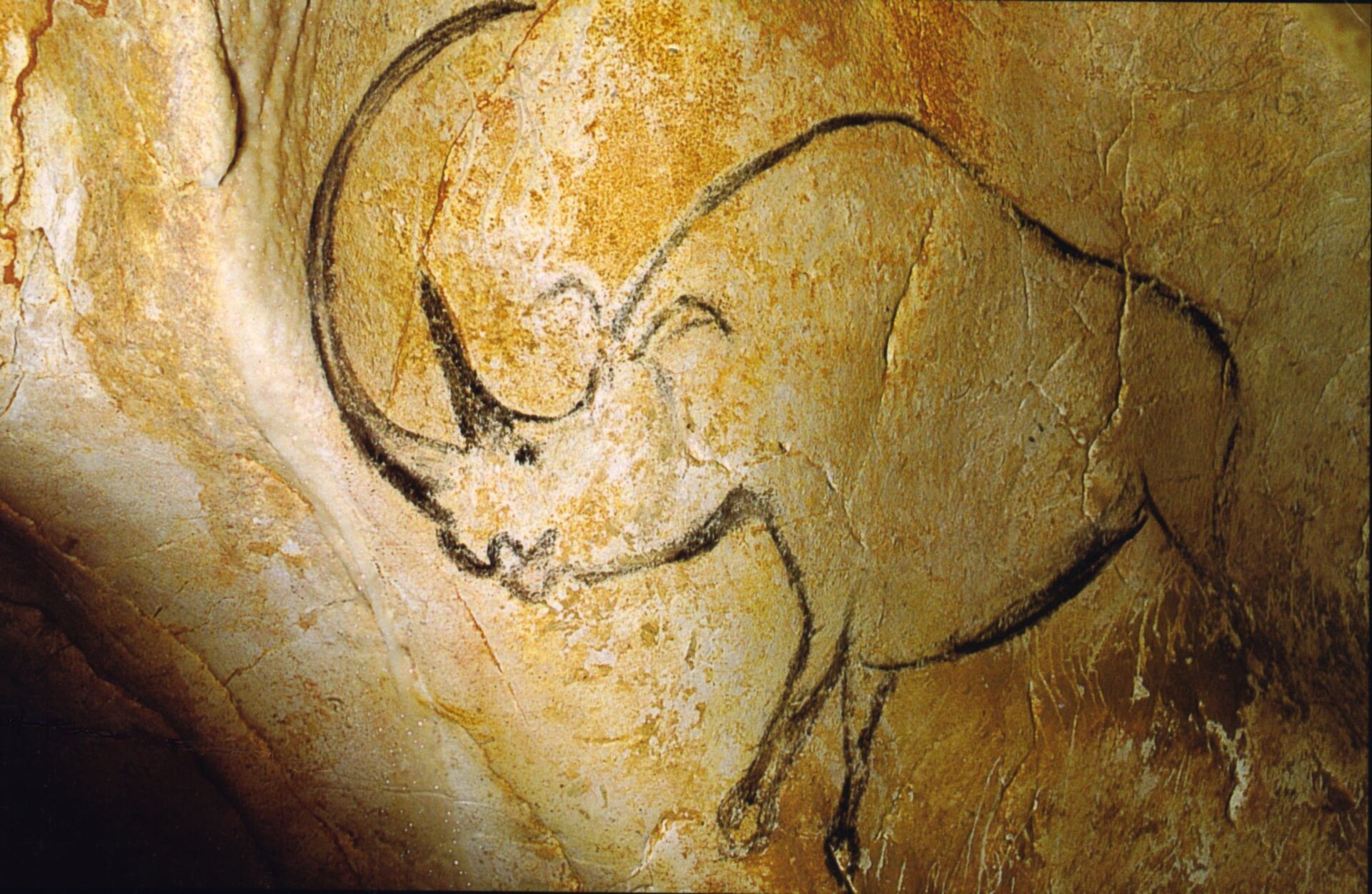
Chauvet Cave (Grotte Chauvet) ranks among the most important prehistoric art sites on Earth, hidden inside a limestone cliff above the former bed of the Ardèche river, within the commune of Vallon-Pont-d'Arc. Its chambers hold more than a thousand paintings and engravings of animals — horses, woolly rhinoceroses, cave lions, bears, and mammoths — created during the Upper Paleolithic. Some of the drawings are roughly 36,000 years old, making them among the oldest known figurative artworks made by human hands.
How was the cave found?
Three amateur speleologists — Jean-Marie Chauvet, Éliette Brunel, and Christian Hillaire — pushed through a narrow gap in the rock on 18 December 1994 and found themselves in a vast network of chambers and galleries covered with images left thousands of years earlier. They quickly understood the scale of what they had stumbled upon: the artwork survived in an almost pristine state because a rockfall had sealed the entrance many millennia ago, cutting the cave off from the outside world until that day.
What makes it so exceptional?
Beyond sheer age, the cave stands out for the skill behind the images. The artists worked with charcoal and ochre, used shading and a sense of perspective, and in several scenes drew animals mid-motion, with overlapping legs suggesting movement. Handprints, animal footprints, and traces of ancient hearths remain visible on the floors and walls. Because of this artistic and scientific value, the site was classified as a French historic monument in 1995, and in 2014 UNESCO inscribed it on the World Heritage List under the name "Decorated Cave of Pont d'Arc, known as Grotte Chauvet."
Can visitors enter the original cave?
No. The original Chauvet Cave has remained closed to the public since its discovery, and only a small number of researchers are granted access each year to study it. The decision followed lessons learned at other renowned decorated caves, such as Lascaux and Altamira, where large-scale visitor traffic triggered mold growth that damaged the paintings. The cave's microclimate — its humidity, temperature, and air composition — is so delicate that any outside interference could irreversibly harm artwork tens of thousands of years old.
So what do tourists actually see?
A faithful full-scale replica was built nearby: the Caverne du Pont-d'Arc, also known as Grotte Chauvet 2. Construction began in 2012, and the site opened to visitors on 25 April 2015. It is the largest replica decorated cave in the world, with roughly 3,500 square meters of floor space and more than 8,000 square meters of reproduced rock surfaces, walls, and ceilings. The design team recreated not only the paintings themselves but also the terrain, temperature, humidity, silence, and acoustics of the original, so the visitor experience closely mirrors that of the real cave.
What is a visit to the replica like?
Tours run in small groups of about 25 people and last around 50 minutes. Guided tours are offered in several languages, and audio guides in additional languages are available for other visitors. The site also includes an educational center dedicated to Paleolithic life and cave art techniques.
FAQ
Can you visit the real Chauvet Cave? No. The original has been closed to tourism since its discovery in 1994 and is accessible only to researchers. Visitors instead tour the faithful replica, the Caverne du Pont-d'Arc (Grotte Chauvet 2), built nearby.
How old are the paintings? The oldest images are estimated at around 36,000 years old, placing them among the earliest known cave paintings in the world.
Who discovered the cave? It was discovered on 18 December 1994 by three speleologists: Jean-Marie Chauvet, Éliette Brunel, and Christian Hillaire.
Where exactly is the cave located? In the commune of Vallon-Pont-d'Arc, in the Ardèche department of France, on a limestone cliff above the former bed of the Ardèche river.
Does the cave have heritage protection status? Yes. It has been a French historic monument since 1995 and was added to the UNESCO World Heritage List in 2014.
Nearby places

Earn badges for the places you visit
Download NextOnTrip, discover new places and check off your trails.