About this place
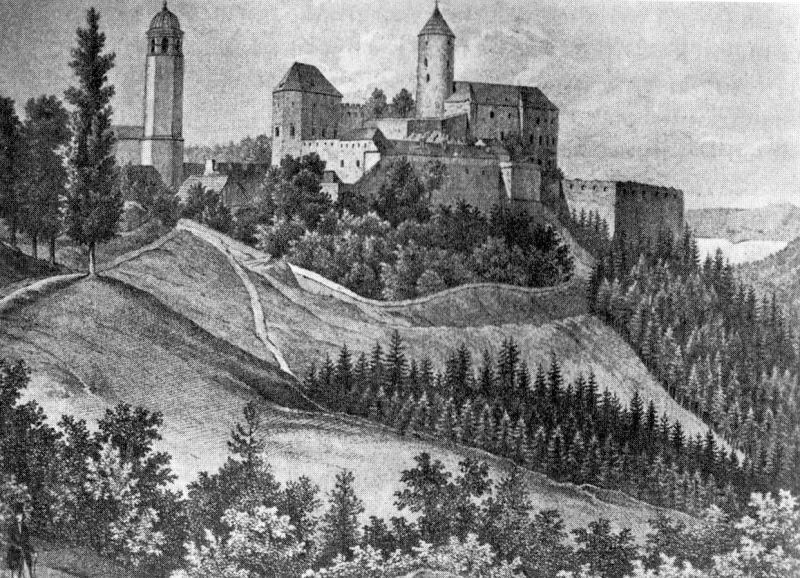
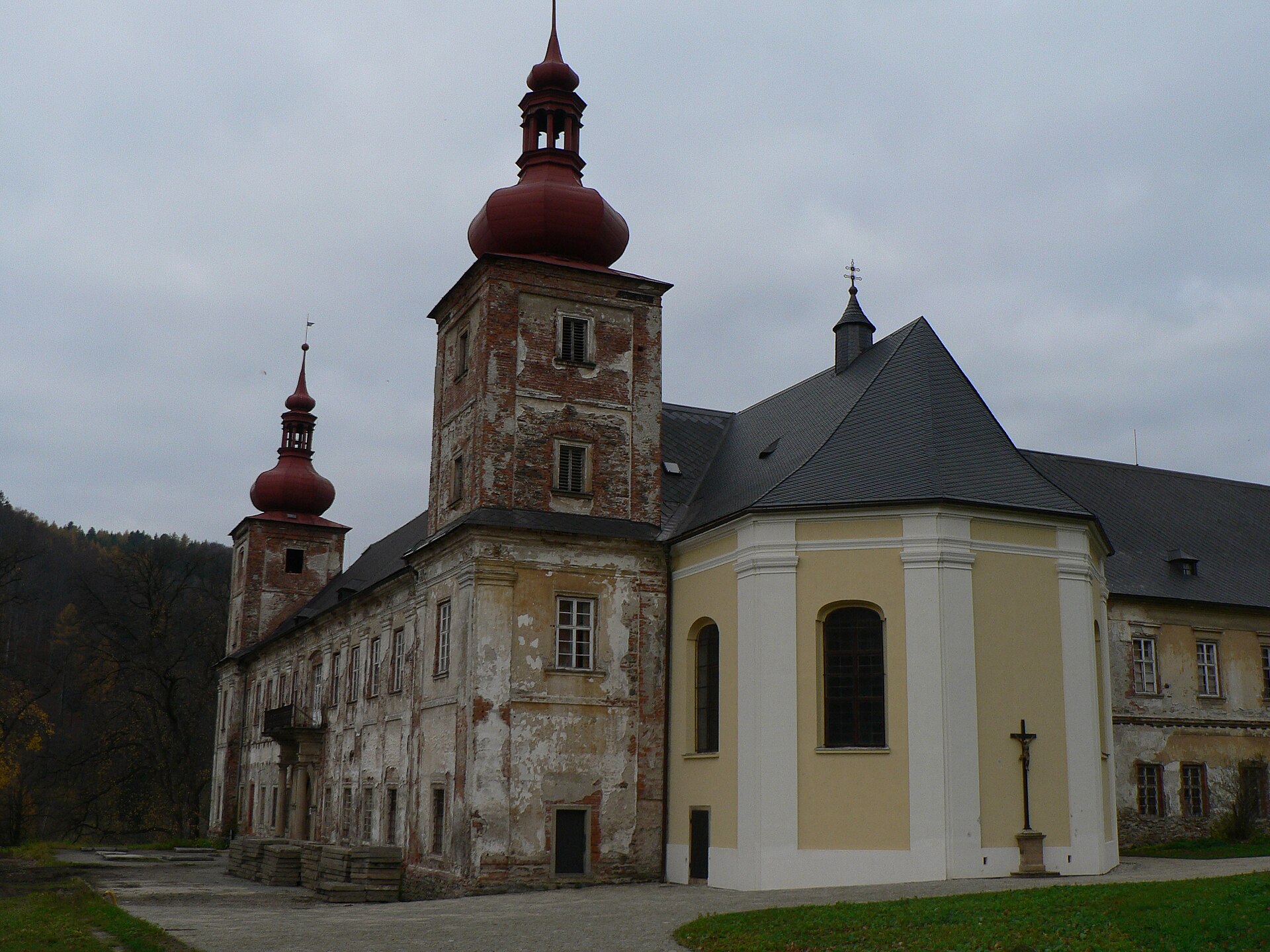
Janovice Castle sits above the Podolský stream right next to Rýmařov, in the Moravian-Silesian region of northern Moravia. Few chateaus in the area show their construction history as openly — Gothic foundations, a Renaissance shell, and two separate Baroque makeovers are all still legible in the building today.
Who built the original fortress, and why here?
A late Gothic fortress went up between 1520 and 1530, commissioned by the feudal lord Petr ze Žerotína. The site above the Podolský stream wasn't chosen for scenery — the surrounding area held valuable mineral deposits and extensive forest, resources that mattered more to a 16th-century landowner than defensive height.
How did a fortress turn into a Renaissance residence?
In 1583, the estate passed into hereditary ownership of Ferdinand Hoffmann von Grünbüchl, a Styrian nobleman, president of the imperial court chamber, and a close friend of Emperor Rudolf II. Construction work started in 1586 and gradually turned the plain fortress into a proper Renaissance château — the building's first real architectural upgrade, and the point where it stopped being purely a fortified outpost.
What changed during the Baroque period?
A rotunda-shaped chapel was added between 1656 and 1658. Shortly before the death of Wolfgang Bedřich in 1663, the castle was rebuilt in early Baroque style under architect Alessandro Canneval. After a brief spell in the hands of the Dietrichstein family, the estate passed by marriage in 1721 to the Counts of Harrach from Jilemnice. Under their ownership, Ferdinand Bonaventura Harrach commissioned a further, late Baroque reconstruction between 1763 and 1765, carried out by architect Gottfried Weisser. The Harrach family kept the castle until the Second World War.
What shaped its 19th-century look, and what happened after 1945?
The castle's current overall appearance dates from a rebuilding phase between 1827 and 1850 — this is essentially the silhouette visitors see today. After 1945, the property was confiscated under the Beneš decrees. From the 1950s onward, the building housed a state district and regional archive, a rather unglamorous use that nonetheless kept the structure maintained through decades when many comparable Moravian chateaus were left to decay.
What can visitors see at the castle now?
In 2018, the National Heritage Institute (Národní památkový ústav) purchased the property and has been opening it to the public in stages. Since 2025, a new visitor route has been running through interiors furnished with historical pieces. Highlights include a knight's hall with distinctive wooden ceilings, and each year the institute restores and opens another room. One unusual touch: a display of puppets illustrating local legends from the Rýmařov area, a detail that sets Janovice apart from more conventionally furnished Czech castles.
Frequently asked questions
Where exactly is Janovice Castle located? In the village of Janovice u Rýmařova, in the Moravian-Silesian region, above the Podolský stream and right next to the town of Rýmařov.
Who originally built the castle? The late Gothic fortress was built between 1520 and 1530 for Petr ze Žerotína. The later Renaissance and Baroque transformations came under the Hoffmann and Harrach families respectively.
Is the castle open to visitors? Yes, though access is expanding gradually. A new tour route with historical interiors opened in 2025, and the National Heritage Institute adds newly restored rooms each year.
What architectural style does it represent? A Gothic core overlaid with Renaissance and Baroque work, plus a 19th-century remodel — several eras of building history visible at once rather than a single unified style.
What's the most distinctive thing to see inside? The knight's hall with its unique wooden ceilings, along with a puppet exhibition depicting local legends tied to the Rýmařov region.
Nearby places

Earn badges for the places you visit
Download NextOnTrip, discover new places and check off your trails.