About this place
Loučná nad Desnou Castle
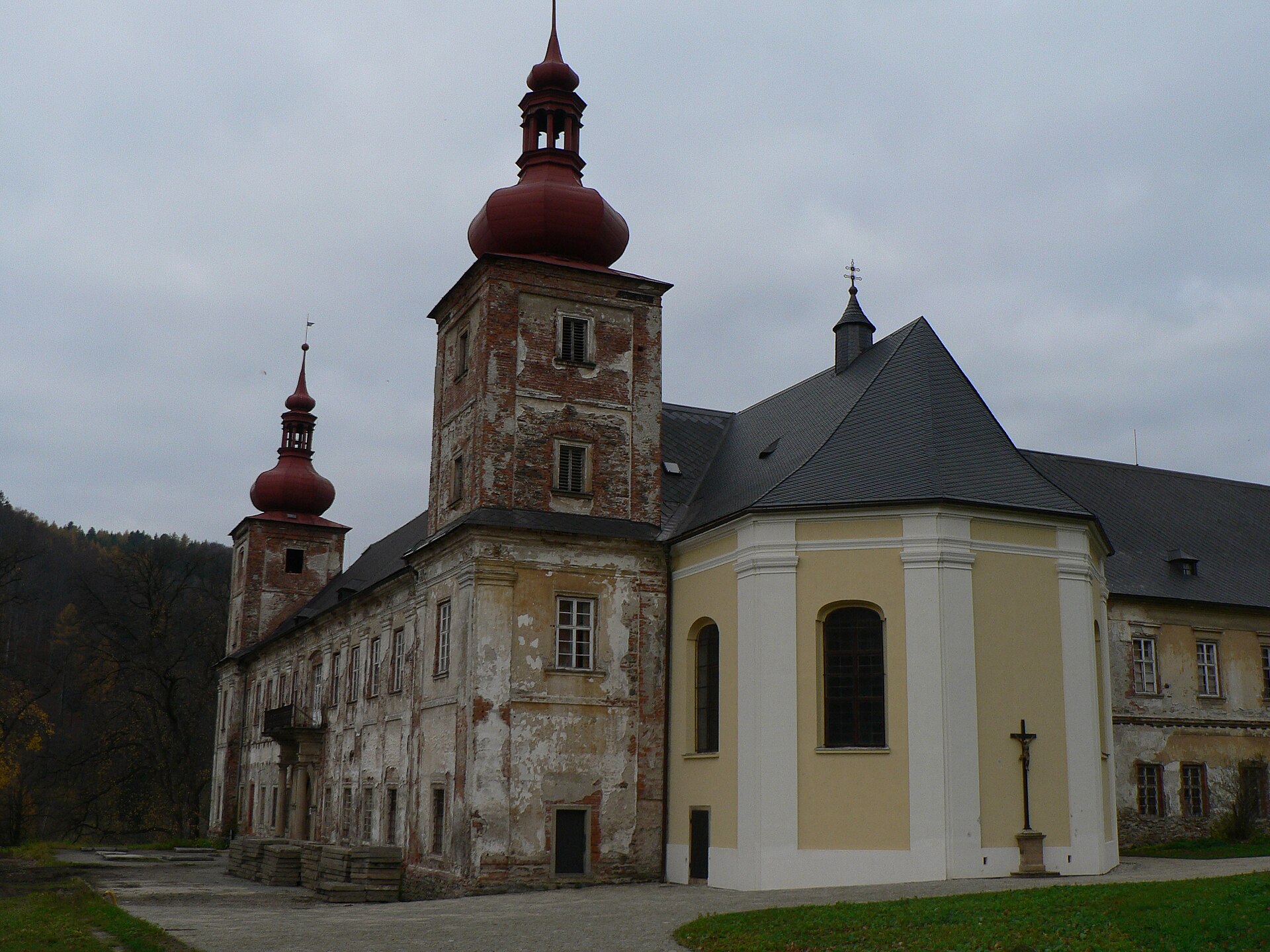
Loučná nad Desnou Castle is a Renaissance-and-Baroque residence at the foot of the Jeseníky Mountains, in the municipality of Loučná nad Desnou in the Šumperk District of the Olomouc Region. The municipality also includes Filipová, a settlement founded in the 18th century by an abbot whose name it still carries. The castle itself is closed to visitors today, but the sprawling park around it remains one of the more rewarding stops in the area.
Who built the castle, and how did it take its current shape?
The building's predecessor was a modest hunting lodge put up by the Žerotín family at the end of the 15th century. Construction of the actual Renaissance castle began in 1608, led by the sons of Jan Starší ze Žerotína — among them Přemek ze Žerotína — on the site of that wooden lodge, with the work carried out by an Italian building crew. The result was a multi-story building wrapped around a rectangular courtyard, with a Renaissance entrance portal on its southern façade. In the last quarter of the 17th century the complex was extended in the Baroque style.
What role did the Velehrad monastery play, and where does Filipová come from?
In 1770 the estate was bought by the monastery in Velehrad. A few years later, in 1774, the abbot commissioned a Baroque chapel for the eastern wing, dedicated to Saints Cyril and Methodius and decorated with paintings by the late-Baroque artist Ignác Raab. That same abbot, Filip Martin Zuri, founded a settlement in 1773 carved out of the estate's manor farm and named it Filipová after himself. After the monastery was dissolved in 1784, the castle chapel became the parish church for the surrounding villages, Filipová included.
How did the castle pass to the Klein family, and what changed in the park?
After its stint under monastic and later religious-fund ownership, the estate belonged to the Mitrovský family between 1833 and 1842 — it was the count who first laid out an ornamental English-style park there. From 1844 to 1945 the owners were the Klein brothers, prominent railway entrepreneurs. Franz Klein I, the most enterprising of the brothers, had trained as a gardener on the Liechtenstein family's estate at Lednice in Moravia before taking over the property, and he drew directly on that experience to turn the castle garden into a full landscape park with a lake, fountains, an artificial grotto and an orangery.
What can visitors see in the park today?
The park covers more than 12 hectares and is known for its rare trees and shrubs, many labeled with information boards — sycamore maples, tulip trees and unusual linden cultivars grow here, including a linden over 600 years old with a trunk circumference of 730 centimeters. The castle building itself, once in private hands and even sold at public auction at one point, has been gradually deteriorating, while the park is maintained and open to walkers during the day.
Frequently asked questions
Can visitors go inside Loučná nad Desnou Castle? No, the castle building is closed to the public. The surrounding park, however, is open and freely accessible.
Where does the name of the village Filipová come from? It was founded in 1773 by Filip Martin Zuri, abbot of the Velehrad monastery, who named it after himself.
Who started building the Renaissance castle? Construction began in 1608 under the sons of Jan Starší ze Žerotína, including Přemek ze Žerotína.
Does the castle have a real connection to the Liechtenstein family? Yes, indirectly: Franz Klein I, who owned the estate from 1844, had trained as a gardener on the Liechtenstein estate at Lednice, and applied that experience to designing the castle park.
How large is the castle park, and what grows there? The park spans more than 12 hectares and includes a linden tree over 600 years old with a 730 cm trunk circumference, alongside rare species like the tulip tree.
Nearby places

Earn badges for the places you visit
Download NextOnTrip, discover new places and check off your trails.