About this place
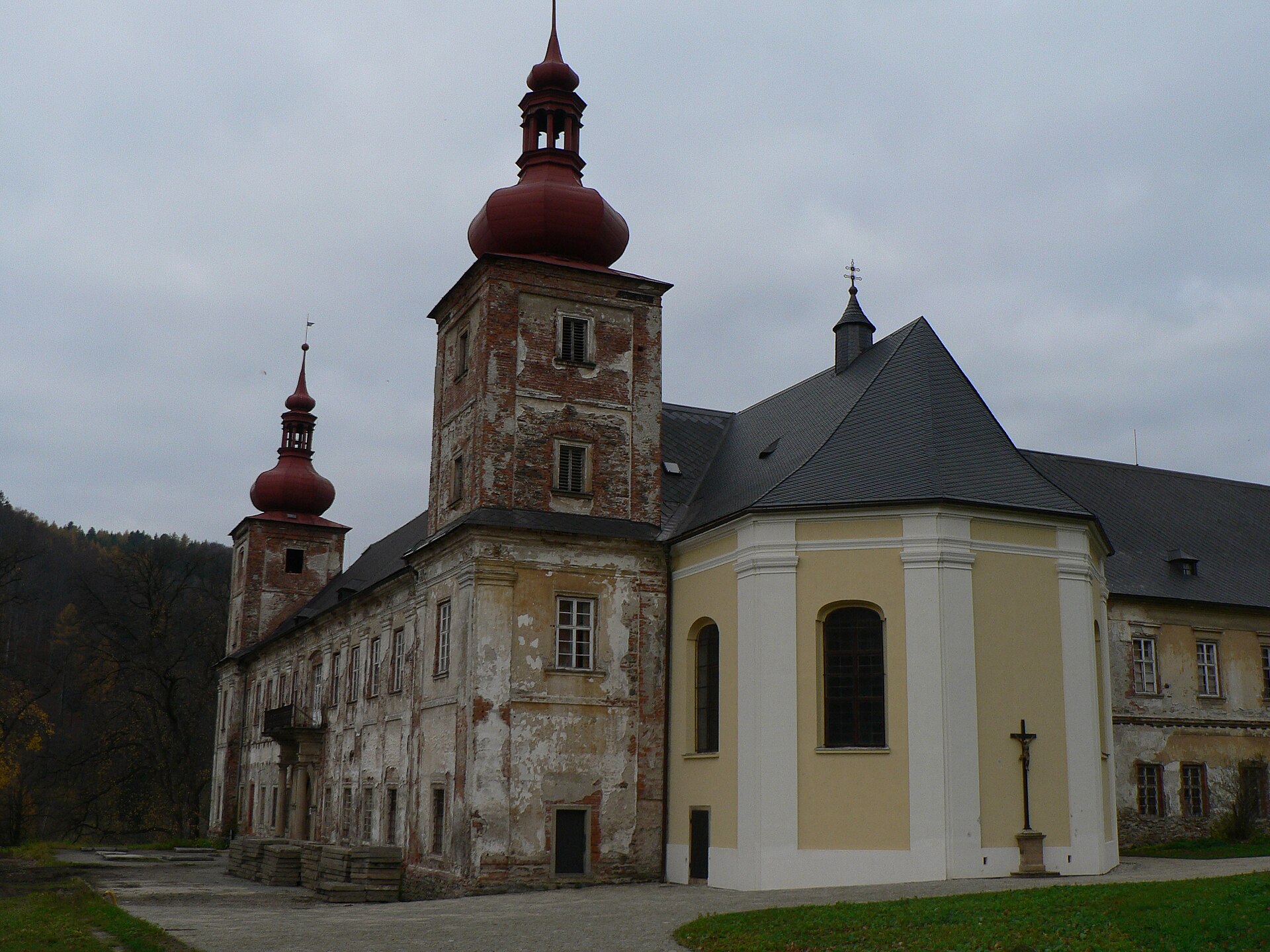
Velké Losiny Castle is a Renaissance chateau in the Olomouc Region of the Czech Republic, remembered for two very different things: refined 16th-century architecture and one of the most notorious witch trials in Czech history. The castle stands next to a hand paper mill that still produces paper the same way it did over four centuries ago.
How did the castle take its current shape?
A Gothic water fortress once stood on the site. The Žerotín family acquired Velké Losiny in the second half of the 15th century, first as a pledge and, from 1507, as permanent property. Starting in 1531, under Jan Žerotín, the residence was rebuilt into a Renaissance chateau: a three-wing "high castle" with three-story arcades, plus three wings of a "low castle" and two annexes. An eight-sided, six-story tower topped with a clock still dominates the skyline. Baroque elements were added around the turn of the 18th century.
The Žerotín family held the estate until 1802, when the last of the line, Ludvík Antonín, sold it to the House of Liechtenstein. The Liechtensteins owned the castle until 1945, when the last owner, Prince Alois, lost it to postwar confiscation by the Czechoslovak state.
What is inside?
A guided tour, usually under an hour, takes visitors through the Knight's Hall, with its Renaissance coffered ceiling and walls covered in tooled leather, and the adjoining Žerotín library. The collection includes furniture spanning the Renaissance to Empire periods, weapons from the 16th to 19th centuries, and tiled stoves dating to 1586–1587 — the oldest of their kind in Moravia and the third-oldest in the entire Czech Republic.
Why is the castle linked to witch trials?
Velké Losiny hosted the best-known witch trials in Czech history. In 1678, Countess Angelina Sybila Galle brought inquisitor František Jindřich Bobliga z Edelstadtu to the estate, and an inquisitorial court operated directly at the castle. The trials ran until 1692 and claimed 56 victims. Among them was Barbora Göttlicherová, wife of the paper mill master Kryštof Göttlicher, burned at the stake in September 1680. A memorial linden tree near the castle still marks the episode.
What connects the castle to the paper mill?
At the turn of the 16th and 17th centuries, the Žerotín estate founded a hand paper mill that is still in operation today, using almost the same process as when it began — the only mill of its kind still working in the Czech Republic. The fate of the paper master's wife ties the mill's history directly to the castle's darkest chapter.
What should visitors know before going?
The castle is surrounded by a 17th-century park with a trail devoted to its trees. It opens seasonally, from April to October, with extended hours in summer through 6pm, and admission costs roughly 100 CZK. Photography is only permitted outside the building.
Frequently asked questions
How many people died in the Velké Losiny witch trials? According to figures published by the castle, the trials held between 1678 and 1692 claimed 56 victims.
Is the Velké Losiny paper mill still working? Yes. The hand paper mill founded at the end of the 16th century still produces paper using traditional methods and is the only mill of its kind still operating in the Czech Republic.
Who owned the castle? The Žerotín family owned it from 1507 to 1802, after which it passed to the House of Liechtenstein until 1945.
How long does a castle tour take? A standard guided tour takes under an hour.
Nearby places

Earn badges for the places you visit
Download NextOnTrip, discover new places and check off your trails.