About this place
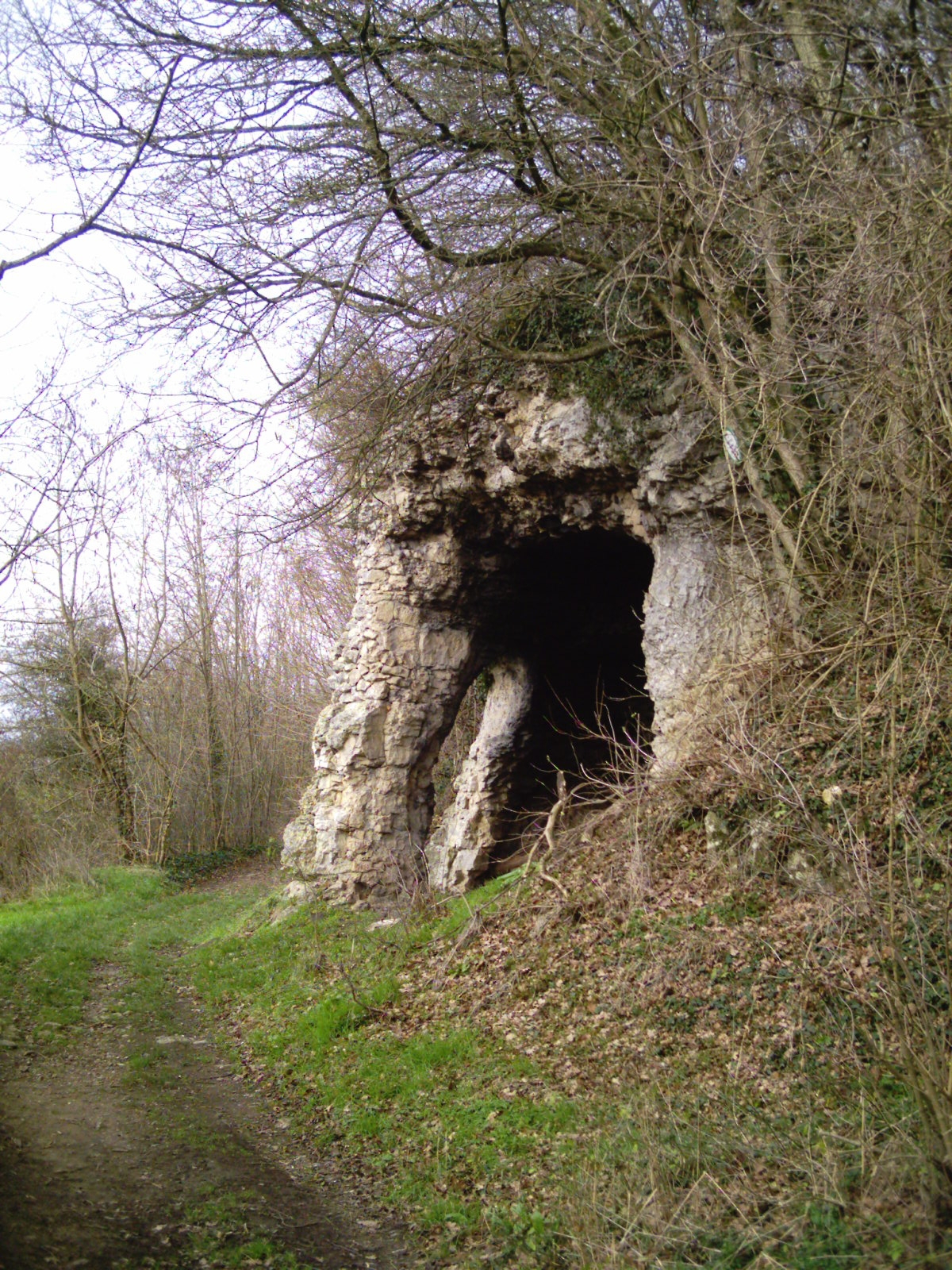
Grotte des Sept Salles is one of the largest known caves in Lorraine, carved into the valley slope above the Moselle river in the commune of Pierre-la-Treiche, Meurthe-et-Moselle. Its name means "cave of the seven halls," a reference to the seven large chambers its discoverer walked through when he first explored it. It ranks among the more notable sites in French speleology — though it is a wild cave rather than a show cave, and visiting it takes real caving skills rather than a casual walk.
Where is it and how did it form
The cave sits on the right bank of the Moselle, within a limestone slope in Pierre-la-Treiche — a commune that hosts dozens of karst caves and is considered the richest karst area in the department. Grotte des Sept Salles began as part of a larger endokarst, a network of underground voids formed beneath the floor of the Moselle valley. Before the river was captured by the Meurthe and diverted onto a different course, the Moselle is credited with carving and enlarging these passages, later filling parts of them with its own alluvial sediment. Geologists estimate this shaping process unfolded over more than 300,000 years, making the cave a long record of how the valley's landscape has changed.
How big is the cave
The surveyed passages add up to roughly 1,235 metres, which makes Grotte des Sept Salles the third-largest known cave by length in the Meurthe-et-Moselle department. The main entrance sits at an altitude of about 225 metres. The system has three known entrances; the third, known as the puits du Chouchen, is a six-metre vertical shaft that was only opened up in 1996 and calls for somewhat more technical skill than the other two entry points.
Discovery and exploration
The cave was discovered on 31 March 1937 by Christian Chambosse. In the very first chamber he found traces left by earlier, unnamed visitors — someone had clearly been there before him, though no record of that visit survives. Chambosse, after working his way through seven large chambers, gave the cave its present name. From the late 1940s, exploration became more systematic: members of the local Scout group Clan des Montenlairs mapped what is now called the "old network," on the left-hand side of the system. The right-hand section and a second entrance were only found decades later, in the 1970s and 1980s, through the work of Michel Louis and cavers from the Cercle lorrain de recherche spéléologique in Nancy.
What is inside
Inside, the cave shows the classic signs of water-carved limestone karst — chambers and galleries partly filled with river sediment left over from when the Moselle still flowed along a different path. The cave shelters invertebrates adapted to darkness and damp, including the cave spider Meta menardi, a species typical of underground habitats across this part of Europe. It is worth noting that the cave has no visitor infrastructure, lighting, or walkways of the kind found in commercial show caves — it remains a site for practising cavers equipped with the right gear and route knowledge.
FAQ
Can the cave be visited without caving experience? This is not advisable. Grotte des Sept Salles is an undeveloped wild cave, and one of its entrances, the puits du Chouchen, requires the ability to descend a vertical shaft safely.
How big is the cave? Its surveyed passages total around 1,235 metres, making it the third-largest known cave in the Meurthe-et-Moselle department.
Is this the same cave as the grotte Sainte-Reine in Pierre-la-Treiche? No. Grotte des Sept Salles and the grotte Sainte-Reine are two separate karst sites within the same Moselle valley, in a commune known for dozens of caves — the facts about one should not be mixed up with the other.
Who discovered the cave, and when? Christian Chambosse, on 31 March 1937. Later sections of the system were mapped progressively, with major discoveries continuing into the 1980s.
Does any wildlife live in the cave? Yes — among other invertebrates, the cave spider Meta menardi, a species commonly found in dark, damp underground sites across this region of Europe.
Nearby places

Earn badges for the places you visit
Download NextOnTrip, discover new places and check off your trails.