About this place
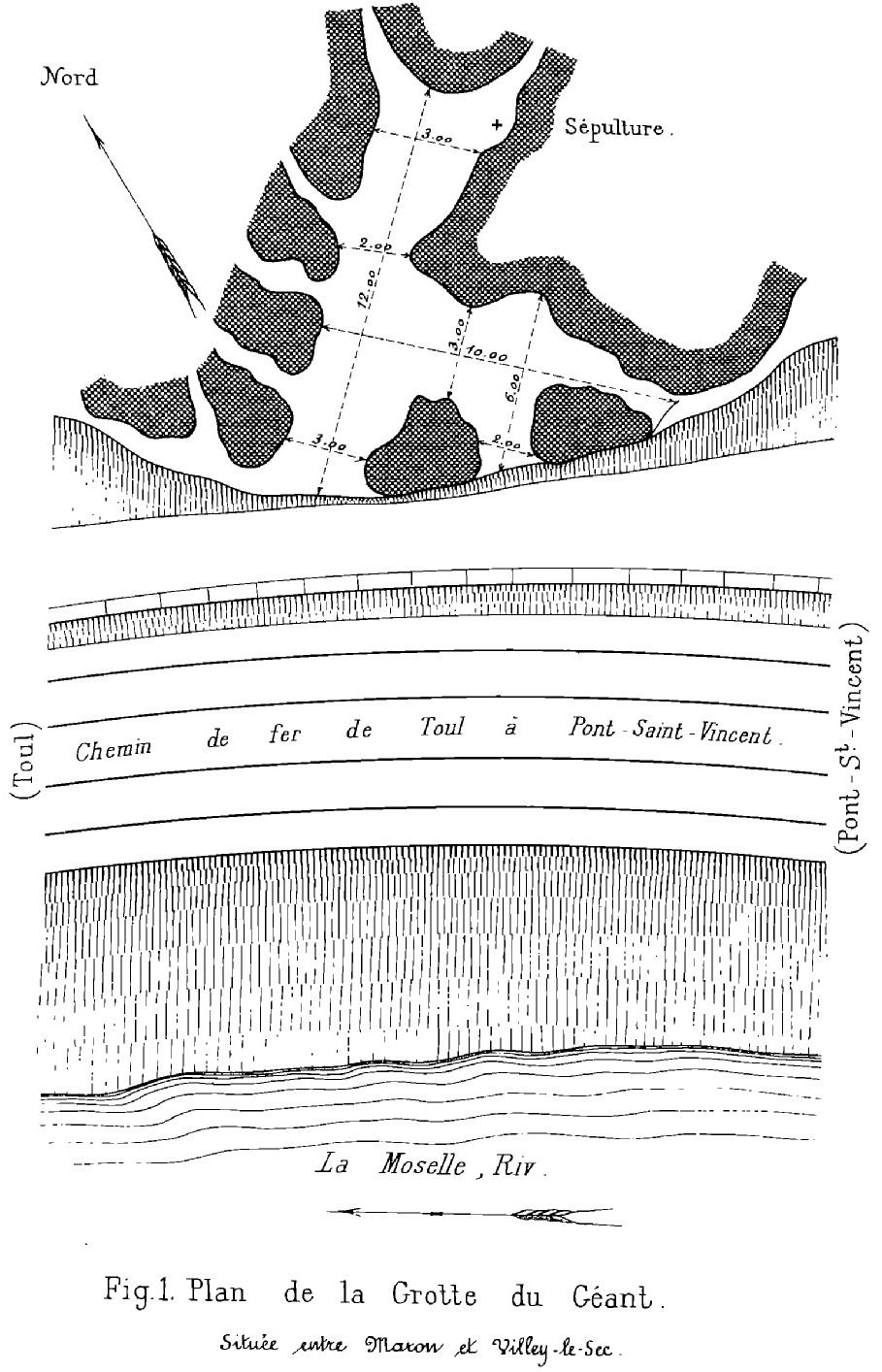
Grotte du Géant is a small rock cave in the commune of Gondreville, in the Meurthe-et-Moselle department of France, tucked into the steep slope of the Moselle's right bank. Its entrance sits roughly 20 meters above the current river level, about halfway between the villages of Maron and Villey-le-Sec. The site pairs an interesting geological backstory with traces of human presence going back thousands of years.
Where is Grotte du Géant located?
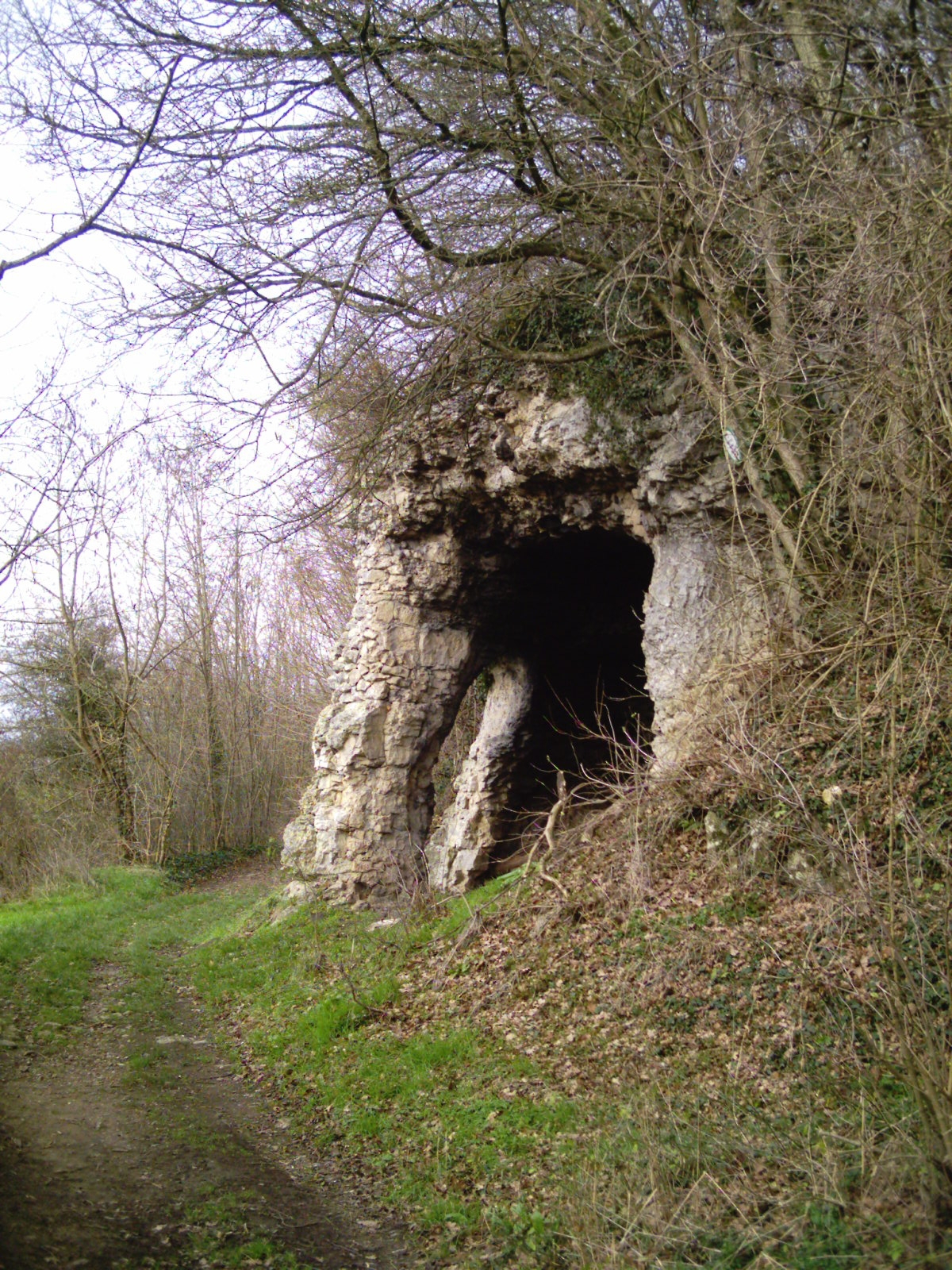
The cave opens on a rocky spur rising above the Moselle valley, surrounded by the woods that cover the slopes between Villey-le-Sec and Pierre-la-Treiche. The entrance itself forms a small chamber with a few openings facing the river, giving a view down over the valley. The cave owes its existence to the region's deep geological history, when the Moselle's course was captured by the Meurthe — the erosion tied to that event is what carved out the shelter now known as Grotte du Géant.
How do you get there?
The most convenient starting point is the car park by the dam in Villey-le-Sec. From there, a trail runs through the woods of Villey-le-Sec and Pierre-la-Treiche, passing old military fortifications along the way, before looping back along the former railway line and the riverside cycle path. It's from that cycle path, looking up above the tallest retaining wall of the old railway, that you can spot the cave's entrance.
Expect a demanding final stretch: the approach is steep, and vegetation that has taken over since the major storm of 1999 makes the climb harder still. This is a route for people used to walking on uneven, overgrown terrain rather than a casual stroll.
What is known about the cave's history?
The first systematic exploration was carried out in 1864 by Nicolas Husson, who documented the remains of an old hearth, worked animal bones, human skeletal remains, and pottery fragments from several different periods of occupation. Decades later, around the turn of the 20th century, Count Jules Beaupré led further excavation campaigns. He uncovered a burial carved directly into the rock, dated to the Neolithic period, along with shell fragments matching those found nearby at the Trou des Celtes in Pierre-la-Treiche — suggesting the two sites may have been used by the same communities.
What will you actually see?
Visitors today mainly encounter the rock formation itself: a modest but distinctive entrance chamber with openings looking out over the Moselle valley. The traces of ancient hearths, invisible to the untrained eye, are a reminder that the site was inhabited across different eras, from prehistory to much later periods. It's a destination better suited to history buffs and hikers than to casual sightseers expecting visitor infrastructure.
When should you visit?
Spring and autumn are the best seasons, when vegetation hasn't yet overtaken the approach and temperatures are comfortable for a longer walk. In summer, dense undergrowth can make the final climb to the entrance considerably longer and harder.
Frequently asked questions
Do you need hiking experience to reach the cave? Yes — the approach is steep and partly overgrown, so reasonable fitness and proper footwear are recommended.
Where's the best place to start the walk? From the car park by the dam in Villey-le-Sec, where the trail heads toward Pierre-la-Treiche through the forest.
Are the archaeological finds visible on site? Most of what was discovered — tools, pottery, the burial — was excavated during 19th- and early-20th-century digs and is now studied elsewhere; there's no on-site display.
Is this the same cave as Grotte du Chaos in Gondreville? No, they're two separate sites. Grotte du Chaos lies elsewhere in the commune and has its own distinct history.
Nearby places

Earn badges for the places you visit
Download NextOnTrip, discover new places and check off your trails.