About this place
Grotte du Chaos is a karst cave near the village of Gondreville, on the right bank of the Moselle river, in the Meurthe-et-Moselle department of northeastern France. Stretching roughly 1,750 metres, it is the longest known underground system in the department, and with a depth of 36 metres it ranks eighth locally for depth. This is a destination for geology and caving enthusiasts rather than a conventional show cave with a marked visitor route.
Where is Grotte du Chaos located?
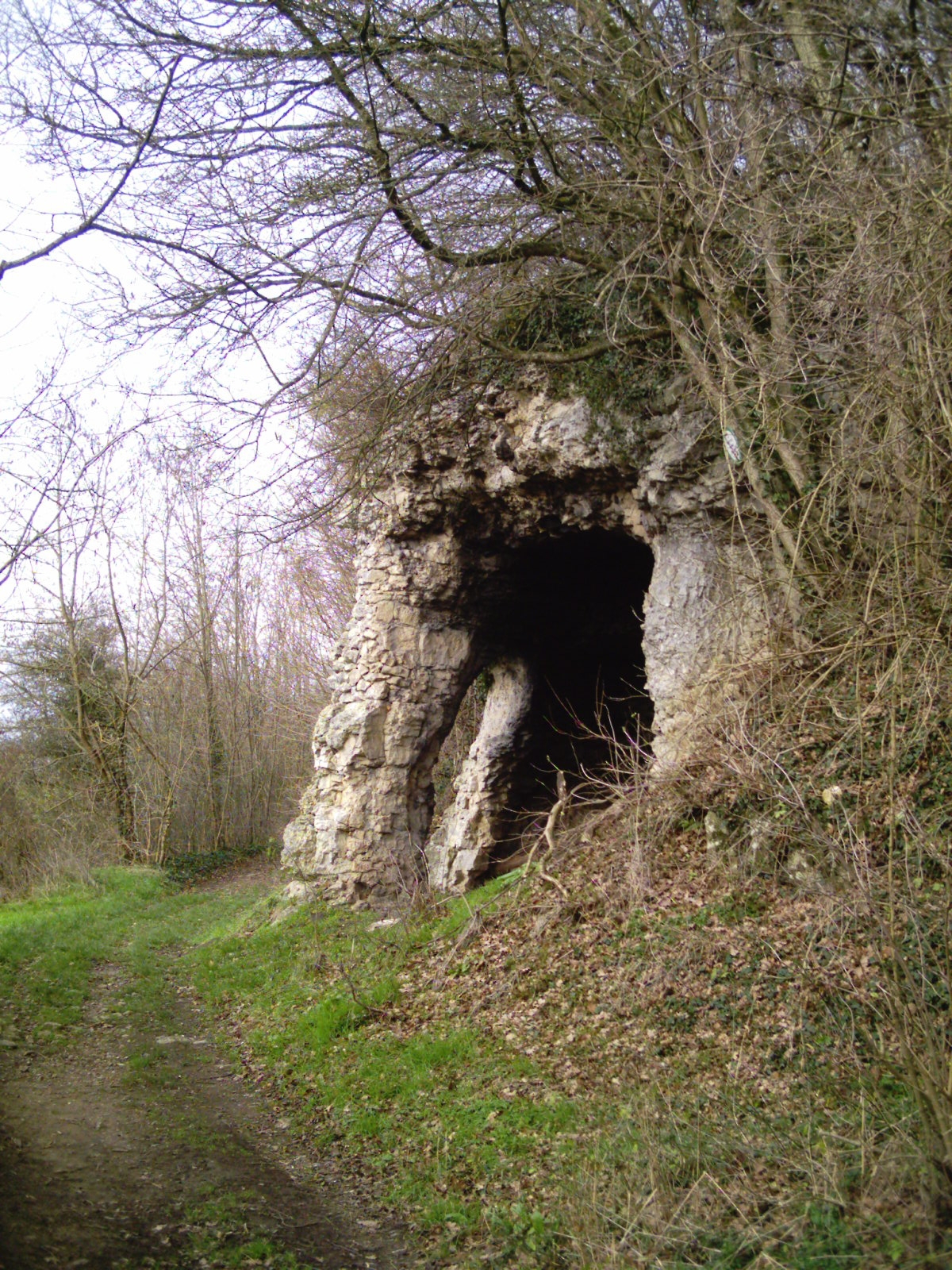
The cave lies just outside Gondreville, close to Villey-le-Sec and the Moselle valley, in the Grand Est region, a short distance from Toul and Nancy. Its entrances are tucked into a wooded valley slope, easy to miss from the outside. The main entrance sits at approximately 48.658°N, 6.000°E.
How did the cave form?
Grotte du Chaos developed in Jurassic limestone, in layers speleologists describe as lower-polypier limestone, an oolitic band, and upper-polypier limestone interbedded with marl. Notably, the cave's formation predates the river capture event through which the Meurthe diverted the Moselle's course — meaning the passages were already forming before the region's valleys took their present shape. That timing is one reason the site holds scientific interest for geologists.
Who discovered it, and how was it explored?
The first documented investigation dates to the 1930s, led by Professor Stéphane Errard, though the site was initially mistaken for a nearby quarry. Systematic exploration, and the effective discovery of the cave's extensive gallery network, is credited to Michel Louis in 1957. Caving work continued for decades afterward, with new chambers and passages mapped into the late twentieth century. During that period a second entrance was opened, easing pressure on the historic opening, which has been slowly collapsing.
Can you visit Grotte du Chaos?
This is the key practical point: the cave is not open for casual visits. The regional speleology association for Meurthe-et-Moselle advises against entering without proper training and equipment — the historic entrance collapses periodically, and the interior demands genuine caving skills. Access only really makes sense as part of an organized caving trip, ideally with a local club familiar with the gallery layout.
What lives inside the cave?
Grotte du Chaos serves as a refuge for several bat species, including the lesser horseshoe bat and the greater horseshoe bat. Because of this wildlife value, the cave falls within the Natura 2000 site known as "Vallée de la Moselle" (FR4100178), which further restricts and regulates access — particularly during hibernation and breeding periods, when disturbing the colonies is prohibited.
What else is worth seeing nearby?
The Moselle valley around Gondreville and Villey-le-Sec offers scenic walking country, with limestone slopes concealing a number of the region's karst caves. It's a good base for anyone curious about Lorraine's geology and the history of local speleology, even though Grotte du Chaos itself stays off-limits without proper preparation.
Frequently asked questions
Can you enter Grotte du Chaos without a guide? It isn't recommended. The regional caving association warns against unsupervised entry because of the risk of collapse at the historic entrance and the demanding nature of the passages inside.
How long is the cave? Around 1,750 metres of documented galleries, making it the longest known cave in the Meurthe-et-Moselle department.
Why is the cave protected? It shelters several bat species and lies within the Natura 2000 "Vallée de la Moselle" site, which brings access restrictions aimed at protecting the colonies.
How many entrances does the cave have? Two — the original historic opening, which is gradually collapsing, and a newer one opened later to relieve traffic through the older entrance.
Nearby places

Earn badges for the places you visit
Download NextOnTrip, discover new places and check off your trails.