About this place
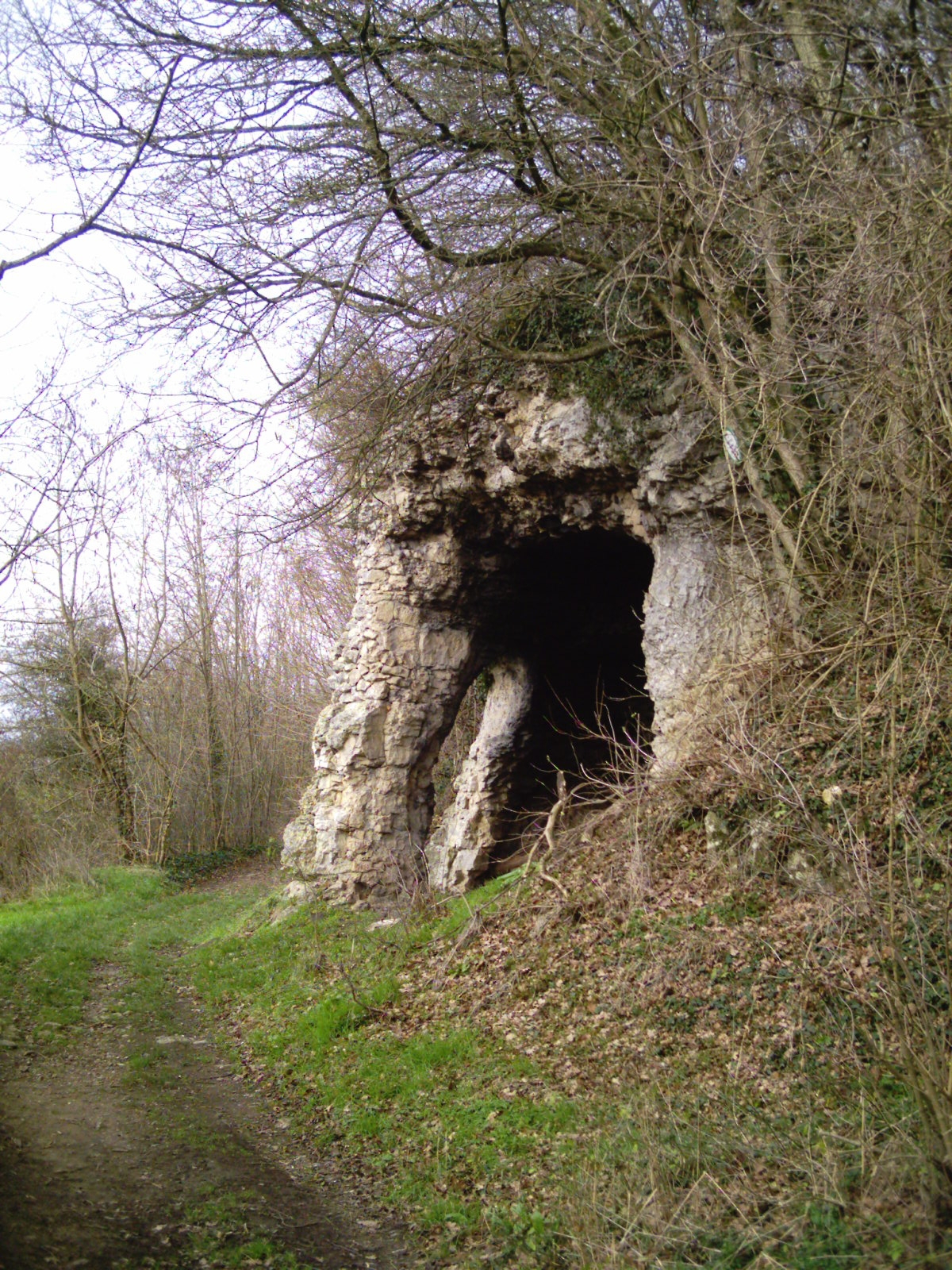
Sainte-Reine Cave (Grotte Sainte-Reine) is one of the largest natural cave systems in the Meurthe-et-Moselle department, hidden in the slope of the Moselle valley within the commune of Pierre-la-Treiche, in the heart of Lorraine, France. Its official heritage name, "Grottes dites Trou de Sainte-Reine," covers several entrances that all lead into a single branching network of galleries.
Where is it and how did it form?
The cave lies on the right bank of the Moselle, where the river has cut deeply into the limestone bedrock of the valley. The galleries originally formed as an endokarst system hidden beneath the valley floor; only once the river entrenched itself and deepened its bed did the cave network become exposed and accessible from the surface. As surveyed in 2004, the mapped passages total 1,260 meters in length with a vertical range of 17 meters, making it the second-largest known natural cave system in the department.
Where does the name come from?
The name "Sainte-Reine" has nothing to do with the archaeological finds inside — it comes from a hermitage established at the cave's main entrance porch in 1711. The presence of a hermit at the site is what linked the cave to Saint Regina in local memory, and the name stuck: it was already recorded in 1861 by Henri Lepage in his geographic dictionary of the Moselle.
What has been found inside?
The cave's archaeological importance was recognized as early as the 19th century. Excavations uncovered the bones of cave bears and cave hyenas, along with Stone Age tools — worked flint and an amulet carved from deer antler. Dating studies indicate that the oldest deposits in the cave predate 300,000 years. These finds are the reason the cave was listed as a historic monument by decree on February 24, 1910.
Is the cave still being explored?
Yes. Exploration continues today, led mainly by cavers from the Union spéléologique de l'agglomération nancéienne (USAN). In October 2008, David Parrot and the USAN team discovered a new chamber, named Room 33. Between 2016 and 2020, Olivier Gradot, Théo Prévot, and other USAN members cleared a further passage known as the Rat-Lynx gallery, confirming that the system extends in three dimensions and is more complex than previously thought.
Can visitors go inside?
Sainte-Reine Cave is primarily a protected natural and archaeological site rather than a show cave with a marked underground trail. The hills above the Moselle valley are, however, a popular destination for hikers, and marked trails in the area pass near the cave entrances, offering views over the valley.
FAQ
Where exactly is Sainte-Reine Cave located? In the commune of Pierre-la-Treiche, Meurthe-et-Moselle department, on the right bank of the Moselle river, in the Lorraine region of France.
Why is the cave called "Sainte-Reine"? The name comes from a hermitage set up at the cave's main entrance in 1711, not from the archaeological discoveries made there.
What archaeological finds were made in the cave? Bones of cave bears and cave hyenas, plus Stone Age tools including worked flint and a deer-antler amulet; the oldest deposits date back more than 300,000 years.
Can the cave be visited independently? It is a protected historic monument explored mainly by speleologists, not a show cave open to the general public with a marked visitor route.
Nearby places

Earn badges for the places you visit
Download NextOnTrip, discover new places and check off your trails.