About this place
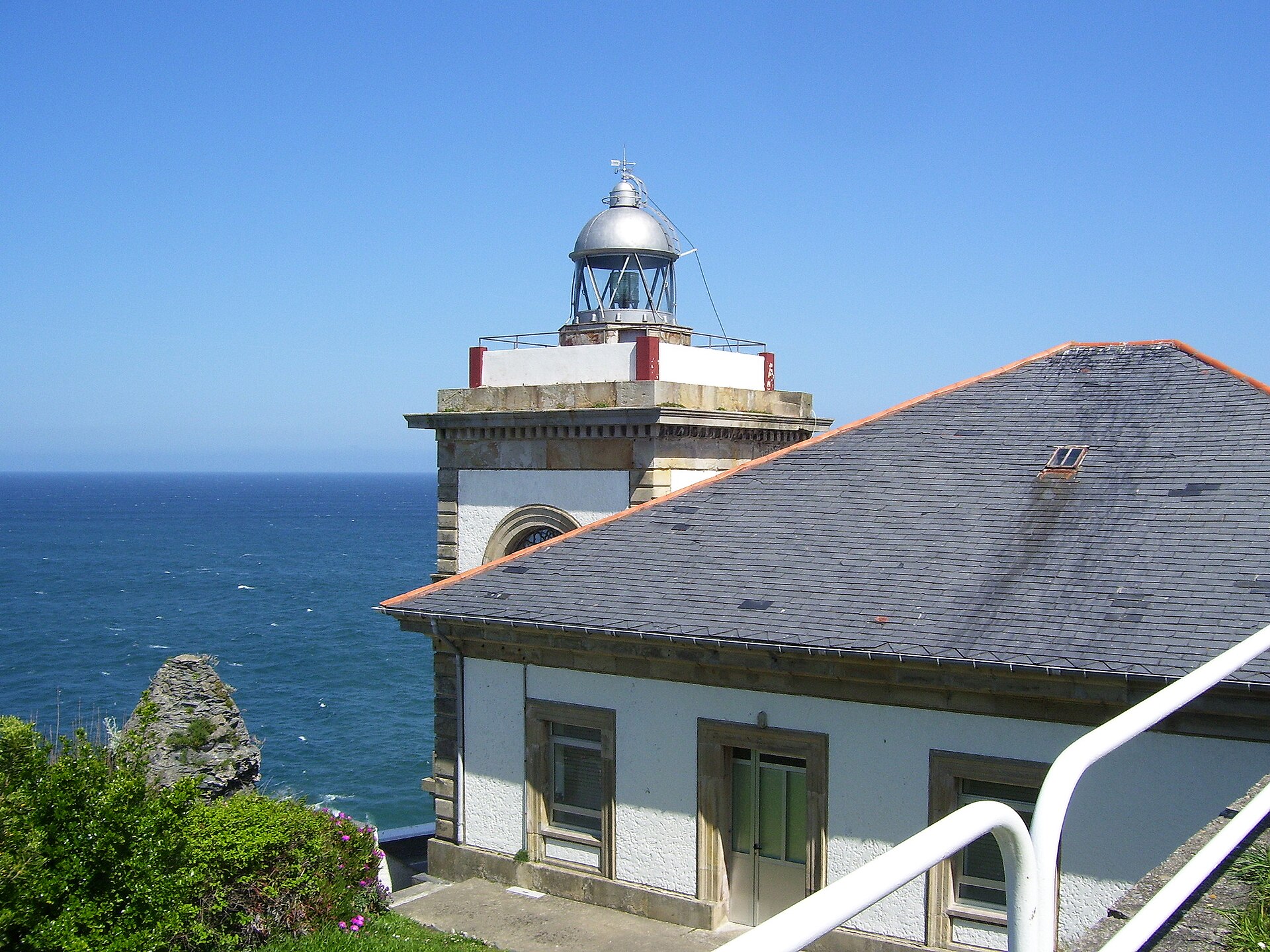
Faro de Luarca is a compact lighthouse perched on the rocky headland known as Punta Focicón, or Atalaya, in Luarca — the capital of the Valdés municipality on the western coast of Asturias. It stands guard over the entrance to the town's harbor and, together with Luarca's colorful houses and rugged Cantabrian coastline, forms one of the most recognizable images of the town.
What is this place?
The lighthouse dates back to the mid-19th century: construction was approved in 1861 and the light was first lit in 1862. It was built on the site of an earlier 16th-century fortification, originally raised to defend the harbor against French naval attacks and English privateers. That layered history — fortress first, lighthouse second — gives the Atalaya headland a significance that goes beyond navigation; it's a place tied closely to the town's defensive past. Right next to the lighthouse stands a small chapel, the Ermita de la Atalaya (Nuestra Señora la Blanca), and the town's parish cemetery sits nearby too, lending the whole headland a quiet, contemplative feel.
How do you get there?
The most enjoyable way to reach the lighthouse is on foot from Luarca's harbor. The coastal walking route takes roughly 45 minutes at an easy pace, winding first through the narrow streets of the old town and then climbing up toward the Atalaya headland. The climb is noticeable, since the lighthouse sits on a high cliff, but it rewards you with a gradually widening view over the harbor and the open sea. The local tourist information office can also point out the exact walking route if you'd rather not rely on signage alone.
What will you see there?
The lighthouse itself is a modest, whitewashed structure with a square tower — it's a working navigational aid, not a museum, so its interior isn't open to visitors. The real draw is the viewpoint it occupies rather than the building itself. From the Atalaya cliff, you get a sweeping panorama over Luarca's fishing harbor, the beaches flanking the mouth of the Río Negro, and the jagged coastline stretching in both directions. It's one of the best spots in town to take in Luarca's layout from above — the colorful houses tumbling down toward the port, the church, and the bridge crossing the river.
When should you visit?
Daytime visits give the best visibility and the most flattering light on the cliffs and water below. Late afternoon and early evening are particularly good for photography — watching the sun set over the Cantabrian Sea from the Atalaya headland is often one of the highlights of a stop in Luarca. Given the steep approach, it's worth avoiding the peak midday heat if you're planning the full walk up from the harbor.
Frequently Asked Questions
Can you go inside the lighthouse? No, Faro de Luarca is an active navigational light and its interior isn't open to the public. The appeal lies in the surrounding headland and the views from the cliff where it stands.
How long does the walk from the harbor take? The coastal walking route from Luarca's harbor up to the lighthouse takes about 45 minutes at a relaxed pace, with a climb near the end.
What else is worth seeing nearby? Right beside the lighthouse you'll find the small Ermita de la Atalaya chapel (Nuestra Señora la Blanca) and Luarca's parish cemetery — both make a natural addition to a visit to the lighthouse on the same walk.
Does the lighthouse have any connection to the town's defensive history? Yes — it stands on the site of a 16th-century fort built to protect the harbor from French naval attacks and English privateers, before the site was converted into a lighthouse in the mid-19th century.
Nearby places

Earn badges for the places you visit
Download NextOnTrip, discover new places and check off your trails.