About this place
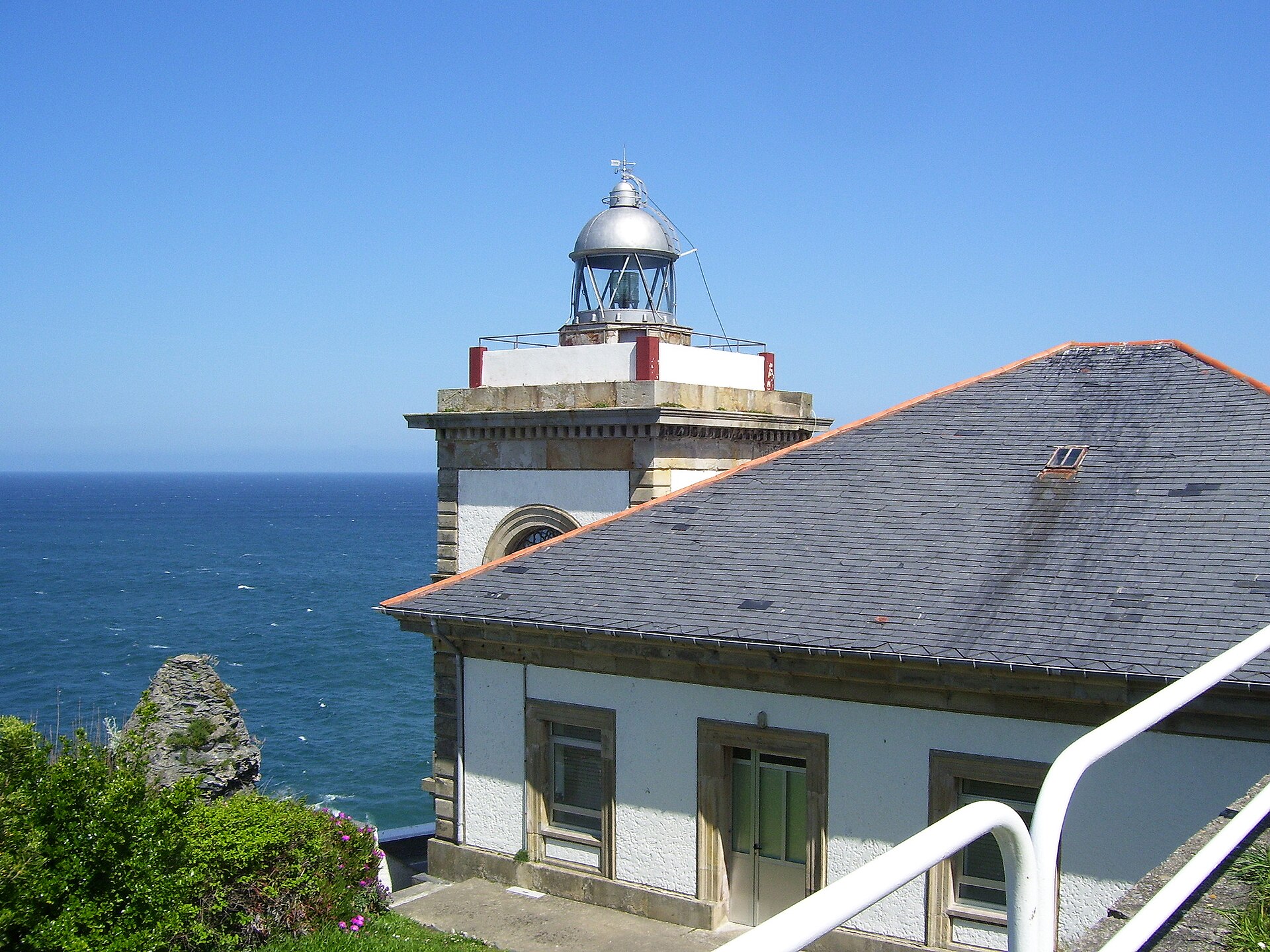
Faro de Cabo Busto is a lighthouse standing on the cliffs near the village of Busto, in the municipality of Valdés, on the western coast of Asturias, Spain. It rises above nearly vertical rock faces roughly 80 meters high, and for more than a century and a half its light has guided ships along one of the more exposed stretches of the Cantabrian coastline.
What is the story behind this lighthouse?
The lighthouse first went into service on April 1, 1858. It originally had a simple rectangular layout, made up of two blocks joined by a central section. In 1920 it was expanded with additional wings, giving the complex a U-shaped floor plan and more room for the keepers' living quarters. A major upgrade to the optical equipment followed in 1940, significantly boosting the light's range. The building reached its current form in 1962, when a new tower was constructed and the attached residential buildings were renovated.
Cabo Busto is classified as a third-order lighthouse, with its light positioned 76 meters above sea level (the tower itself is about 10 meters tall). It emits four flashes every 20 seconds and can be seen from 35.8 nautical miles away in clear weather, dropping to around 16 nautical miles in fog — figures typical of a major coastal light guarding open water.
How do you get there?
The cape sits within the municipality of Valdés, close to the town of Luarca, which serves as the usual base for exploring western Asturias. A local access road leads to the lighthouse from the village of Busto, from where a short walk brings you to viewpoints along the cliff edge. The lighthouse is also a stop along a coastal walking path (senda costera) that runs along the shoreline of western Asturias, popular with hikers and landscape photographers.
What will you see once you're there?
The main draw is the cliffs themselves — steep, almost vertical rock walls dropping toward the Cantabrian Sea, opening onto wide views of the open ocean. The lighthouse's white tower stands out against the green coastal meadows and the dark rock below, making it one of the more photographed spots along the Valdés coastline. On clear days the view stretches far into the Bay of Biscay, and at sunset the light begins its work against the fading sky, drawing visitors looking for a quieter alternative to the more crowded viewpoints elsewhere on the coast.
When is the best time to visit?
The lighthouse can be visited year-round, but conditions for exploring the cliffs and walking the coastal path are best from spring through early autumn, when days are longer and the weather more stable. The area tends to be windy, since this stretch of the Asturian coast faces directly onto the Atlantic, so it's worth bringing a windproof layer even in summer.
Frequently Asked Questions
Can you go inside the lighthouse? Faro de Cabo Busto is an active navigational aid, so the tower's interior is generally not open to visitors — the appeal here is the view of the lighthouse and surrounding cliffs from outside.
How old is the lighthouse? It has been in operation since April 1, 1858, though its current form — with the newer tower and expanded buildings — dates from 1962.
Are there hiking trails nearby? Yes, Cabo Busto lies along a coastal walking route through western Asturias, popular with visitors exploring the Valdés and Luarca area.
How far can the light be seen? In good visibility the light can be seen from almost 36 nautical miles away, dropping to about 16 nautical miles in foggy conditions.
Nearby places

Earn badges for the places you visit
Download NextOnTrip, discover new places and check off your trails.