About this place
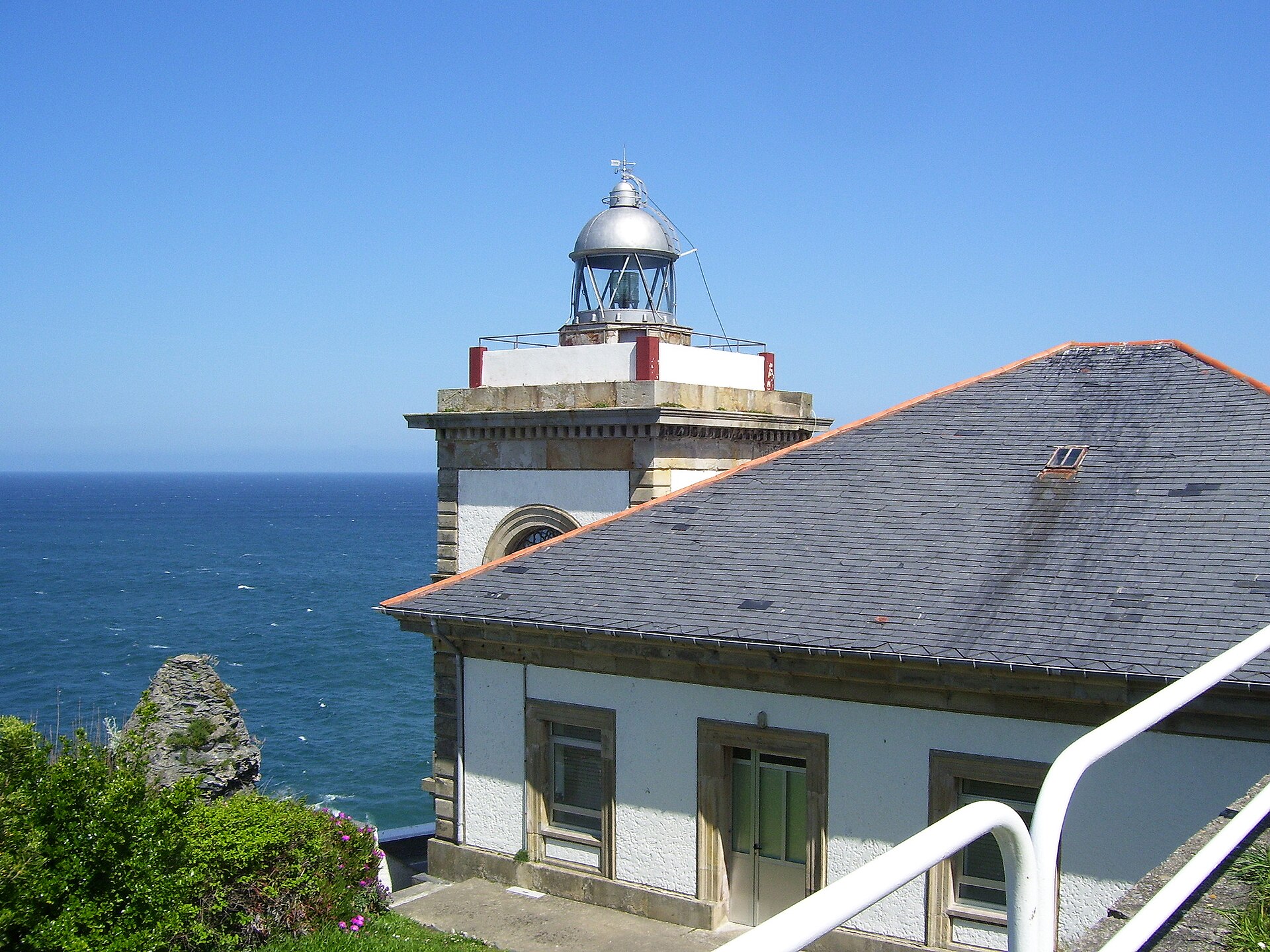
Faro de Cudillero is a white lighthouse standing on Punta Rebollera, a rocky headland that closes off the eastern side of the fishing harbour in Cudillero, one of the most colourful fishing villages in Asturias. For more than a century and a half it has guided ships along the Cantabrian coast, and today it ranks alongside the village's tiered, brightly painted houses as one of the area's most recognisable landmarks.
How do you get to the lighthouse?
A walking path connects the centre of Cudillero to the lighthouse, and the hike takes roughly 20 minutes each way. The trail runs along the coastline through seaside vegetation, with views opening up toward the cliffs and the open sea, so the approach itself becomes part of the experience rather than a mere means of getting there. No special preparation is required, though sturdy footwear helps, since parts of the path are uneven.
What is the history behind it?
The lighthouse was first lit on 1 August 1858, fitted with a fifth-order lens. It replaced a far more improvised system: before the tower existed, fishermen's wives in Cudillero lit bonfires on the cliffs to guide boats back home after dark. The building was extended in 1921 and underwent a thorough renovation in 1984. Its light source changed over the decades too — olive oil gave way to paraffin, then to petroleum, until electrification finally arrived in 1930 and closed the chapter on liquid fuels.
What will you see on site?
The tower itself is octagonal, built of stone, painted white, and stands 10 metres tall. It's topped by a lantern room ringed by a double gallery, once used by keepers to service the light and clean the glass. Attached to the tower is the former lighthouse keeper's house, a modest single-storey building with a gabled roof, also painted white, forming a cohesive, harmonious composition with the tower beside it.
The real draw, though, is the view. From the terrace by the lighthouse, the panorama sweeps across the Asturian coastline — the colourful port and the houses of Cudillero climbing the hillside on one side, the open Cantabrian Sea on the other. It's one of the most photographed viewpoints on this stretch of coast.
Can you actually stay overnight at the lighthouse?
Yes. Following its restoration, the former keeper's house was converted into accommodation, now offering luxury suites with sea views. It's a rare chance to spend the night at a working piece of maritime heritage, with the cliffs and the waters of the Cantabrian Sea right outside the window.
When is the best time to visit?
Since reaching the lighthouse means walking a coastal path, the most comfortable window runs from spring through early autumn, when days are longer and the Asturian coast tends to see more stable weather. Sunsets seen from the lighthouse are among the most memorable images of Cudillero, which is why many visitors time their walk for late afternoon.
Frequently Asked Questions
How long does it take to walk to the lighthouse from Cudillero's centre? About 20 minutes each way, along a coastal path lined with seaside vegetation.
How old is the lighthouse? It has been in operation since 1 August 1858, when it replaced an earlier system of bonfires lit by fishermen's wives to guide boats home.
Can you go inside the tower? The grounds around the lighthouse and the viewing terrace are open to visitors, but since part of the building now operates as accommodation, it's worth checking locally how much of the interior is accessible on any given day.
Is it really possible to sleep at the lighthouse? Yes — the keeper's house next to the tower has been converted into luxury suites with sea views, available to guests who want to spend the night at this historic site.
Nearby places

Earn badges for the places you visit
Download NextOnTrip, discover new places and check off your trails.