About this place
Cabo Busto is a headland on the Cantabrian coast in the municipality of Valdés, in Asturias, northern Spain. The rocky cliff rises above the Cantabrian Sea and is one of the well-known viewpoints along this stretch of coastline, sitting between the small towns of Cudillero and Luarca.
What will you see at Cabo Busto?
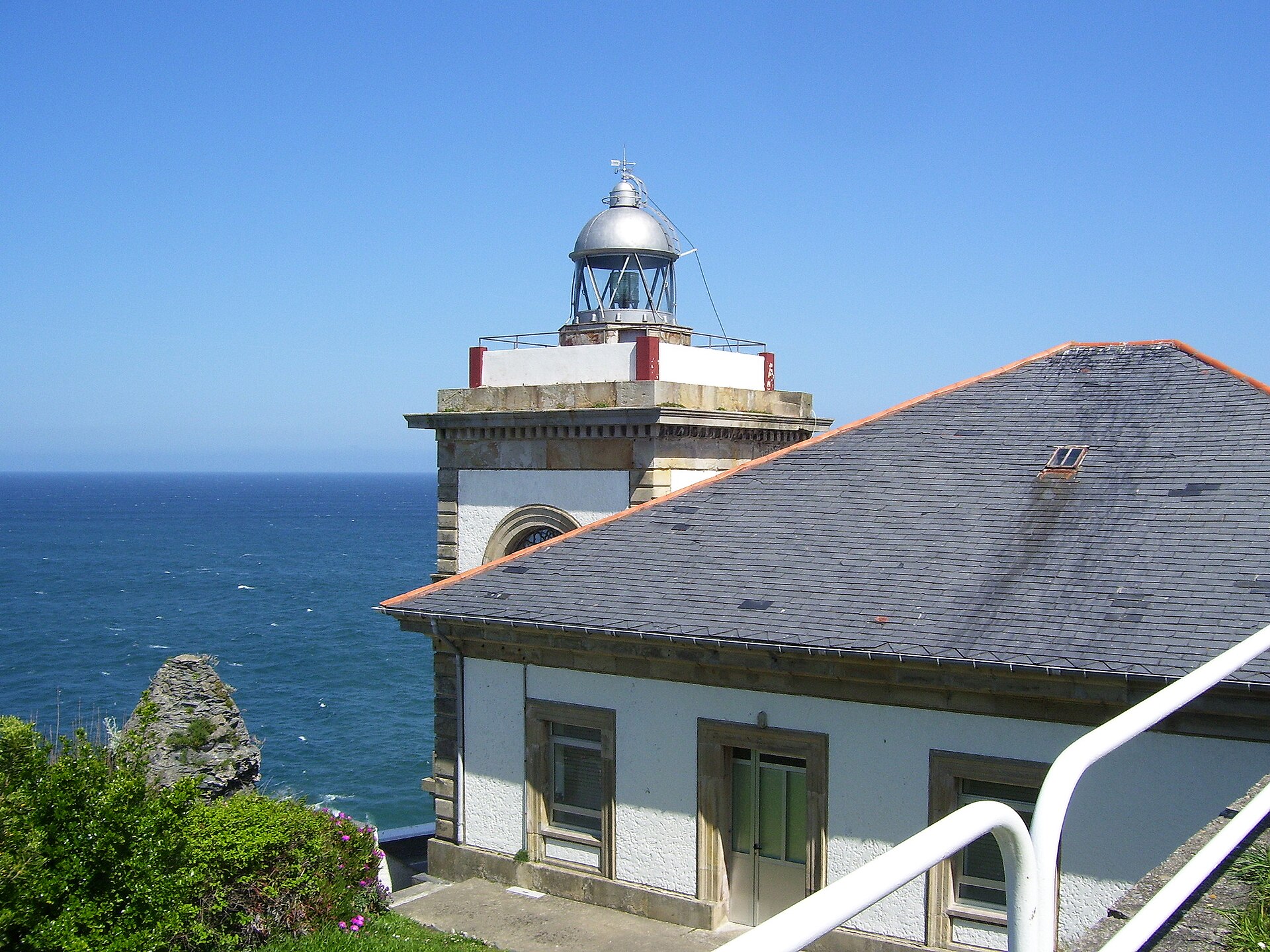
The main landmark on the headland is a lighthouse, the Faro de Cabo Busto, standing at the edge of the cliff and guiding ships along this rugged, exposed section of the Asturian shoreline. Around the lighthouse, open grassy ground gives way abruptly to steep cliffs dropping to the sea. On a clear day, the views stretch for kilometers in both directions — jagged rock formations, small coves, and the open Atlantic beyond.
The scenery is typical of the Asturian coast: high cliffs, strong sea winds, and low, wind-resistant vegetation adapted to salt spray. The spot is popular with photographers and travelers looking for a quieter alternative to the crowded beaches nearby in summer.
How do you get to Cabo Busto?
The headland lies within the municipality of Valdés, the same district that includes the well-known fishing town of Luarca. The easiest way to reach it is by car, following the local roads that trace the Asturian coastline — Cabo Busto sits along the route connecting Luarca and Cudillero. This stretch also forms part of the coastal walking paths that run along northern Spain's shoreline, used both by hikers following the Camino de Santiago del Norte and by visitors simply walking the coast.
Because the site is an open, unsheltered cliff with no buildings nearby, sturdy footwear and wind-resistant clothing are worth bringing, even in summer.
When is the best time to visit Cabo Busto?
The Asturian coast has an oceanic climate, with mild temperatures year-round and frequent rain, especially in autumn and winter. Late spring through summer (May to September) is the best window for a visit, with longer daylight hours and a better chance of clear conditions for taking in the views from the cliff. Even so, wind on the exposed headland can be strong at any time of year.
Early morning and late afternoon offer the softest light for photographing the lighthouse and cliffs, and sunsets over the Atlantic seen from the headland are one of the highlights of the spot.
What else is worth seeing nearby?
The municipality of Valdés, home to Cabo Busto, covers a long stretch of coastline with numerous beaches, cliffs, and small fishing harbors. Luarca, the municipal capital, is a picturesque port town known for its colorful houses and a hillside cemetery overlooking the harbor. In both directions from the headland, further viewpoints and sections of the coastal path make it easy to combine a visit to Cabo Busto with a longer walk along the shore.
Frequently asked questions
Is there an entrance fee for Cabo Busto? No, the headland is open natural terrain, freely accessible to everyone.
Can you go inside the lighthouse? The Faro de Cabo Busto is an operational lighthouse, generally not open for interior visits — the main draw is the view of the lighthouse and cliffs from outside.
Are there beaches nearby? Yes, the municipality of Valdés, along the entire coast between Cudillero and Luarca, has numerous beaches and coves reachable from local roads and footpaths.
Is the walk to the headland difficult? Reaching the viewpoint itself is easy, but the terrain is open and exposed to wind, so wind-resistant clothing is recommended even in summer.
Nearby places

Earn badges for the places you visit
Download NextOnTrip, discover new places and check off your trails.