About this place
Església de l'Assumpció de Xerta is the parish church standing on Plaça Major in Xerta, a small town in the Baix Ebre region of Catalonia. Listed as a Cultural Asset of Local Interest (Bé Cultural d'Interès Local), it remains the most prominent landmark in the town centre.
What is the history behind the church?
The first church in Xerta dates back to 1325, but as the parish grew, the original building could no longer keep up. In the 16th century, local authorities decided to erect a larger temple on the same site. Construction began in 1580 — a date confirmed by an inscription carved into one of the stone blocks on the old facade. The work took decades to finish, and the church was finally consecrated in 1628 by the Bishop of Barcelona, Joan Sentís. The main portal, one of the facade's most decorative features, was not completed until 1659. The church is dedicated to the Assumption of Mary, and some local sources also list Saint Martin as a co-patron of the parish.
What will you see inside?
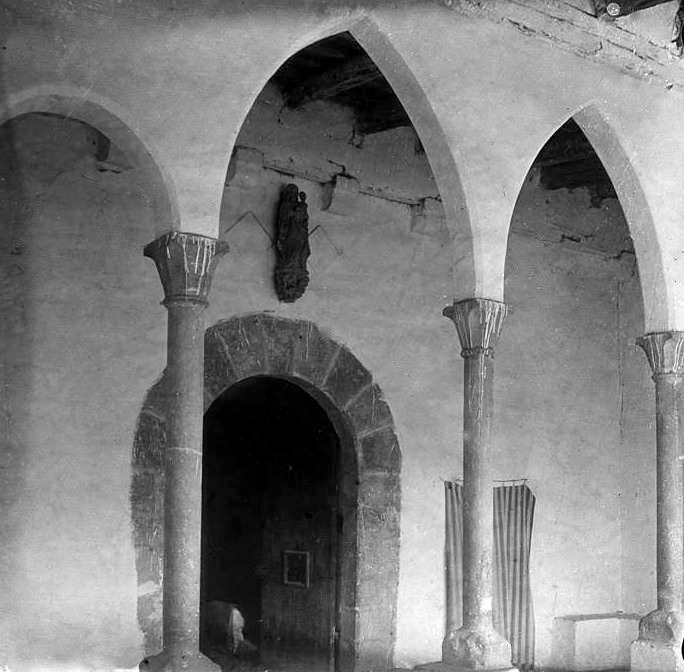
The interior is organised into two naves. The main, older nave is covered by a ribbed vault, a feature typical of Catalan religious architecture from this period. Four side chapels line each side of the nave, interconnected to form a continuous space for visitors to walk through. A second, smaller nave — known as the Chapel of the Holy Sacrament — was added in the 18th century and attaches directly to the main body of the church. This addition is a clear marker of how the building evolved over time, from its austere 16th-century core to the more ornate additions made a century later.
What stands out on the outside?
The most distinctive exterior feature is the bell tower at the foot of the church. Built in neo-Romanesque style, it stands out for its semi-circular arches framed by a moulded cornice. While the church itself dates from the 16th and 17th centuries, the tower is the result of a later remodelling, creating an interesting stylistic contrast between the older, plainer facade and the more decorative tower above it. Look closely at the stone blocks on the old part of the facade — one still bears the carved date of 1580, marking the start of the current building.
How do you get there and when should you visit?
The church sits right in the heart of Xerta, on Plaça Major, so it is impossible to miss while walking through town. Xerta itself lies in the Baix Ebre region, close to the Ebro river, making it a convenient stop on a route through the area's smaller towns. The building is best appreciated in daylight, when the details of the facade and tower are easiest to make out. Since this is still an active parish church, visitors should be mindful during Mass and other services, and it is worth checking opening hours for tourists in advance.
Frequently Asked Questions
Where does the church's name come from? The name refers to the church's dedication to the Assumption of Mary (Catalan "Assumpció"), one of the most common dedications for parish churches across Catalonia.
How old is the current building? The current church is over 400 years old — construction began in 1580 and it was consecrated in 1628. An earlier church stood on the same site as far back as 1325.
What is the most distinctive architectural feature? The combination of two naves — the older main one with its ribbed vault and eight side chapels, and the 18th-century Chapel of the Holy Sacrament — together with the neo-Romanesque bell tower at the base of the building.
Is the church legally protected? Yes, it is listed as a Cultural Asset of Local Interest (BCIL), which recognises its historical and architectural value to the region.
Nearby places

Earn badges for the places you visit
Download NextOnTrip, discover new places and check off your trails.