About this place
Ermita de Santa Teresa is one of the mountain hermitages scattered across the Serra de Cardó range, in the municipality of Benifallet, Tarragona province. It stands on a site that was once a remote Carmelite desert retreat and later a fashionable spa — today it's a stop on hiking routes through the rocky hills above the Ebro valley.
What is the history behind it?
In the early 17th century, the prior of the Tortosa convent, Jerónimo de la Asunción, asked the friar Pau de Crist to establish an isolated Carmelite community in the Cardó mountains. Construction began around 1604-1605, and a cluster of individual hermitages soon grew up around the central convent, each housing monks who lived apart from one another in prayer and ascetic withdrawal. The Ermita de Santa Teresa itself dates to 1612, built in the same wave as the hermitages of Sant Josep (1611), Àngel Custodi (1612), Sant Simeó l'Estilita (1612) and Sant Jeroni (1613). At its peak, the settlement counted fourteen such hermitages spread across the surrounding slopes.
The eremitic community lasted until 1835, when Spain's disentailment laws forced the dissolution of religious orders and the abandonment of the buildings. The convent and its hermitages sat in ruin for decades until 1866, when a spa opened on the site of the old convent, drawing on the area's mineral springs. The Balneario de Cardó operated on and off until 1967, and the site later served as a water-bottling plant until 2007.
What will you see there?
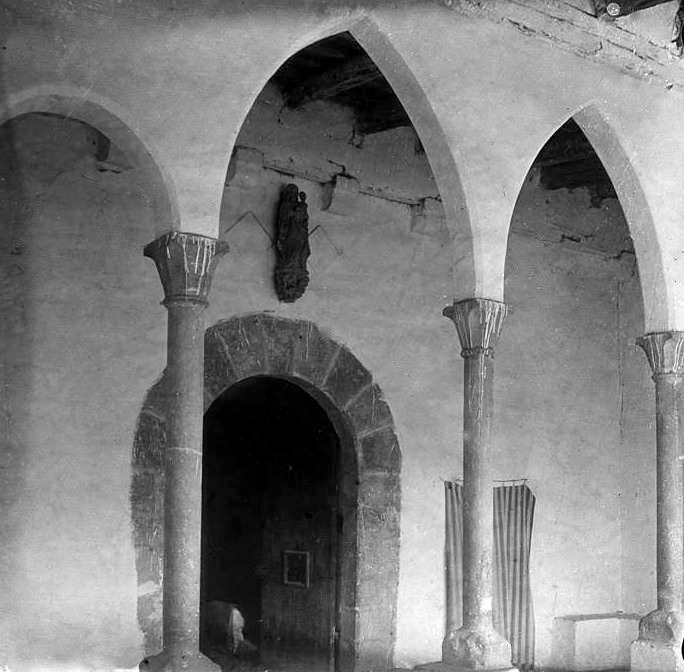
Ermita de Santa Teresa is one of the surviving structures — in varying states of preservation — from this sprawling hermitage complex. It sits amid the rugged, rocky terrain of the Serra de Cardó, close to the dramatic Salt del Frare cliff. Visiting it usually makes sense as part of a wider stop that includes the nearby convent and spa ruins, together forming an unusual landscape where centuries of monastic history meet a 19th-century fashion for therapeutic bathing.
How do you get there?
There's no road access to Ermita de Santa Teresa — it's reached exclusively on foot. The most common approach follows the marked "Les 14 ermites de Cardó" trail, which links most of the hermitages in the complex and typically starts from around Benifallet or the site of the old Cardó spa. The route crosses rocky, occasionally steep ground, so sturdy hiking shoes and water are worth bringing, especially in warmer months.
When is the best time to visit?
Given the rocky terrain and limited shade along much of the trail, spring and autumn offer the most comfortable hiking conditions. In summer, midday heat can make the walk demanding, so an early start is advisable. Winter hiking is possible, but it's worth checking the forecast beforehand, since the rocks can turn slippery after rain.
Frequently asked questions
Is Ermita de Santa Teresa still used for religious purposes? No — after the 1835 disentailment the hermitage lost its religious function and has remained an abandoned historic site ever since, open to visitors as part of the hiking trail.
Can this visit be combined with the other hermitages of Cardó? Yes, that's the usual approach — the "Les 14 ermites de Cardó" trail connects most of the surviving structures in the complex in a single outing.
Are there food or lodging options nearby? There's no tourist infrastructure right at the hermitage, so bring your own supplies. Benifallet, the nearest town, offers restaurants and accommodation to use as a base.
How long does it take to reach Ermita de Santa Teresa? It depends on the starting point and pace, but routes through the Serra de Cardó that take in the hermitages are generally measured in hours rather than minutes — plan for a full morning or day.
Nearby places

Earn badges for the places you visit
Download NextOnTrip, discover new places and check off your trails.