About this place
Capelles de Sant Zenó i la Mare de Déu del Pilar are two small wayside chapels on the main street of Xerta, a town in the Baix Ebre region of Catalonia. Both stand along Carrer Major and, despite having very different histories, together form one of the recognizable landmarks of the old town center.
Where are the chapels located?
The first chapel, dedicated to Sant Zenó, sits halfway along Carrer Major, built into the corner of a building. The second, dedicated to Mare de Déu del Pilar, stands at the far end of the same street. Because they're so close together, both can be visited in a few minutes while walking the main axis of old Xerta.
What will you see at the Sant Zenó chapel?
The entrance to the Sant Zenó chapel is closed by a semicircular arch, topped with a broken-line pediment. Above it sits a small bell tower housing a single bell — a modest but distinctive feature of the facade. Inside, a small altar holds a niche with the saint's image. The chapel still serves a devotional role for people living along the street.
What remains of the Mare de Déu del Pilar chapel?
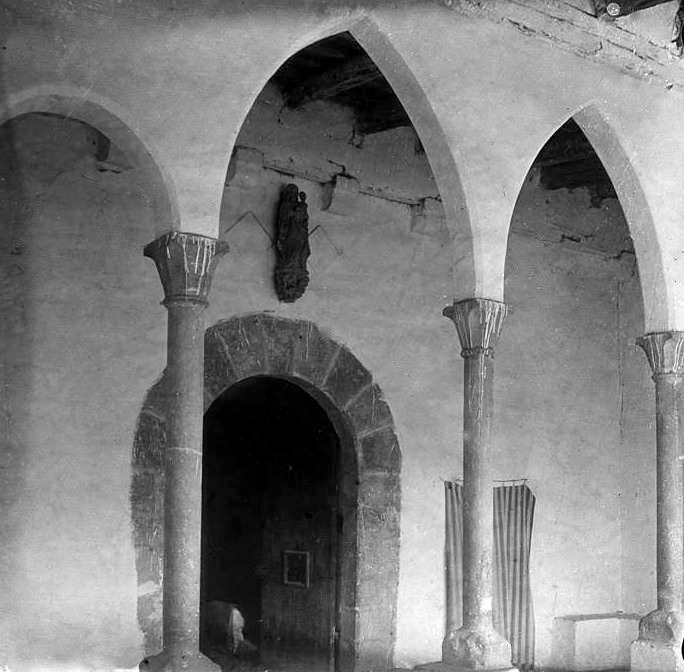
The second chapel has a more turbulent history. Only two arches of the original structure survive — the rest was destroyed during the Spanish Civil War (1936–1939). Above the main arch sits a niche holding an image of Mary, capped by a brick cornice with a broken line and protruding decorative elements. The whole composition is centered on the apex of the semicircular arch, giving it a certain symmetry despite the losses.
How do you get to the chapels?
Xerta lies in the Ebro valley, in the Baix Ebre region, not far from Tortosa. Both chapels sit right in the town center, on Carrer Major, so the easiest approach is to drive into Xerta and park near the center — the rest of the visit is on foot. It's an easy walk that pairs well with a look at the town's other landmarks, including the parish church.
When is the best time to visit?
The chapels sit in open street space rather than inside a museum, so there are no opening hours to work around — they can be seen year-round. Spring and autumn are the most comfortable seasons for a walk through Xerta, when temperatures in the Ebro valley are mild and the light brings out the detail in both the stone and brickwork. Summers in the region can get very hot, so it's worth avoiding the middle of the day if visiting then.
Why is this spot worth a stop?
Small as they are, both chapels are a record of local devotion and of Xerta's history — including the difficult period of the Civil War, whose effects are still visible in the surviving arches of the Mare de Déu del Pilar chapel. For anyone interested in small-scale religious architecture and the history of Catalan towns, this is a stop that fits naturally into a longer trip through Baix Ebre.
Frequently asked questions
Are the chapels one building or two? They are two separate, small religious structures — one dedicated to Sant Zenó, the other to Mary under the title Mare de Déu del Pilar — linked only by standing close together on the same street.
Is there an entrance fee? No, both chapels stand in public street space, so they can be seen for free at any time.
How long does a visit take? Given their small scale, walking between the two and taking in the architectural details usually takes about 15–20 minutes.
What happened to the Mare de Déu del Pilar chapel? Most of the original structure was destroyed during the Spanish Civil War (1936–1939); only two arches of the original building have survived to today.
Nearby places

Earn badges for the places you visit
Download NextOnTrip, discover new places and check off your trails.