About this place
Mare de Déu del Coll de l'Alba is a small hermitage set on a hilltop in the municipality of Tortosa, in the Catalan region of Baix Ebre. The site combines the role of a Marian shrine with that of a former lookout post over the Ebre valley.
Where exactly is the hermitage located?
The building stands on the ridge of the Serra del Coll de l'Alba, a hill rising to the east of Tortosa. This was once the route of the Roman road linking Tortosa to Tarragona, a branch of the Via Augusta. Thanks to its elevated position, the spot has served for centuries as a watch point over the Baix Ebre area — a role underlined by the ancient tower still standing right beside the chapel.
What is the history behind this place?
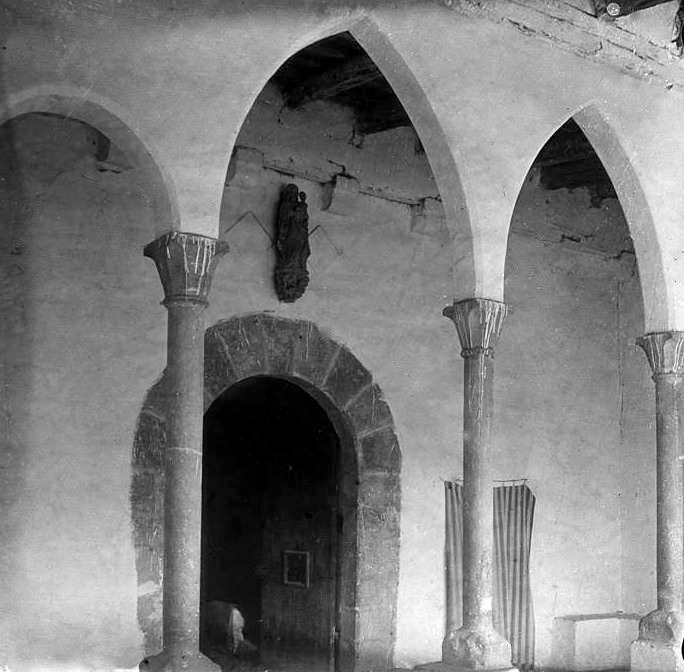
The first record of pilgrims visiting Coll de l'Alba dates to 1442, and the Gothic hermitage itself was built the following year, in 1443. In 1444, Tortosa assigned the site its first priest, tasked with celebrating Sunday Mass. In the 16th century, an atrium with a single arch was added to shelter pilgrims and travelers from the weather while stopping at the chapel.
Older documents refer to the site under several older names — Coll de l'Alma, Acma, or Acme — and the Virgin venerated here was also known under names such as Espasme or Espant before the current name, tied to the hill itself, became fixed.
Why is it worth visiting?
Beyond its historical and religious value, Coll de l'Alba is above all a viewpoint. From the terrace by the hermitage, visitors get a panorama over the Ebre delta, the river valley, and the Els Ports mountain range further inland. It's one of those spots where the flat delta landscape and the mountainous backdrop of the region appear in the same view.
The hermitage itself is modest in scale — not a monumental church, but the kind of intimate hilltop shrine typical of the Catalan countryside, where the architecture serves shelter and prayer rather than display.
Are there any traditional celebrations here?
Yes. Coll de l'Alba has for centuries been the destination of an annual pilgrimage held on the Monday after Pentecost, known locally as Dilluns de Pentecosta. On that day the hillside comes alive, as residents of Tortosa and the surrounding area walk up to take part in the service and celebrate together, making use of surroundings that stay quiet and secluded for the rest of the year.
How do you get to Coll de l'Alba?
Because of its ridge-top location, access is on foot via trails starting from around Tortosa; the site is also a waypoint on longer hiking routes that cross the hills surrounding the city. It's worth planning the visit with proper walking shoes, since the approach is a hillside hike rather than a casual stroll.
Frequently Asked Questions
What is Mare de Déu del Coll de l'Alba? It is a 15th-century Marian hermitage set on the Coll de l'Alba hill near Tortosa, which historically also served as a lookout point.
When was the hermitage built? The Gothic building dates to 1443, with the first documented pilgrimage recorded a year earlier, in 1442.
What can you see from the site? From Coll de l'Alba you get a panoramic view of the Ebre delta, the river valley, and the Els Ports mountain range.
Are there any religious celebrations held here? Yes, an annual pilgrimage takes place on the Monday after Pentecost, locally known as Dilluns de Pentecosta.
Nearby places

Earn badges for the places you visit
Download NextOnTrip, discover new places and check off your trails.