About this place
Escaladieu Abbey sits in the small commune of Bonnemazon, in the Hautes-Pyrénées department at the foot of the Pyrenees, right where the Arros and Luz rivers meet, a short distance from the Château de Mauvezin. Its name comes from the Latin "Scala Dei," meaning "stairway to God," a fitting label for a place that has drawn travelers and worshippers for nearly nine centuries.
What is the history behind the abbey?
A community of Cistercian monks settled here around 1140–1142, founding the abbey as a daughter house of Morimond, one of the four senior monasteries of the Cistercian order. The 13th century marked the high point of Cistercian expansion across Europe, and Escaladieu played its part in spreading the order's influence through the surrounding region. Because the site lay along a route toward Santiago de Compostela, it also served travelers walking the Way of St. James through the Pyrenean passes.
What does the abbey's architecture look like?
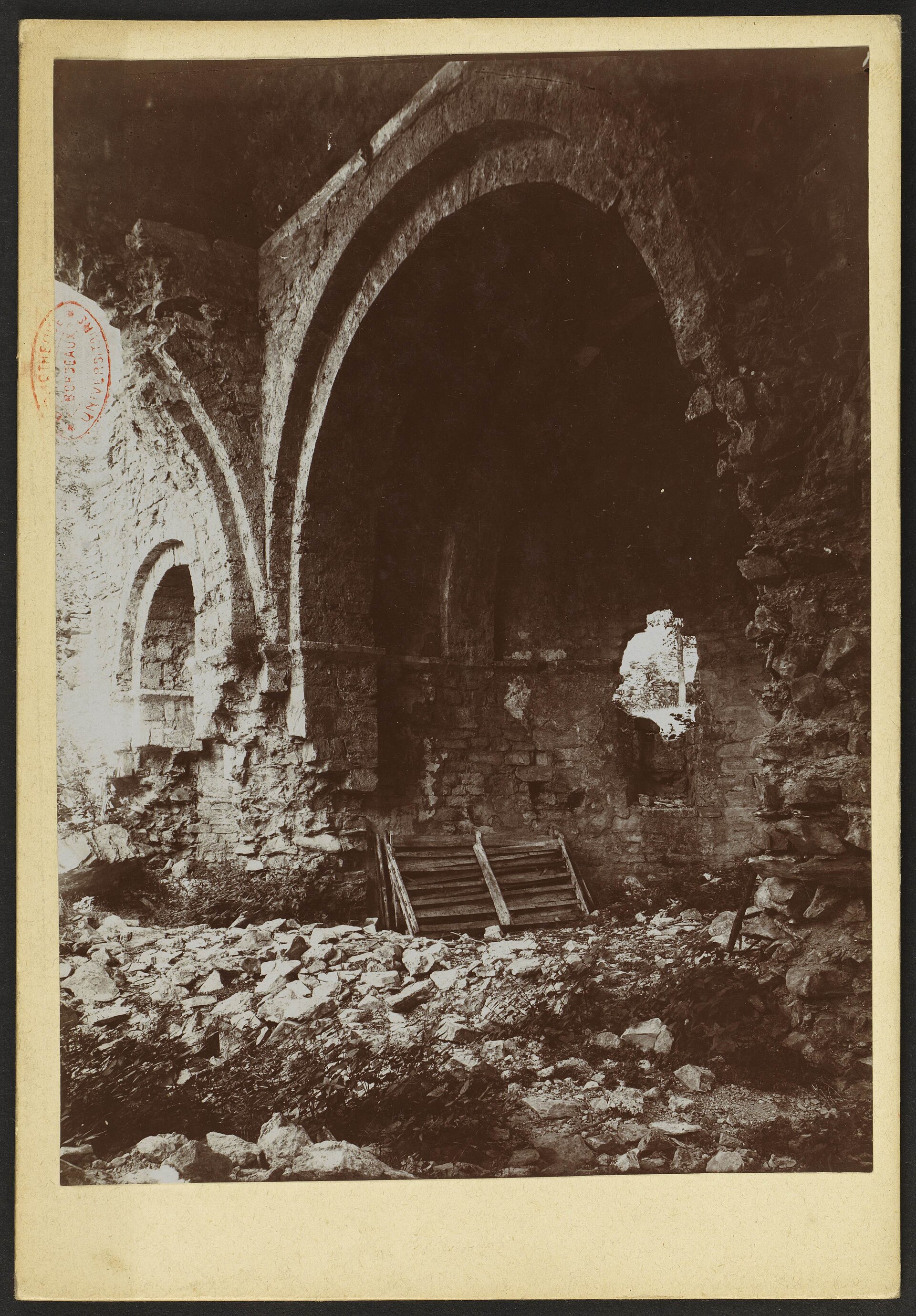
Escaladieu was built in keeping with Cistercian ideals: restraint, plainness, and an almost complete absence of ornament. The complex was laid out around a cloister that no longer survives, though the surrounding structure still traces the outline of monastic daily life. The abbey church has lost its choir and one bay of its nave, but it keeps the traditional east-facing orientation toward Jerusalem. What remains impresses through scale and austerity rather than decoration — a hallmark of Cistercian building.
Which room has survived best, and why does it matter?
The chapter house is the best-preserved space in the complex. Built on a square plan, it rests on four columns carved from Campan marble, each topped with a capital carved in the plant-motif style typical of Cistercian sculpture. This is where the monks gathered daily to discuss community matters and hear a reading from their rule — arguably the most intact record of monastic routine left at the site.
Who manages the abbey today, and how can visitors explore it?
Since 1997, the abbey has belonged to the departmental council of Hautes-Pyrénées, which has carried out a long-term restoration program on the site. The grounds cover roughly three hectares and include the abbey church, the chapter house, the former warming room, the monks' hall, and the gardens. Visitors can choose a self-guided or guided tour lasting about an hour, a shorter fifteen-minute visit, or family discovery packs designed to make the history accessible to children.
What cultural events take place at the abbey now?
Far from being a static ruin, Escaladieu hosts a full cultural calendar of concerts, exhibitions, plays, and talks. A music festival founded by pianist David Fray, who grew up in the Hautes-Pyrénées, brings performances to the abbey each year and ties its programming to disability-related causes. The site also hosts Horizons Numériques, a digital arts festival featuring interactive installations, virtual reality experiences, and concerts. Since 2010, Escaladieu has coordinated the European Route of Cistercian Abbeys, linking it with sister sites across the continent.
Frequently asked questions
Where exactly is Escaladieu Abbey located? In the commune of Bonnemazon, Hautes-Pyrénées, at the confluence of the Arros and Luz rivers, near the Château de Mauvezin.
When was the abbey founded? Around 1140–1142, as a daughter house of the Cistercian abbey of Morimond.
What is the best-preserved part of the abbey? The square chapter house, with its Campan marble columns, along with the church, which lost its choir but kept its original east-facing layout and austere design.
Does the abbey still host events? Yes — concerts, exhibitions and festivals, including a music festival founded by pianist David Fray and the Horizons Numériques digital arts festival.
Who runs the abbey today? The departmental council of Hautes-Pyrénées, which has owned and restored the site since 1997.
Nearby places

Earn badges for the places you visit
Download NextOnTrip, discover new places and check off your trails.