About this place
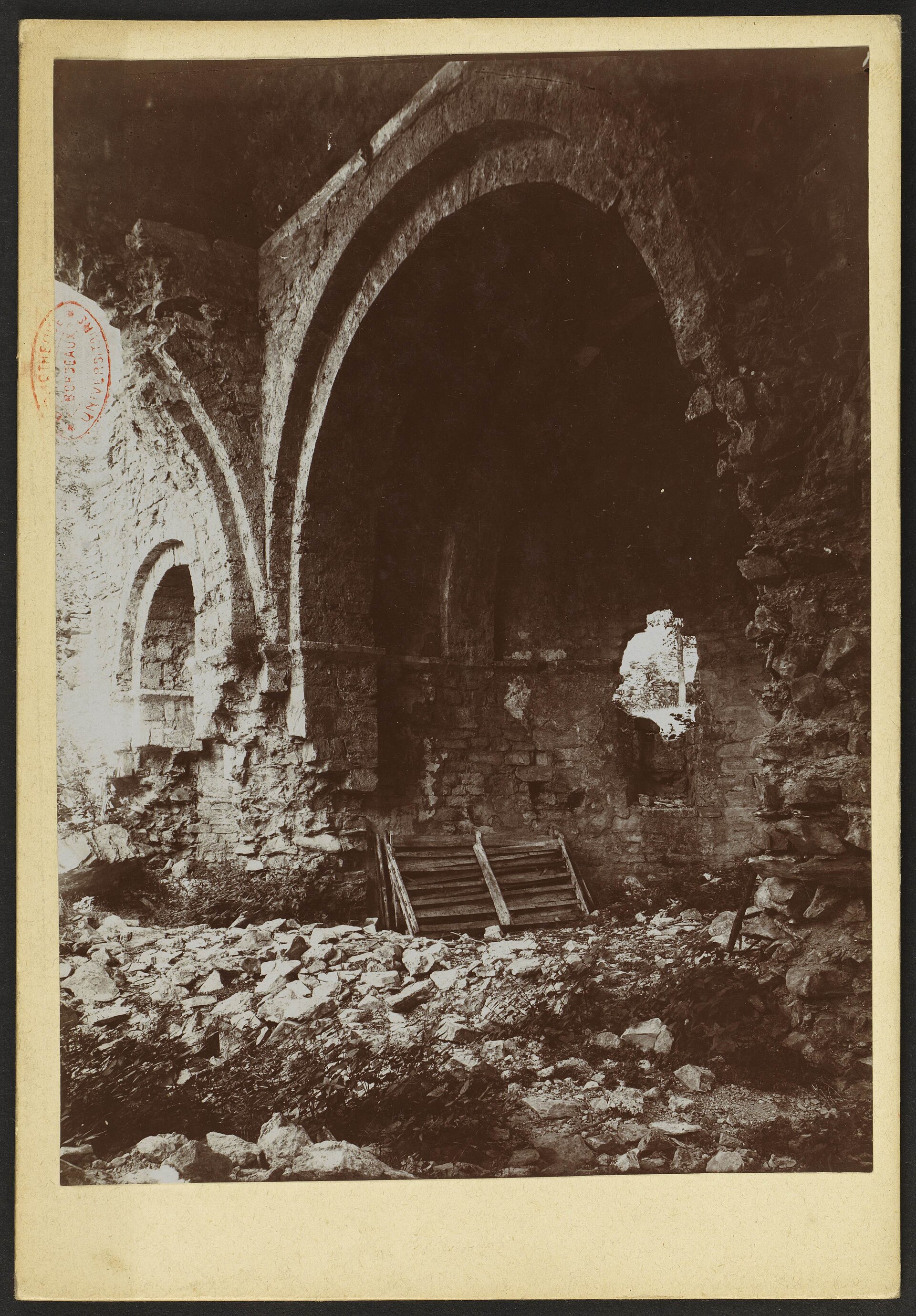
Prieuré de Saint-Orens-en-Lavedan is a ruined Benedictine priory tucked into a side valley of the Isaby stream, a few kilometres from the village of Villelongue in the Hautes-Pyrénées. Surrounded by meadow and woodland, it counts among the oldest traces of monastic life in the Lavedan region.
Where exactly is the priory?
The ruins sit in a spot known as Herrole, at a dead end of the Isaby valley, roughly three kilometres from the centre of Villelongue. That isolation was never accidental: sitting well away from the main travel routes shaped the whole course of the community's history, for better and for worse.
How did the site begin?
Local tradition traces the origins back to Saint Orens, who lived at the turn of the 4th and 5th centuries. He is said to have retired to this very valley as a hermit before later becoming bishop of Auch. His reputation for holiness took firm hold in the area, and a chapel was raised on the spot associated with him. The monastery itself is regarded as the oldest in the department, with a founding act attributed to the Countess of Bigorre and dated to the 9th century.
When was the community at its height?
The turning point came in 1064, when the community was affiliated with the Cluniac order and formally became a priory. Between the 11th and 13th centuries — its most active period — the church, cloister and conventual buildings took shape. The current abbey church itself replaced an older chapel at the close of the 11th century. This stretch is the high-water mark of the site's history, a time when the community had both the resources and the standing to build on a serious scale.
Why did the priory decline?
From that peak, the priory's influence gradually faded, largely to the benefit of the far more powerful abbey of Saint-Savin nearby, which sat closer to major routes and drew greater patronage and influence. The remote setting that once offered shelter became, over time, a disadvantage. A brief revival took place at the end of the 17th century, but it did not reverse the longer decline. The community was definitively abandoned before the French Revolution. Its movable furnishings were transferred to the parish church of Villelongue in 1786, and the buildings themselves were sold as national property in 1792, part of the wider secularisation of church assets during the revolutionary period.
What survives today, and who looks after it?
After decades of neglect, the fortunes of the ruins turned in the 1970s, when a local initiative — the forerunner of an association later dedicated to the valley's heritage — pushed for the site to be formally protected. The remains are now listed among France's monuments historiques, with that protection confirmed in 1983. The site today functions mainly as a place for a quiet walk through history rather than a restored, fully staffed visitor attraction.
Frequently asked questions
Can visitors walk around the ruins? Yes — the site is an open-air archaeological and historical location. Expect to walk among wall remains rather than tour a rebuilt, intact building.
How far is it from Villelongue? About three kilometres from the village centre, following the road that runs up the Isaby valley.
Why does this priory matter historically? It is considered one of the oldest monastic foundations in the Hautes-Pyrénées, with roots reaching back to the 9th century and a direct link to Saint Orens, later bishop of Auch.
Is the site legally protected? Yes, the remaining priory buildings are listed as monuments historiques, which guarantees them formal conservation status.
Nearby places

Earn badges for the places you visit
Download NextOnTrip, discover new places and check off your trails.