About this place
Église Saint-Jean is a former church in Bagnères-de-Bigorre, in the Hautes-Pyrénées department, whose surviving fragments still stand at the corner of rue Saint-Jean and rue des Thermes. Only the porch and its central portal remain of the original building, but that single architectural detail makes it one of the more rewarding historical stops in a town otherwise known for its thermal baths and winter sports.
How to get there?
The ruins sit right in the historic core of Bagnères-de-Bigorre, a short walk from the main thermal baths and the town's market square. Bagnères is easily reached by car from Tarbes (about 20 minutes) or from Lourdes, and a local bus network connects it with neighboring Pyrenean towns. Because the old town is compact, exploring on foot is by far the most practical option — it's worth parking on the edge of the center rather than trying to drive in.
What will you see?
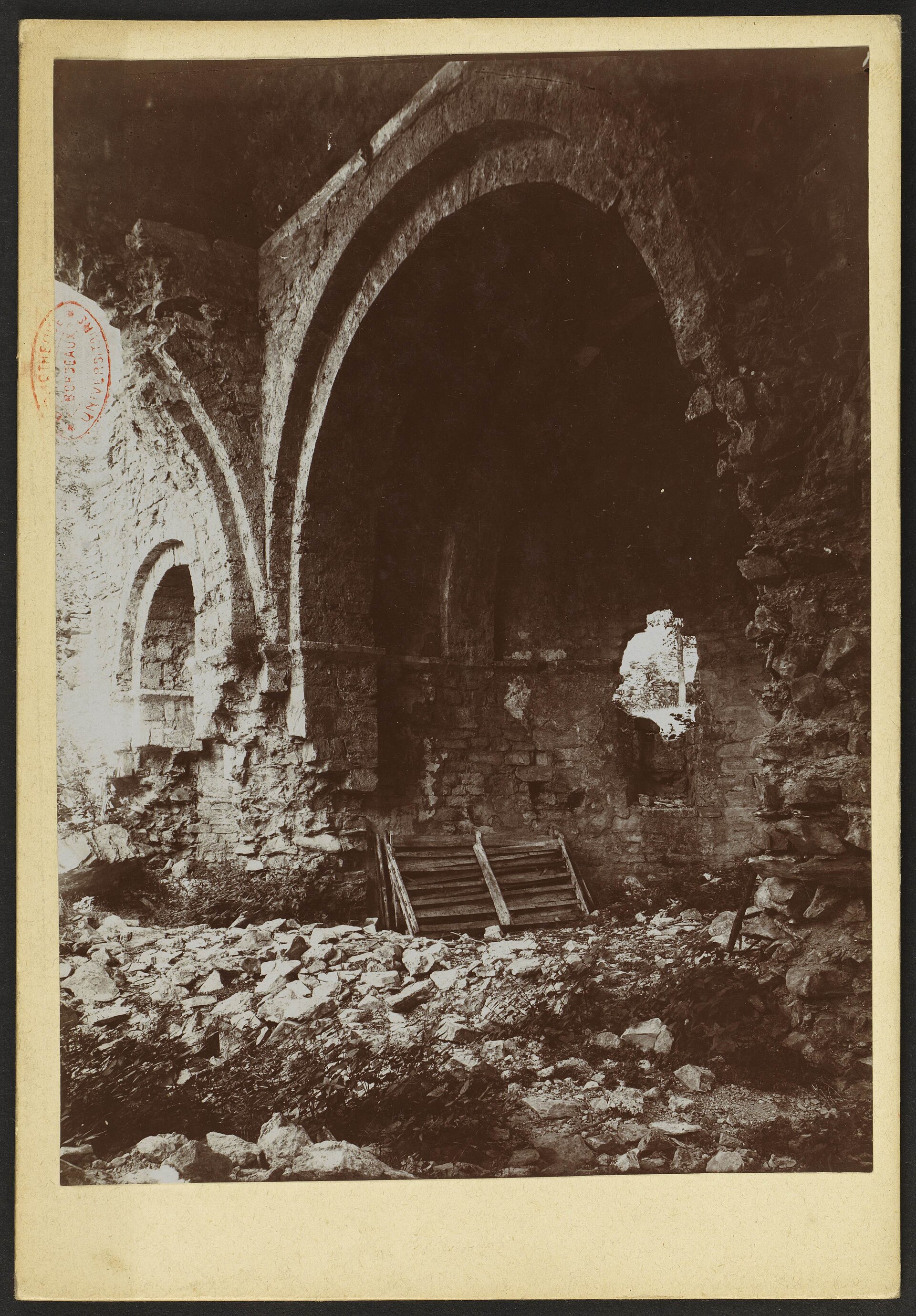
The church was built in Bagnères by the Hospitallers, the knights of the Order of Saint John of Jerusalem, toward the end of the 13th century, around 1280. After the French Revolution it lost its religious function and was for a time used as a theatre. The building's fate was sealed by a fire in 1901, after which only the portal survived — a structure valuable enough to be listed as a French historic monument in 1926.
The portal itself is a fine example of late Romanesque style with clear Gothic influence. It consists of two pointed-arch openings separated by a column, its capitals carved with large, stylized flowers in classic Romanesque fashion. Above the openings sits a tympanum bearing a Jerusalem cross set within an ornate circle, the whole composition crowned by a tall pointed arch. It's exactly this mix of Romanesque decorative detail with a Gothic pointed-arch structure that makes the portal worth a close look for anyone interested in the region's religious architecture.
Keep in mind there is no nave, no choir, and no interior to visit — what remains is strictly the façade and porch that survived both the centuries and the 1901 fire. A visit takes only a few minutes, but it pairs well with a longer walk through the old town, which holds other landmarks tied to Bagnères' long thermal-bathing tradition.
When to visit?
Since this is an open-air façade with no entrance fee or opening hours, it can be visited year-round, any time of day. The best light for photographing the portal's carved capitals comes on a sunny morning or late afternoon, when the low angle brings out the depth of the stonework. Spring and early autumn are comfortable seasons for combining this stop with the nearby thermal baths and Pyrenean trails, while summer tends to bring more visitors heading further into the mountains.
Frequently asked questions
Is there anything left of the church besides the portal? No — the 1901 fire destroyed the rest of the building. Only the porch and central portal survive today, and they were listed as a historic monument in 1926.
Who built the church, and when? It was built by the Hospitallers, the knights of the Order of Saint John of Jerusalem, around 1280, near the end of the 13th century.
Can you go inside? No, there is no interior left to visit — only the façade and portal remain, which can be admired from the street.
What architectural style does the portal represent? It's a late Romanesque work with Gothic touches: pointed Gothic-style arches combined with typically Romanesque capital carvings and a tympanum featuring a Jerusalem cross.
Nearby places

Earn badges for the places you visit
Download NextOnTrip, discover new places and check off your trails.