About this place
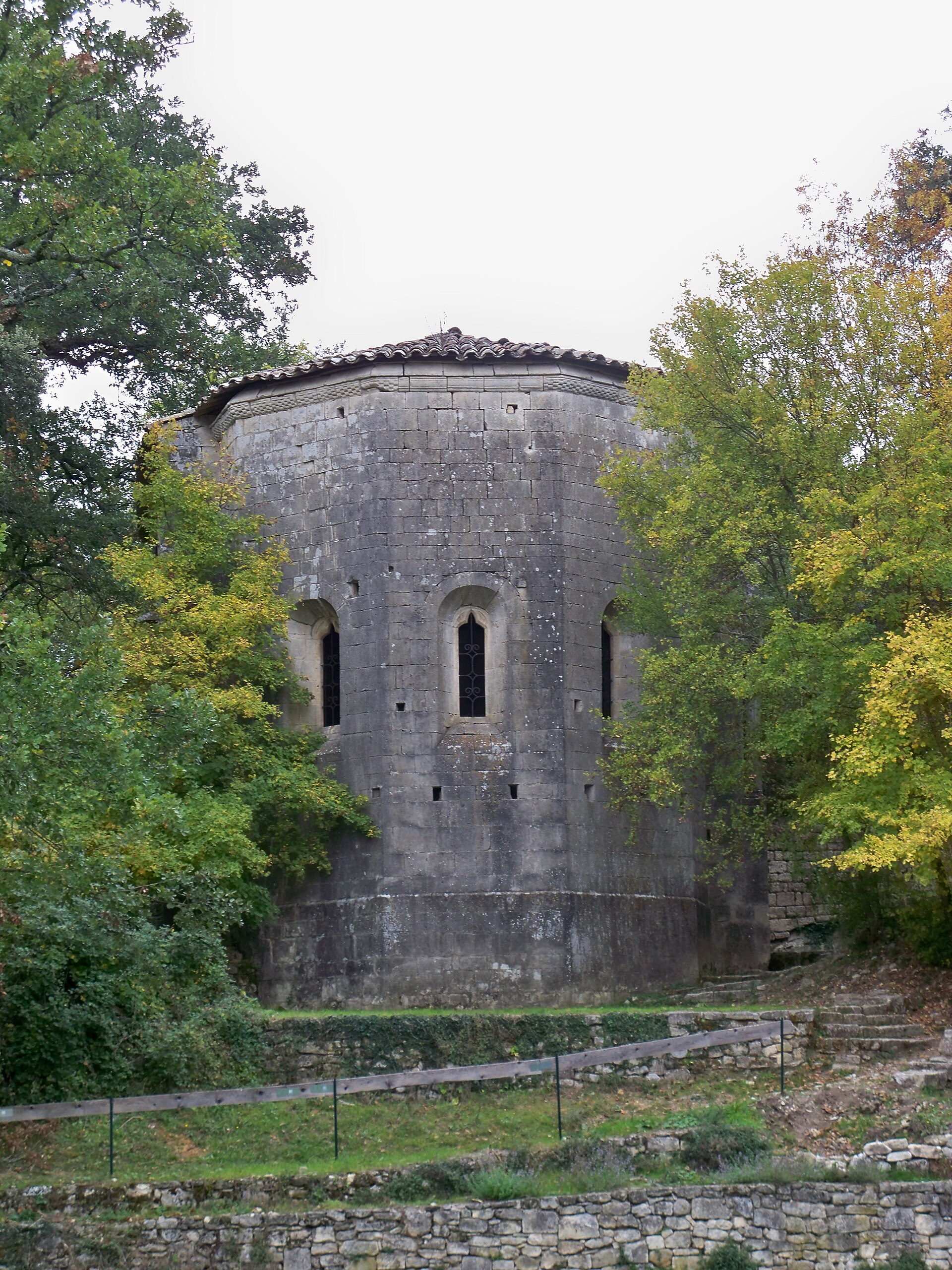
Église Notre-Dame-des-Aumades is the ruined medieval priory church standing on the plateau above Caseneuve, a small village in the Vaucluse département at the edge of the Luberon. The site overlooks the Calavon valley, close to the line once followed by the ancient Via Domitia, and it makes for an off-the-beaten-path stop for anyone touring the hill villages of the Luberon.
How do you get there?
Caseneuve sits a short drive from Apt, the main tourist hub of the Luberon. The priory ruins lie outside the village proper, on rising ground with views over the Calavon valley; visitors typically drive to the edge of the village and cover the final stretch on foot or along a local track. Because Caseneuve itself has little dedicated tourist infrastructure around the site, it works best as one stop on a longer day exploring nearby Luberon villages rather than a standalone destination.
What is the history behind the priory?
The earliest written trace of the site dates to 1103, recorded in the cartulary of the Abbey of Cluny. According to that charter, the property — previously belonging to the family of Dom Maïeul, the fourth abbot of Cluny — was handed over to Abbot Hugues of Cluny by Laugier d'Agoult, bishop of Apt. That transfer established the priory known in Latin records as Sancti Maria de Ulmatis.
The building itself was substantial for a rural priory: a nave of three bays under a broken barrel vault, a transept, and a choir closed by three apses — a layout typical of Cluniac churches of the period. Its fortunes did not hold. By the late 13th century the building was already reported in poor condition, and Cluniac statutes from 1312 warned that it risked collapse. Urgent repairs were ordered in 1315 but never carried out; the order's general chapter later noted that the house at Aumades was declining both spiritually and materially. The priory was finally abandoned in 1386.
What remains on site today?
The stone from the abandoned priory found a second life in the 19th century. Starting in 1840, at the initiative of the Oblate fathers of Notre-Dame de Lumières, villagers built a monumental oratory at the entrance to Caseneuve, intended to house a commemorative cross from a Franciscan mission led by Father Ricard. It was Ricard who persuaded local residents to dismantle the priory's triumphal arch to supply building material for the new oratory. As a result, what remains on the plateau today is mostly foundations and wall fragments, while part of the priory's original stonework effectively relocated to the village in the form of that oratory.
Visiting the site therefore means reading it as two connected chapters: the ruins above the Calavon valley, and the oratory in the village that was literally built from them.
When is the best time to visit?
Spring and autumn are the most comfortable seasons, when Luberon temperatures are mild and the paths around Caseneuve are pleasant for a slow walk with views over the Calavon valley. In summer the plateau is exposed and dry, which makes extended walking around the site less enjoyable.
Frequently asked questions
What exactly is the église Notre-Dame-des-Aumades? It is the ruined medieval church of a Cluniac priory, built on a plateau above the Calavon valley in the commune of Caseneuve and first documented in 1103.
Can you still see the original church architecture? Foundations and wall fragments of the nave and choir survive; much of the original building stone was reused in the 19th century for an oratory built in the village.
Why did the priory decline? Cluniac statutes recorded a worsening condition from the late 13th century onward; a repair ordered in 1315 was never completed, and the priory was abandoned in 1386.
What else should you pair with a visit here? The village of Caseneuve and the monumental oratory at its entrance, built from stone taken from the priory ruins, make a natural extension of the visit.
Nearby places

Earn badges for the places you visit
Download NextOnTrip, discover new places and check off your trails.