About this place
Abbaye Saint-Eusèbe de Saignon is a former Benedictine abbey standing on a low hill just east of the village of Saignon, in the heart of the Luberon massif, in the Vaucluse department of Provence. The isolated abbey church is reached along a country lane that winds past lavender fields and viewpoints over the Apt valley, making the site as much a scenic destination as a historical one.
Where is the abbey and how do you get there?
The building sits in open countryside away from the built-up part of Saignon, on ground high enough to take in views over the Calavon valley and the surrounding hills of the Luberon. The nearest town, Apt, is a short drive away. The final stretch to the abbey is usually covered on foot or by bike along a local track, which is how most visitors approach the site.
What is the history behind Saint-Eusèbe?
The ground on which the abbey stands mattered long before any monks arrived. Excavations have shown that a Roman-era residence belonging to the Fronton family stood here in the 2nd and 3rd centuries. A first monastic settlement is thought to have followed in the 8th century, and local tradition links its origin to a hermit remembered as Marin. That early community did not survive the unsettled centuries before the year 1000, when repeated raids across Provence left many such foundations in ruins.
Rebuilding began in the early 11th century under Robert de Vacaron, and the new church was originally dedicated to Saint Maurice and Saint Just. A turning point came in 1032, when Eldebert, lord of Saignon, handed the abbey over to the order of Saint-Gilles. Monks were then brought in by the abbot of Cluny, Saint Odilo, bringing the community into the Cluniac network. In 1096 the church was consecrated in person by Pope Urban II, a sign of how much standing the abbey had gained by that time.
Through the 12th century, Saint-Eusèbe reached its peak: priories across the dioceses of Apt, Cavaillon, Aix and Nice answered to it. Decline set in during the 15th century, when the abbey lost its independence and was reduced to a simple priory under the prince-bishops of Apt.
What makes the church's architecture distinctive?
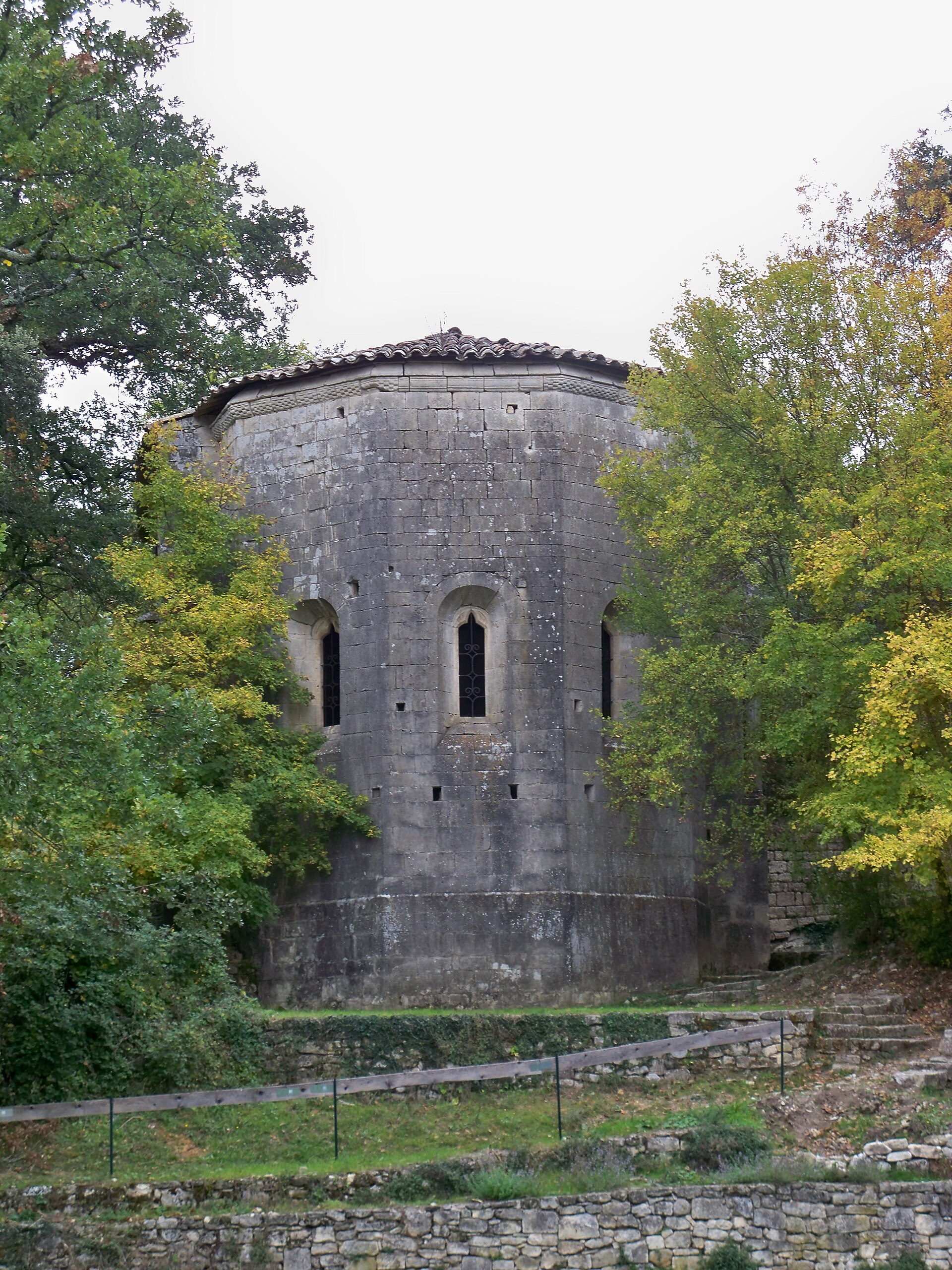
The abbey church counts among the few examples of Lombard Romanesque style found in Provence. This shows most clearly on the apse, where the exterior is decorated with the style's signature banding — vertical pilaster strips linked at the top by a row of small blind arches. This decorative scheme, common in northern Italian Romanesque building, is unusual in Provence, which is what draws visitors interested in medieval architecture to Saint-Eusèbe.
Can the abbey be visited today?
Of the original monastic buildings, only the church has survived. It served for a long stretch as a barn and is now privately owned, used as a venue for private events; its two vaulted stone Romanesque halls, covering roughly 300 square metres combined, are hired out for banquets and celebrations. Visiting in the usual tourist sense is therefore limited, and seeing the interior means arranging access with whoever manages the site.
Frequently asked questions
When was the abbey of Saint-Eusèbe founded? A monastic community already existed here in the 8th century, but most of the standing church dates from the rebuilding of the early 11th century and was consecrated in 1096.
Can visitors go inside the church? The building is privately owned and functions as an event venue, so access works differently from a standard open monument — it is worth checking availability before planning a visit.
What is the Lombard style visible on the apse? It is a decorative treatment typical of Romanesque architecture in northern Italy — vertical strips of masonry topped by a row of small arches — rarely found elsewhere in Provence.
How do you reach the abbey from Saignon or Apt? The abbey lies outside the village centre of Saignon, a short drive from Apt, with the last stretch of the route covered on foot or by bike along a local lane.
Nearby places

Earn badges for the places you visit
Download NextOnTrip, discover new places and check off your trails.