About this place
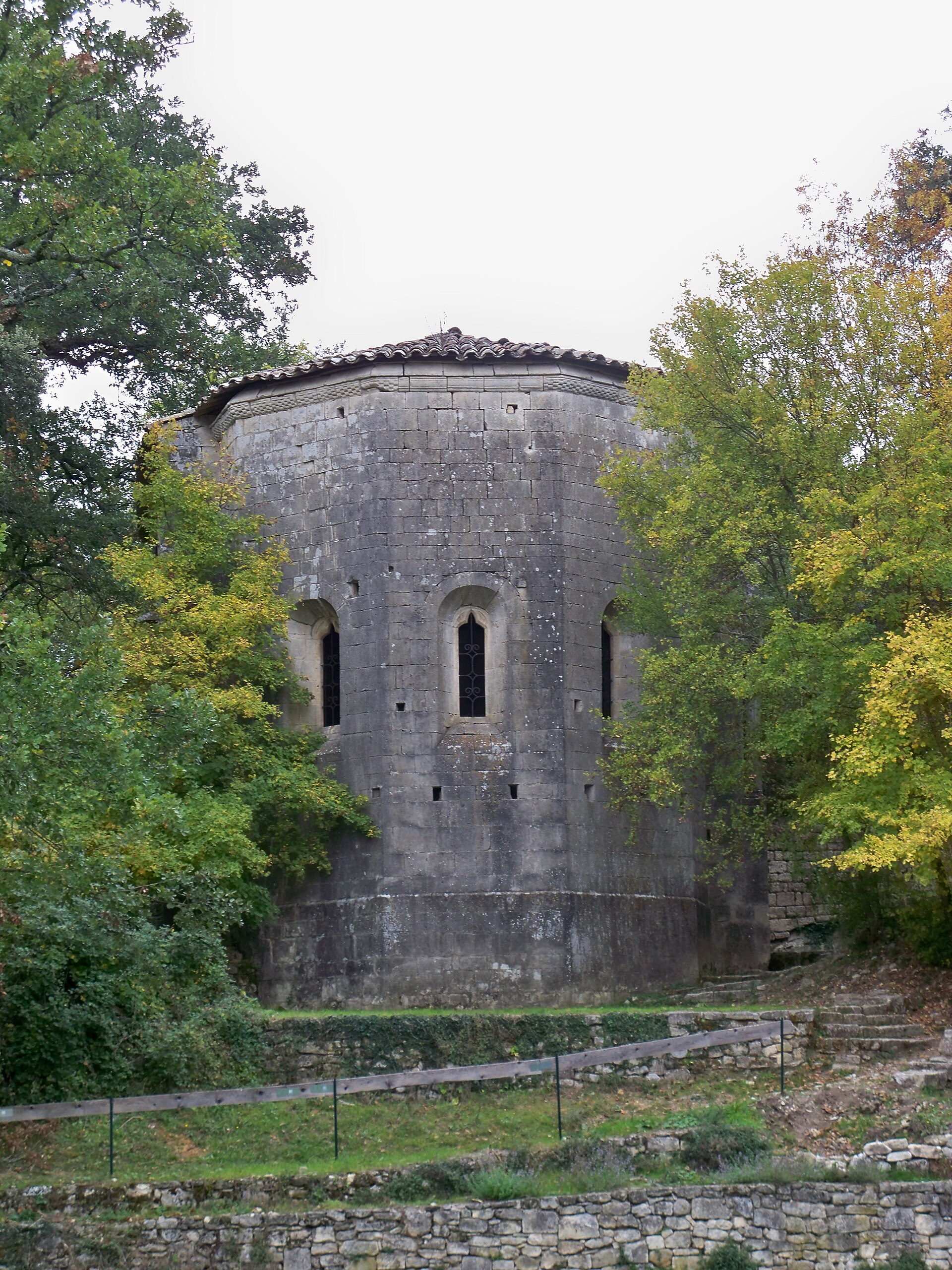
Prieuré de Saint-Symphorien is a former Benedictine priory in the commune of Bonnieux, at the heart of the Luberon massif in the Vaucluse department of Provence. Set apart from the village among vineyards and scrubland, it is best known for a twelfth-century Romanesque bell tower widely regarded as one of the finest in Provence.
Where exactly is the priory located?
The priory stands within the territory of Bonnieux, in a stretch of countryside typical of the Petit Luberon, surrounded by vines, olive groves and garrigue vegetation. Its coordinates are 43.822768, 5.358067. Because it sits away from any dense settlement, the site has kept the quiet, secluded feel it must have had when it was first founded.
How old is the site really?
The church building visible today was raised mainly during the 11th and 12th centuries, but the origins of the religious community here appear to reach further back. By cross-referencing charters from the abbey of Cluny with records from the church of Apt, historians narrowed down the window in which certain individuals named in an inscription could have lived at the same time - most likely between 955 and 961, which would place the earliest roots of the site in the second half of the 10th century. The oldest surviving written record, a donation charter from 1053, names two brothers, Pons and Ripert, who granted property to the priory following the earlier gift of their grandmother, Ingilrade. This points to a religious community already active here at the very start of the 11th century, with the 1053 document simply recording a later stage in its endowment.
Which larger institution did it depend on?
Saint-Symphorien operated as a dependency of the abbey of Saint-Victor in Marseille, one of the most influential monastic houses in medieval Provence. Such an arrangement meant the smaller priory was governed under the rule of the larger abbey while drawing on its wider economic and spiritual network.
What makes the bell tower so notable?
The site's standout feature is its freestanding 12th-century bell tower, which rises above the surrounding vegetation independently of the main church body. It is topped with a small, gently pitched square roof, and its walls are built from carefully dressed stone reinforced with substantial corner quoins. The precision of this stonework is why the tower is so often singled out as one of the more accomplished pieces of Romanesque architecture in the region.
Is the priory a protected historic monument?
Yes, and in two separate steps. The bell tower was listed as a historic monument on 10 November 1921, while the church itself was registered as a historic monument later, on 16 May 1949. Giving the tower its own, earlier protection underlines how much conservators valued it specifically, ahead of the rest of the building.
Who owns the priory today?
The site has been privately owned since 1980, when it was purchased by Daniel Vial. As private property, the priory is not automatically open for casual visits, and access to the interior should not be assumed without prior arrangement.
Frequently asked questions
Can visitors go inside the Prieuré de Saint-Symphorien? Since it has been privately owned since 1980, free access to the interior is not guaranteed - visitors should expect that viewing may be limited to the exterior.
Which abbey did the priory answer to? It was a dependency of the abbey of Saint-Victor in Marseille, one of the leading monastic centres of medieval Provence.
What is the priory's main highlight? Its isolated 12th-century stone bell tower, built with dressed stone and corner quoins, ranked among the finest Romanesque bell towers in Provence.
When was the site officially protected as a monument? The bell tower gained protected status in 1921, and the church followed in 1949 - two separate listings on the French register of historic monuments.
Nearby places

Earn badges for the places you visit
Download NextOnTrip, discover new places and check off your trails.