About this place
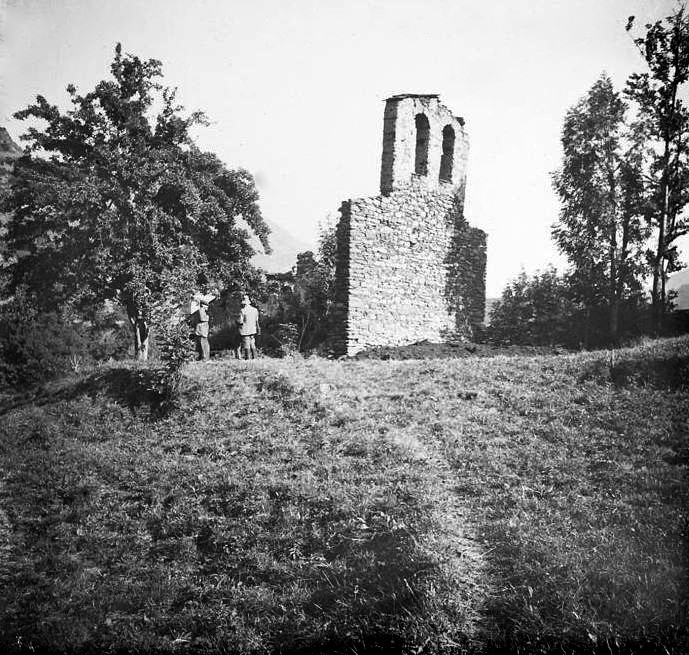
The Notre-Dame de Noguès church, also known as Notre-Dame du Clocher, is a small former place of worship standing apart from the village of Lescure, in the Ariège department of southern France. No longer used for religious services since the mid-19th century, it survives today as a quiet witness to centuries of local history.
How do you get there?
The church sits away from the main built-up area of Lescure, on a modest hilltop near the hamlet of Noguès (postcode 09420). It makes a rewarding short stop on a longer tour through Ariège, or a pleasant destination for a countryside walk — the surroundings are peaceful and green, and the approach on foot is part of the charm. The easiest way is to drive to the center of Lescure and continue from there on foot or by bike; the distance is short and the route runs through typical rural Ariège scenery.
What will you see?
The site's history goes back to the 12th century, when the church — once known as Notre-Dame Descoemps — is first documented. The building seen today largely reflects later changes: in the 17th or 18th century the single-nave structure was enlarged, with an apse featuring cut-off corners (pans coupés) added to close the east end, giving the church its distinctive, slightly irregular silhouette.
The most recognizable feature is the brick bell tower, square at its base and turning hexagonal above, rising over two levels. Inside, the ground floor of the tower still holds a pointed Gothic vault, considered one of the oldest and most valuable surviving elements of the whole complex.
The church was once ringed by an enclosed cemetery, in use until the early 20th century. Today the land and its surrounding walls form part of the protected monument: since 6 June 2012 the site has been listed as a Historic Monument in France. Ownership now rests with the municipality of Lescure, while the local association "Les Amis du Clocher de Noguès" (Friends of the Noguès Bell Tower) looks after its upkeep and promotion, having led restoration efforts over the years.
What stands out is the contrast between the building's modest, rural scale and the depth of history it holds — a compact example of the Romanesque-Gothic religious heritage found across Ariège, kept alive through community effort even after losing its original function.
When should you visit?
Given its outdoor, low-key character, spring and summer (May to September) are the best months to visit, when longer days and mild weather make walking the surrounding area especially pleasant. In autumn, the hills around Ariège take on extra color, adding to the visual appeal of a visit. Since the church is no longer an active place of worship and has no fixed opening hours, it's worth checking with the local association beforehand if you'd like to see the interior.
Frequently asked questions
Is the Notre-Dame de Noguès church still used for religious services? No — it served as a place of worship until the mid-19th century. It is now preserved purely as a historic and architectural monument.
How old is the church? The site is first documented in the 12th century, though the building visible today — particularly the nave and apse — dates mostly from later reconstructions in the 17th and 18th centuries.
What is the most valuable feature of the building? The two-story brick bell tower, which still contains a Gothic pointed vault on its ground floor, is considered the oldest and most significant surviving part of the complex.
Who takes care of the church today? The land and building belong to the municipality of Lescure, while the association "Les Amis du Clocher de Noguès" oversees its preservation and promotion.
Nearby places

Earn badges for the places you visit
Download NextOnTrip, discover new places and check off your trails.