About this place
Dvorac Zajezda is a Baroque manor house in the village of Zajezda, within the Budinščina municipality, at the heart of Hrvatsko Zagorje. It stands today as one of the region's more architecturally significant — yet badly neglected — noble residences, a remnant of the Patačić family's era and 18th-century craftsmanship.
What's the history behind the manor?
Zajezda served as the principal estate of the Patačić family, an old Croatian noble line that settled in Hrvatsko Zagorje from Bosnia in the early 16th century. The earliest known family member, Nikola Patačić, married Katarina Herkffy in 1536 and through her dowry acquired the Milengrad estate, also known as Zajezda. From that point on, the family adopted the predicate "de Zajezda," which they carried until the line died out.
The manor itself was built around 1740, though the exact construction date isn't precisely fixed — it's estimated based on the family record known as "Status familiae Patachich." The builder was Johann Fuchs, an architect from Styria, which makes the manor a notable early example of mature Baroque architecture in northern Croatia.
The building's fortunes changed dramatically in 1984, when an earthquake caused serious structural damage. Since then it has stood empty, fenced off and closed, slowly deteriorating. There's good news for its future, though: in 2026, funding of 400,000 euros was approved for documentation and structural-construction work as part of the manor's restoration.
What will you see there?
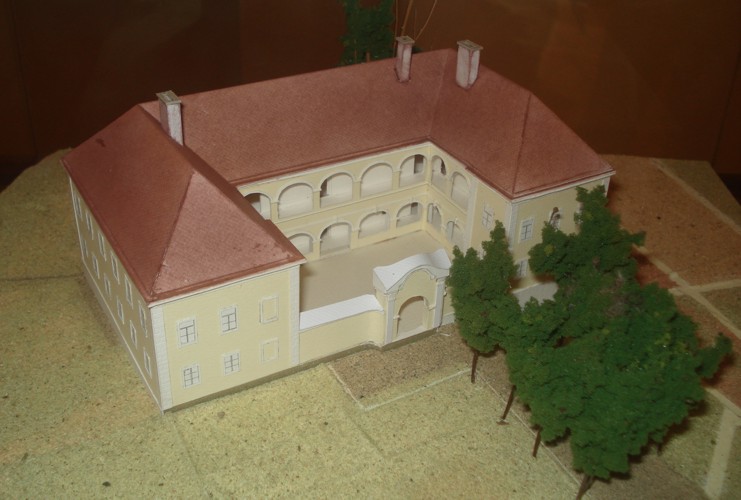
Dvorac Zajezda stands out for its unusual horseshoe-shaped, U-plan layout. Three wings of the building enclose an inner courtyard, while the fourth side is bounded by a wall with a gate portal. This kind of spatial arrangement was relatively rare in 18th-century Croatian residential architecture, underlining the manor's importance among the region's noble houses.
The building is currently closed and cannot be visited inside — it can only be viewed from outside, beyond the fence. Even so, it makes an impression: the monumental structure, despite visible damage, still reads clearly as Baroque and gives a sense of the grandeur the Patačić residence once held.
How do you get there?
The manor sits in the village of Zajezda, within the Budinščina municipality, in the Hrvatsko Zagorje region — an area known for its dense network of historic manors and castles, often explored along the so-called Zagorje castle route. The most convenient way to reach it is by car, using local roads connecting the towns and villages of Hrvatsko Zagorje. It's worth combining a visit here with stops at other, better-preserved residences in the region, which together paint a fuller picture of the local nobility's history.
When's the best time to visit?
Since the manor can only be viewed from the outside, a day with good visibility works best — spring, summer or early autumn, when the surrounding greenery adds to the scenery. Keep in mind that the interior isn't open to visitors, and the grounds around the building may be partly fenced off for safety reasons.
Frequently asked questions
Can you go inside the manor? No. The building is closed to visitors due to its poor structural condition following the 1984 earthquake.
Who built Dvorac Zajezda? The manor was built around 1740 for the Patačić family, designed by Styrian builder Johann Fuchs.
Will the manor be restored? In 2026, funding of 400,000 euros was approved for documentation and structural-construction work related to the building's restoration.
What makes this manor architecturally notable? Its horseshoe-shaped, U-plan layout, with three wings enclosing a courtyard and a walled fourth side featuring a gate portal — an unusual arrangement for 18th-century residential architecture in the region.
Nearby places

Earn badges for the places you visit
Download NextOnTrip, discover new places and check off your trails.