About this place
Hellenbach Castle is a Classicist manor hidden in an old park right next to Marija Bistrica, one of Croatia's most important pilgrimage towns. It is one of the rare Croatian manors where the same family has lived continuously since the mid-19th century, and the interior still carries the atmosphere of that era.
Where does the castle come from?
The building was completed in 1786 in the Classicist style, a date confirmed by an inscription found in the decorative stucco work inside. The estate's first owner was Count Petar Sermage. Through a series of family marriages, ownership later passed to the Keglević family and then to the Jelačić family. The turning point came in 1851, when Baron Lazar Hellenbach married Klotilde Jelačić — from that moment the estate took the Hellenbach name and has remained in the family's hands ever since.
What does the castle look like?
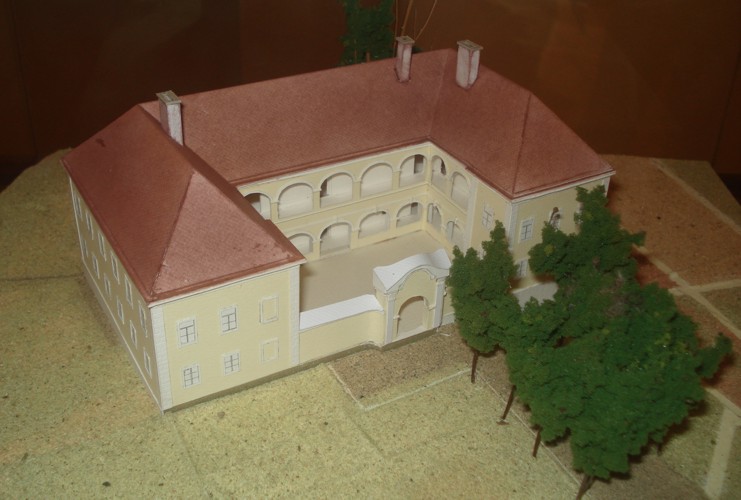
The building stands on a square floor plan, with rooms arranged symmetrically around a central ceremonial hall. This hall rises noticeably higher than the surrounding rooms and is lit basilica-style, through windows set in the upper part of the walls. The front façade is marked by four columns linked by a balustrade, carrying a tall architrave topped with a triangular pediment. Inside, the original Classicist stucco work has survived — garlands, festoons, architraves and pilasters — typical of elegant late-18th-century residential architecture.
What makes it special?
Hellenbach Castle is one of the few manors in Croatian Zagorje where both the continuity of habitation and the original 19th-century interior have been preserved intact — many neighboring residences changed function or fell into disrepair after the Second World War, while here time seems to have stood still. The building is listed as a protected cultural monument. It has also served as a filming location, appearing in the Croatian TV series "Vila Orhideja."
What about the park?
The castle is surrounded by a historic park laid out around the mid-19th century, covering just under 2 hectares (1.91 ha) and legally protected as a monument of park architecture since 1950. Several notable old trees stand out within it — linden, red beech, wild chestnut and plane trees — giving the grounds a fairy-tale, picturesque character.
Can you visit the castle and park?
Hellenbach Castle and its park are private property, and the Hellenbach family still lives there today, so this is not a site with regular visitor access or interiors open to the public. It is, however, worth seeing from the outside while walking around Marija Bistrica — the building's silhouette and the surrounding greenery are striking even viewed from beyond the fence.
How to get there?
The castle sits right next to Marija Bistrica, above the road leading toward Zlatar Bistrica, in the Zagorje region northwest of Zagreb. The easiest way to reach it is by car — Marija Bistrica has good road connections to Zagreb and the surrounding towns of Zagorje, and the castle itself lies a short distance from the town center and its famous Marian shrine.
When to visit?
Since the castle is mainly seen from the outside, spring, summer and early autumn are the best times to come, when the park looks its most picturesque and the old trees are in full leaf. It is worth combining a visit with a stop at the shrine in Marija Bistrica and the other cultural attractions of the Zagorje region.
Frequently Asked Questions
When was Hellenbach Castle built? In 1786, in the Classicist style — a date established from decorative stucco work found inside the building.
Can you go inside the castle? No — the castle and its park are the private property of the Hellenbach family, who still live there, so the interior is not open to visitors.
Where does the name Hellenbach come from? From Baron Lazar Hellenbach, who married Klotilde Jelačić in 1851 and thereby came into possession of the estate.
What is special about the park surrounding the castle? It is a protected monument of park architecture (since 1950) covering 1.91 ha, home to old trees such as linden, red beech, wild chestnut and plane trees.
Nearby places

Earn badges for the places you visit
Download NextOnTrip, discover new places and check off your trails.