About this place
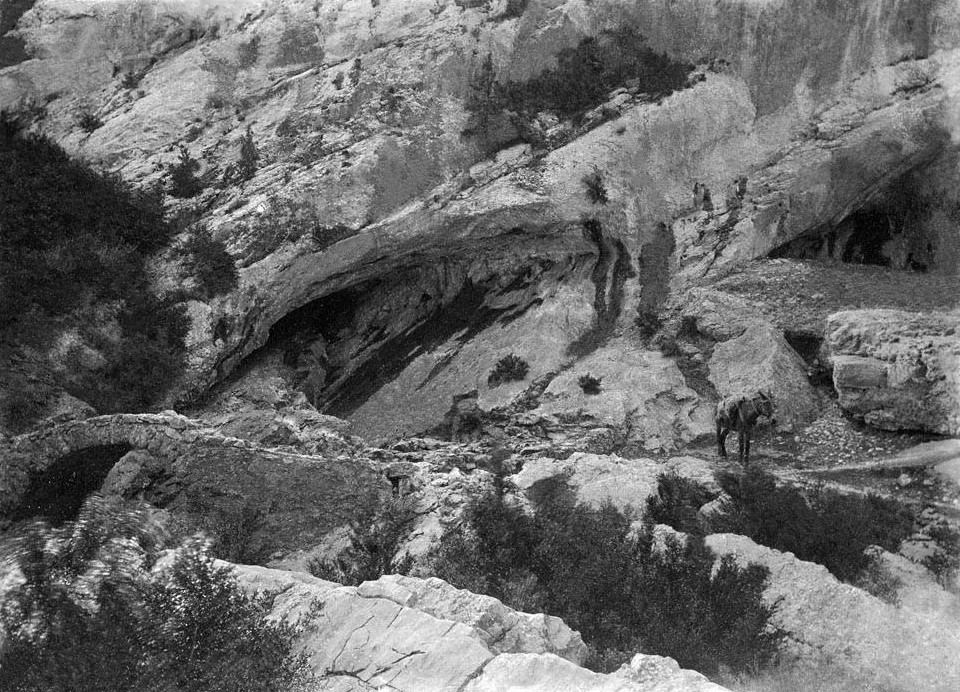
Cova dels Muricecs is a cave and archaeological site in the municipality of Llimiana, in the Pallars Jussà region of Catalonia, Spain. Carved into limestone, it opens onto the wall of the Congost de Terradets gorge, just above the Noguera Pallaresa river and close to a small hydroelectric plant. Few sites pack together two such different reasons to visit — deep human prehistory and a living bat colony.
Where does the name come from?
The cave takes its name from the Catalan word "muricecs" (in some local dialects, "ratpenats"), meaning bats. Bats have lived inside the cave for centuries, and researchers have confirmed the presence of three threatened species today: the greater mouse-eared bat, the Mediterranean horseshoe bat, and the long-fingered bat. Their protection is the main reason the cave's opening hours are restricted.
What will you actually see inside?
The cave itself runs for roughly 390 metres of passages with about 20 metres of elevation change, shaped in limestone over thousands of years. But the rock formations are only part of the story: Cova dels Muricecs is one of the more significant archaeological sites in this part of Catalonia. Excavations have uncovered layers reaching back to the Middle Palaeolithic, including Mousterian material linked to Neanderthal occupation, alongside remains from the Bronze Age — among them pit structures — and the Iron Age. Traces of hearths and tools show the cave was used by different groups across an unusually long span of time, making it a key source for understanding early settlement along the Noguera Pallaresa valley.
How do you get there, and when can you visit?
The cave sits within the municipality of Llimiana, inside the Terradets gorge, easily reached from the main roads through Pallars Jussà. To protect the bat colony, the cave is closed to visitors every year from 15 May to 15 October — the period when the bats raise their young and are most sensitive to disturbance. Visits are possible from 16 October to 14 May, and only as guided tours run by the local organisation managing access to the site. Booking ahead is worthwhile, since group sizes on each tour are limited.
Who is this cave for?
Cova dels Muricecs suits travellers interested in prehistory, geology, and wildlife — particularly anyone keen on bat-watching or the early human history of the Iberian Peninsula. It also works well as a lower-key, educational stop for anyone exploring the hiking trails of Pallars Jussà.
Frequently asked questions
Can the cave be visited all year round? No. Cova dels Muricecs is closed from 15 May to 15 October to protect the bat colony during breeding season. Visits run from 16 October to 14 May.
Do you need a guide? Yes, independent access isn't allowed — the cave can only be visited as part of an organised, guided group tour.
What makes this cave stand out? The combination of two things rarely found together: a significant archaeological record spanning the Middle Palaeolithic to the Iron Age, and an active colony of three threatened bat species.
Is the visit physically demanding? The route covers about 390 metres of passages with a 20-metre elevation change — a modest cave that most visitors in reasonable shape can manage, though comfortable footwear is recommended.
Nearby places

Earn badges for the places you visit
Download NextOnTrip, discover new places and check off your trails.