About this place
Cova dels Tres Forats is a small rock shelter in the municipality of Castell de Mur, in the Pallars Jussà county of Catalonia, within the Montsec d'Ares range of the Pre-Pyrenees. It sits at roughly 630 metres above sea level, close to the village of Cellers, along the C-13 road heading toward Tremp.
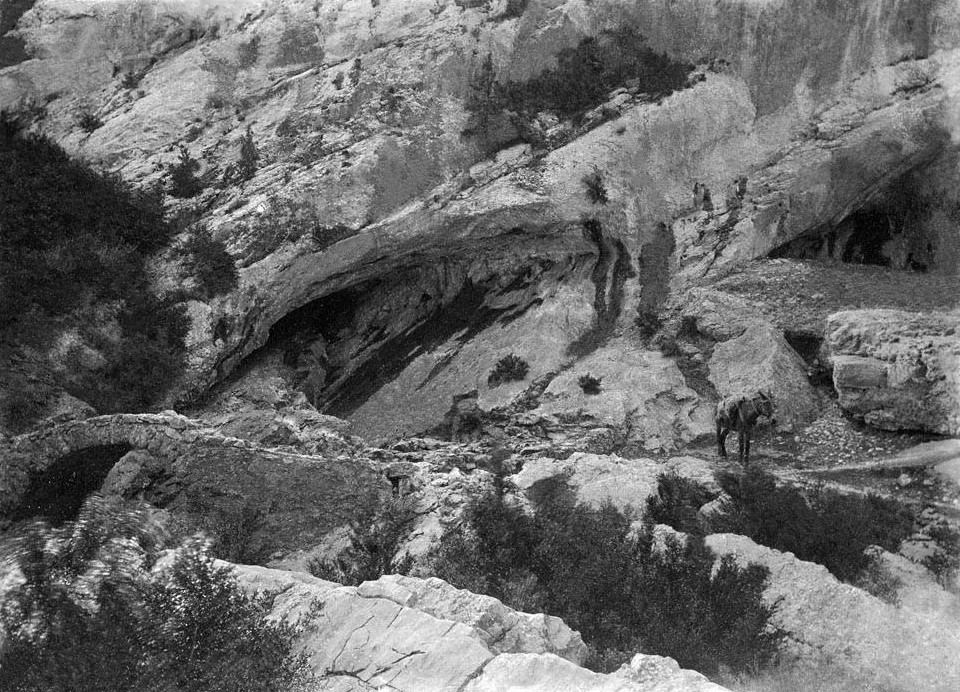
The name translates to "Cave of the Three Holes," a reference to three openings visible in the rock face of the shelter. From the outside they look like entrances to a deep cave system, but none of them actually leads far: the whole feature measures only about 7 metres in length, with essentially no change in elevation. It's better described as a rock overhang than a cave to be explored underground.
How do you get there?
The starting point is the C-13 road around kilometre 74, just before the Hostal del Llac inn near Cellers. From there, a track passes beneath a railway embankment before climbing toward a ridge. The final stretch is a narrow trail, partly overgrown, where you may need to push through vegetation — sturdy trekking shoes and long trousers are a sensible choice. The approach isn't marked like a standard hiking route, so carrying a map or GPS device is worthwhile.
What will you see?
The main feature is a wide rock shelter, roughly 30 metres across, carved into a limestone cliff of the Montsec d'Ares. Its face shows three openings, each 2 to 3 metres deep, which give the site its name — though none opens into a larger chamber network. The rock is limestone, typical of the karst formations found throughout this stretch of the Pre-Pyrenees.
The place also carries some history. Local tradition holds that during the Spanish Civil War (1936–1939), residents of Cellers used the shelter to hide from the fighting. It was formally surveyed by members of the ERE-AEC speleological society during Easter week of 1956, with archaeologist Dr. Eduard Ripoll of the Archaeological Museum taking part in the exploration — suggesting the site may also hold some significance for research into the area's earlier human occupation.
When should you visit?
Given the rocky, partly overgrown terrain, spring and autumn are the best seasons, when temperatures in Pallars Jussà are mild and vegetation hasn't grown as dense as it does in midsummer. In summer, the exposed rock can heat up considerably, and thick undergrowth makes the final stretch of the approach harder to walk. In winter, it's worth checking conditions beforehand, since the mountainous Pre-Pyrenean terrain can become trickier to cross.
Frequently asked questions
Do you need caving experience to visit? No — Cova dels Tres Forats is a rock shelter, not an underground system requiring caving gear. Sturdy footwear and some care on the overgrown final stretch of the path are enough.
How long does the walk from the C-13 take? The route is short but climbs uphill and partly through vegetation, so the approach typically takes 20 to 40 minutes depending on pace and season.
Are there archaeological traces inside the shelter? The 1956 exploration, which included archaeologist Dr. Eduard Ripoll, points to possible research interest in the site, though detailed findings from that work aren't widely documented.
Is the site lit or set up for visitors? No, it's a natural feature with no tourist infrastructure — no lighting, handrails, or marked paths inside the shelter itself.
Nearby places

Earn badges for the places you visit
Download NextOnTrip, discover new places and check off your trails.