- Sacred Monuments
- Religious monuments
Couvent des Capucins de Château-Thierry
About this place
Couvent des Capucins de Château-Thierry, the former Capuchin convent, stands in Château-Thierry, in the Aisne department of northern France. Over more than four centuries the building has changed hands and purposes several times — moving from a religious house to a cotton mill, a private residence and finally a well-known school — and it now carries protected heritage status.
When was the Capuchin convent founded?
The provincial chapter of the Capuchin order approved the establishment of a house in Château-Thierry in 1609. The actual settlement of the friars took longer to arrive: on 23 April 1623, a solemn ceremony saw a cross planted in the suburb near the Marne river, marking the symbolic start of the Capuchins' presence in the town. The convent chapel was consecrated in 1626 by the Bishop of Soissons, Simon Legras, and it is likely that the surrounding conventual buildings went up around the same time or shortly after.
What does the building look like?
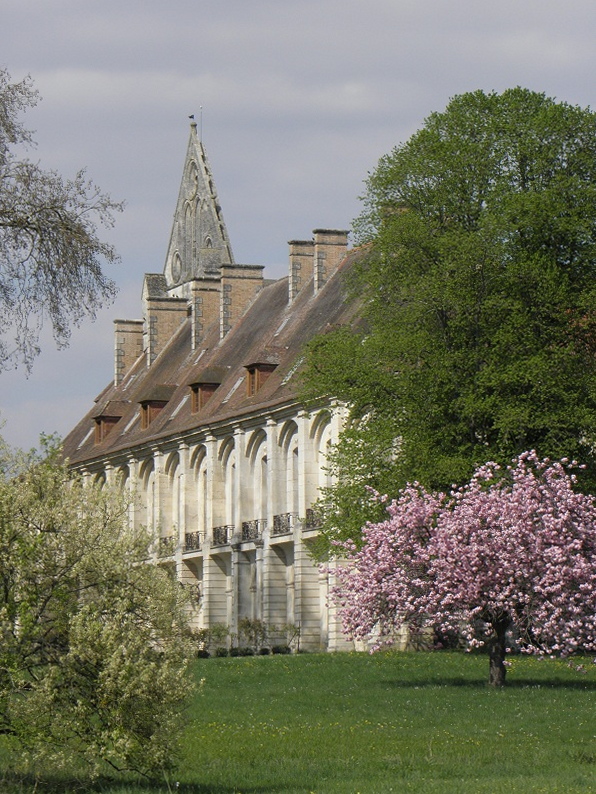
The convent follows a U-shaped layout: a chapel and two rectangular ranges are arranged around a central courtyard, with two circular pavilions marking the entrance. This kind of plan, common to Capuchin houses of the period, kept the sacred space of the chapel separate from the friars' living and working quarters.
How did the site survive the French Revolution?
The Revolution ended the convent's original purpose. On 13 February 1790, the Constituent Assembly abolished religious vows and suppressed monastic congregations, forcing the Capuchin community in Château-Thierry to disband. The property was seized as national property and sold to a buyer named Louis Marie Marion Brillantais, with the sale formally completed in 1797. From 1818, through the second quarter of the 19th century, the former convent housed a cotton mill. It later served as a private residence before being leased in 1891 to the Brothers of the Christian Schools, who ran a boarding school there. Between 1896 and 1899 the Brothers added a new wing designed by architect Philippe Jolivald; that addition no longer survives.
Is there a link to Jean de La Fontaine?
Château-Thierry is the birthplace of the fabulist Jean de La Fontaine, and the former convent is where that connection was later given institutional form. The municipality bought the buildings in 1906, and the following year the Collège Jean de la Fontaine — a school named after the town's famous native son — moved into the site. It operated there as a secondary school and then a lycée until 1974, when the lycée relocated to modern premises on higher ground in the town. The secondary school that remained on the convent site is known today as the Collège Jean Racine. The link to La Fontaine, then, is not a matter of him having lived or stayed at the convent — it comes from the building later housing a school that carried his name in honor of the poet born in the same town.
What is the site used for today?
The former convent is protected as a monument historique, having been listed in 1988. It remains part of Château-Thierry's educational infrastructure, and its historic fabric — the chapel, the two ranges around the courtyard and the circular entrance pavilions — still lets visitors read the original 17th-century layout of the religious house.
Frequently asked questions
When was the Capuchin convent in Château-Thierry established? Approval for its founding came in 1609, the friars' arrival was marked symbolically in 1623, and the chapel was consecrated in 1626.
What happened to the convent after the French Revolution? The community was suppressed in 1790 and the property sold as national property. It later held a cotton mill, then a private residence, and from 1891 a boarding school run by the Brothers of the Christian Schools.
Did Jean de La Fontaine ever live at this convent? No — the connection is through the school's name. From 1907, the former convent housed the Collège Jean de la Fontaine, honoring the poet born in Château-Thierry, rather than marking any personal stay of his at the site.
Is the building a protected monument today? Yes, the former Capuchin convent was listed as a monument historique in 1988.
Nearby places

Earn badges for the places you visit
Download NextOnTrip, discover new places and check off your trails.