About this place
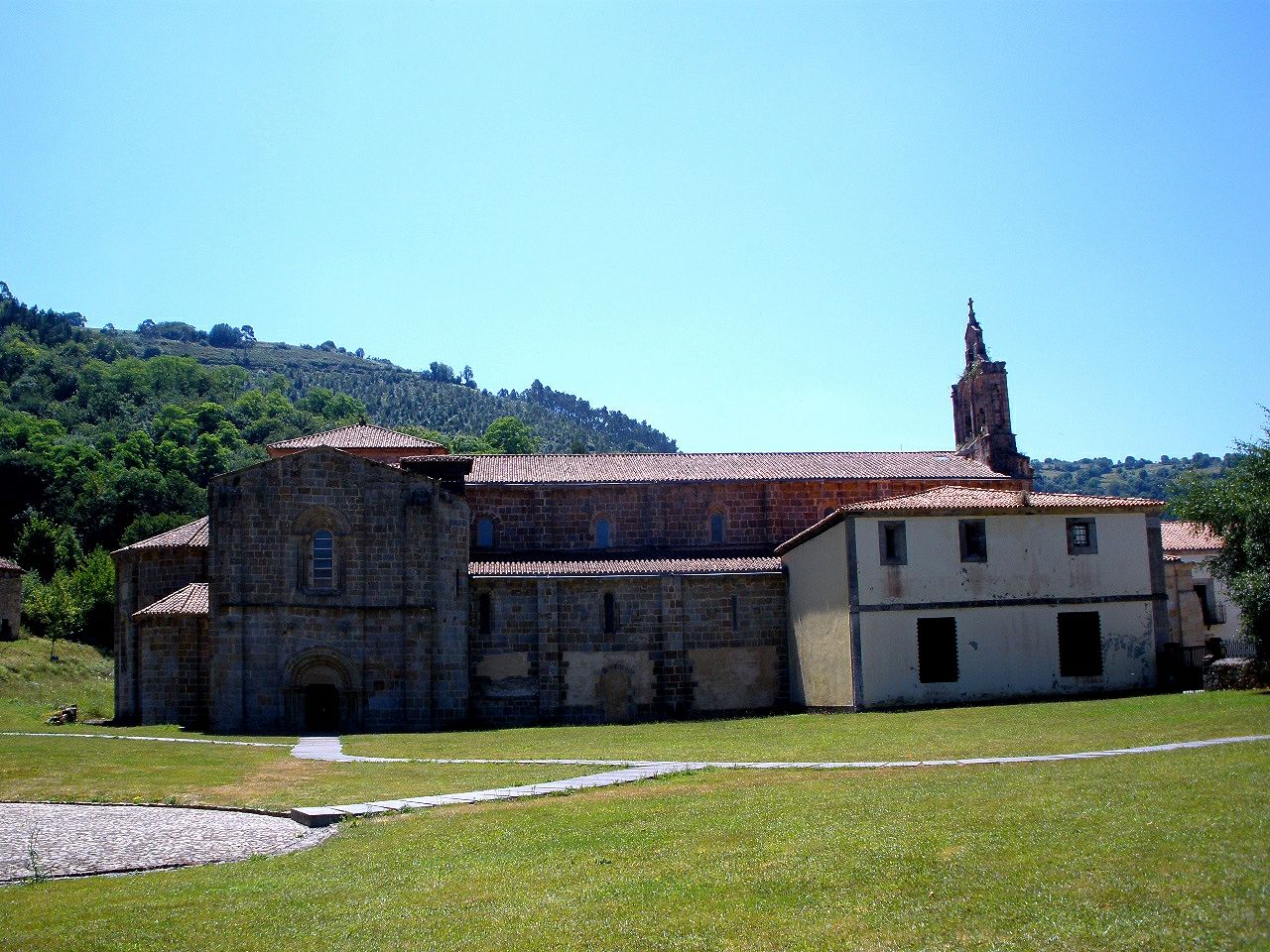
The church of Santa María Magdalena de los Pandos stands in the small settlement of La Magdalena, within the municipality of Villaviciosa, Asturias. This Romanesque building dates from the early 13th century and was declared a Bien de Interés Cultural (a Spanish Cultural Interest Asset) in the category of Monument by decree 66/2006, issued on 29 June 2006.
What does the church at Los Pandos look like?
The building follows a simple, compact plan: a single rectangular nave closed by a straight chancel, rather than the rounded apse found in many other Romanesque churches of the region. Combined with the modest scale typical of these buildings, this layout allows the church to sit unobtrusively within the rural Asturian landscape — a trait associated with the so-called archaizing and popular strand of late Romanesque architecture that developed in Asturias.
The west front, at the foot of the church, holds the main doorway. It is built from four concentric semicircular arches: the innermost rests directly on plain jambs and is decorated with a band of small blind arches, while the outer three are carried on columns topped with carved capitals. A moulded band runs around the whole doorway, decorated with the so-called Jaca chequerwork (ajedrezado jaqués), a small repeating geometric motif widespread in Spanish Romanesque decoration. The same motif reappears on the impost course of the chancel, visually tying the two parts of the building together.
What is worth seeing inside?
Inside, the triumphal arch separating the nave from the chancel draws the eye. Its capitals are carved with plant and animal motifs, including fruit and birds, alongside other decorative elements typical of rural Asturian Romanesque carving. This sculptural work — on the exterior doorway as well as on the triumphal arch inside — represents the main artistic interest of this small church.
Has the building changed over the centuries?
Yes. Although the core of the church dates to the early 13th century, it has not survived unaltered. A porch was added in the 18th century to shelter the entrance, a sacristy followed in the 19th century, and a bell gable — an espadaña, a wall pierced with openings for bells, typical of Asturian religious architecture — was built in the 20th century. These later additions have not obscured the original Romanesque structure, which remains legible both in the overall form of the building and in the carved detail of its doorway.
Frequently Asked Questions
Where exactly is the church of Santa María Magdalena de los Pandos located? In the settlement of La Magdalena, part of the municipality of Villaviciosa in Asturias, northern Spain.
When was the church built? It dates from the early 13th century and represents the archaizing, popular strand of late Asturian Romanesque architecture.
What heritage protection does the church have? It is listed as a Bien de Interés Cultural in the Monument category, under a decree issued on 29 June 2006.
What is the most notable architectural feature of the church? The west doorway, with its four semicircular arches, carved capitals and Jaca chequerwork motif — repeated on the chancel's impost course — and, inside, the triumphal arch capitals carved with fruit and bird motifs.
Nearby places

Earn badges for the places you visit
Download NextOnTrip, discover new places and check off your trails.