About this place
The Church of Santa María de la Oliva rises in Villaviciosa, a coastal town in Asturias famous for its apple orchards and cider-making tradition, and its weathered stone walls capture a moment when Romanesque solidity was giving way to Gothic ornament.
How do you get there?
Villaviciosa sits on the Asturian coast, roughly between Gijón and Ribadesella, and is a natural stop for travelers following the coastline or heading inland toward Oviedo. The church stands in the town's historic core, on ground that has anchored community life here since the Middle Ages.
What is the history behind the church?
Construction began in the late 13th century, shortly after 1270, when King Alfonso X the Wise granted Villaviciosa its founding charter. The building was dedicated to the Annunciation and served as the town's parish church for more than five centuries, until the ecclesiastical confiscations ordered by Mendizábal in 1836 stripped it of that role. Its civic importance ran deeper than religion alone: town authorities once convened under a portico attached to the church — since lost — to decide matters affecting Villaviciosa. In recognition of its historical and artistic value, Spain declared the church a National Monument by decree on 3 June 1931.
What will you see inside and outside?
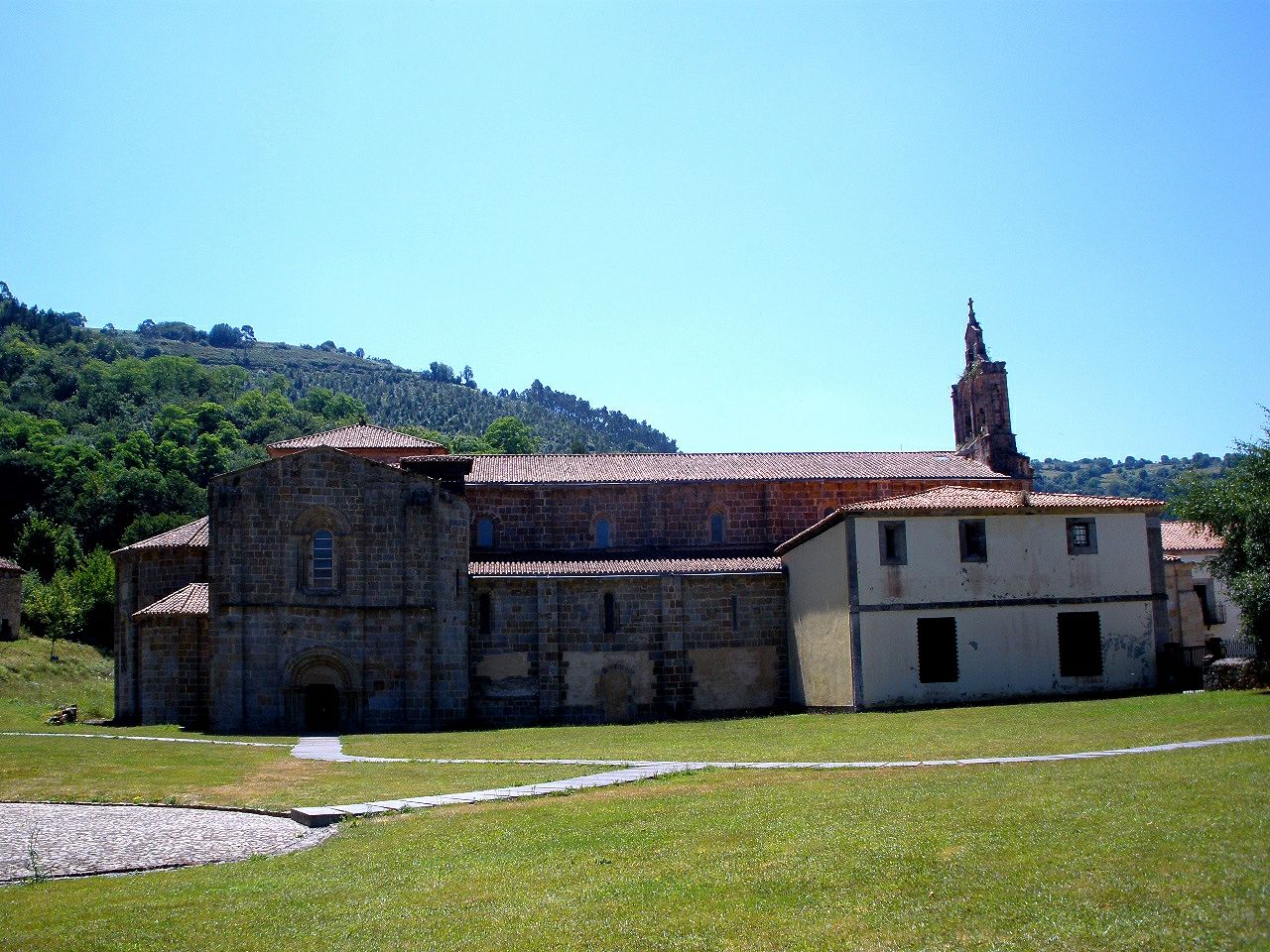
The church was raised at the meeting point of two architectural periods, and the mix is visible at a glance. Its compact single-nave plan still echoes Romanesque restraint, while the rose window on the west facade, the ribbed vaulting details, and the buttresses reinforcing the interior point toward the Gothic. The building itself is rectangular, with a single nave covered by an exposed timber roof structure that gives the interior a rustic, unpolished warmth rare in monuments of this stature.
The carved capitals reward a closer look. On the south portal, stonemasons chiseled hunting scenes — animals and human figures caught mid-motion with a liveliness unusual for the period. The main west doorway is the more elaborate of the two entrances, framed by a pierced rose window, layered archivolts, and columns topped with capitals crowded with zoomorphic and anthropomorphic figures: fantastical beasts and human faces drawn from the imagination of medieval carvers.
When is the best time to visit?
Asturias has a mild, damp Atlantic climate, cooler than most of Spain even in summer, so late spring through early autumn tends to offer the most comfortable conditions for exploring outdoor monuments like this one. That window also overlaps with the region's apple harvest and cider season, when Villaviciosa's rural character is easiest to sense firsthand. Visiting outside peak season trades some of that atmosphere for quieter streets and a more contemplative look at the church itself.
Frequently Asked Questions
Can the Church of Santa María de la Oliva be visited? The exterior — including the west facade's rose window and the sculpted south portal — can be viewed and appreciated by anyone walking through Villaviciosa's old town, since the carved stonework is the building's main draw.
What architectural style is the church? It blends late Romanesque structure with early Gothic detailing, a transitional style visible in its compact nave alongside Gothic features like the rose window and buttressing.
Why did the church stop being Villaviciosa's parish church? It lost that role in 1836, when Mendizábal's ecclesiastical confiscations reorganized church property and administration across Spain.
Is there anything else to see near the church? Villaviciosa's old town and its cider culture make a natural pairing with a visit to the church, since both reflect the town's long-standing character.
Nearby places

Earn badges for the places you visit
Download NextOnTrip, discover new places and check off your trails.