About this place
Church of Santa María la Real del Sar is a Romanesque church in Santiago de Compostela, in the Galicia region of northwestern Spain. It stands on the bank of the Sar river, at the edge of the city's historic center, and has long been tied to the pilgrimage tradition surrounding the tomb of Saint James.
What is the Church of Santa María a Real do Sar?
The building was originally a collegiate church of Augustinian canons, raised in the Romanesque style in the second half of the 12th century. It dates from the period when Santiago de Compostela was expanding rapidly as a pilgrimage destination, with churches and religious institutions taking shape around the routes converging on the city from across Europe. The church retains the plain, heavy stonework typical of Romanesque buildings in the region — thick walls, restrained window openings, and a distinctive apse.
In 1895 the building was declared a Bien de Interés Cultural, Spain's designation for property of cultural significance, granting it national legal protection. Since 1993 it has also formed part of the UNESCO World Heritage listing "Routes of Santiago de Compostela," which covers key monuments connected to the medieval pilgrimage network leading to the city.
Why is the church known for its leaning columns?
One of the building's most recognizable features is the set of angled arches and buttresses reinforcing the apse. They were added after the ground near the river began to subside, threatening the stability of the structure not long after construction. Rather than lose the building, builders introduced slanted supports to counteract the shifting foundations — an engineering response that survives today in an unusually clear, largely intact form for Romanesque architecture. This detail draws visitors interested in architectural history as much as pilgrims following the Camino.
What can visitors see inside and around the church?
The interior preserves a Romanesque layout centered on the apse, with stone capitals decorating the columns. Outside, around the chancel, the tilted support system described above is clearly visible — this is the spot where the effect of the shifting structure is most apparent. Though smaller in scale than the cathedral in the city center, the church is a notable example of Romanesque religious architecture on the Iberian Peninsula, and it is often discussed alongside the wider circle of builders active in Santiago during the same period as the cathedral's construction.
Why does the church matter to Santiago de Compostela's heritage?
Its inclusion in the UNESCO listing in 1993 reflects its role as one of the monuments documenting the network of medieval pilgrimage routes leading to the tomb of the apostle James. The sites covered by this designation, spread across northern Spain, testify to the scale and endurance of the Camino de Santiago, which still draws hundreds of thousands of travelers every year. The Church of Santa María a Real do Sar, though less famous than the cathedral itself, belongs to the same story of a city shaped by pilgrimage.
For visitors exploring Santiago de Compostela, the church offers a natural extension to a walk through the historic center — a quieter, less crowded counterpart to the religious architecture concentrated around the cathedral.
Frequently Asked Questions
Where is the Church of Santa María la Real del Sar located? In Santiago de Compostela, in the Galicia region of northwestern Spain, on the bank of the Sar river.
Why are the church's columns tilted? Because the ground near the river subsided after construction; slanted buttresses were added to reinforce the apse and stop further damage.
When was the church built? In the second half of the 12th century, in the Romanesque style, as a collegiate church of Augustinian canons.
Is the church part of a UNESCO World Heritage listing? Yes — since 1993 it has been part of the UNESCO "Routes of Santiago de Compostela" listing, and since 1895 it has held the status of Bien de Interés Cultural.
Nearby places
-
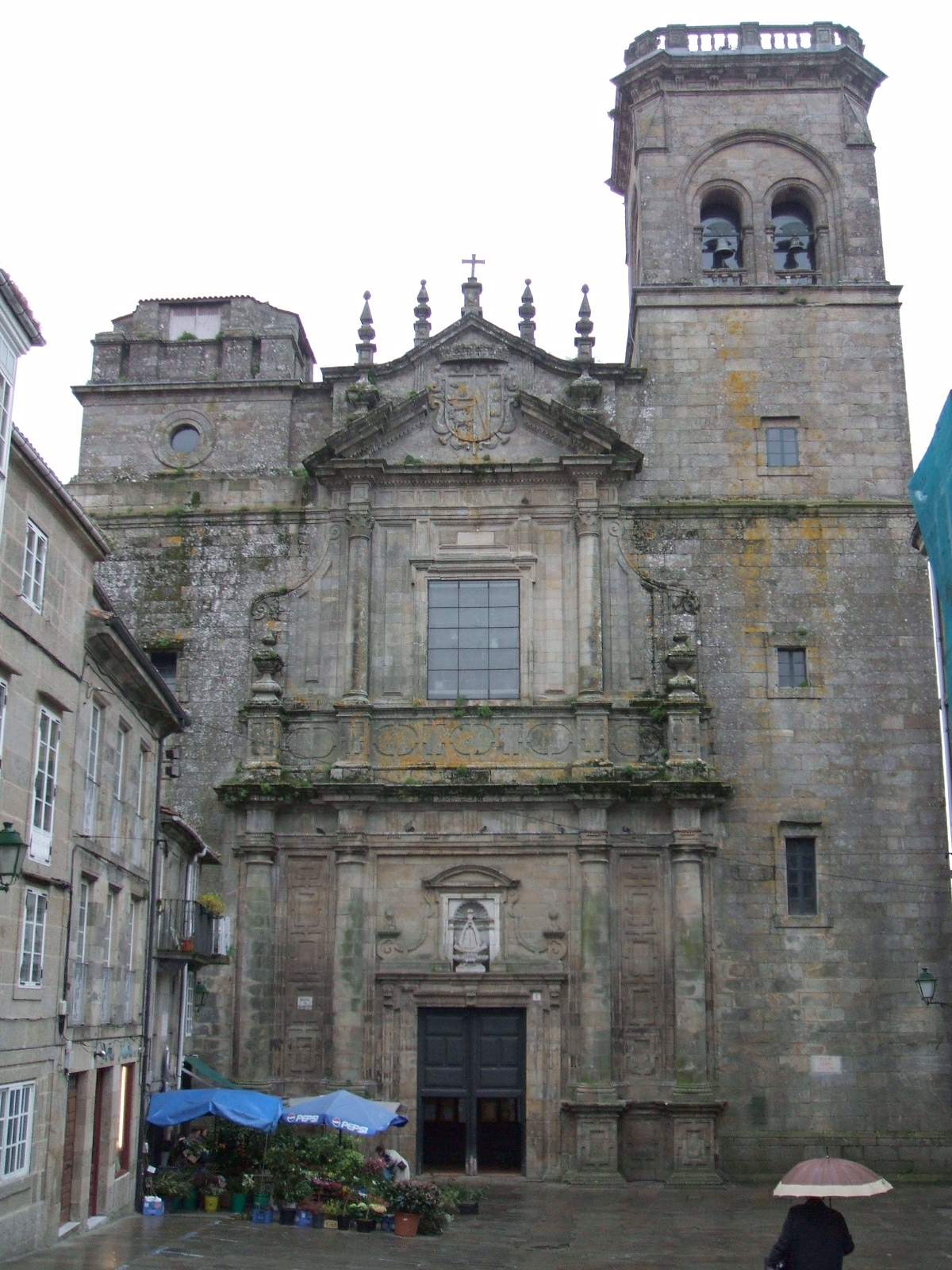
Church and Convent of Saint Augustine
Santiago de Compostela
-

Monastery of Saint Pelagius of Antealtares
Santiago de Compostela
-
Church of San Bieito do Campo
Santiago de Compostela
-
Capela Mondragón
Santiago de Compostela
-
Church of Sant Mary of the Way
Santiago de Compostela
-
Museum of the Cathedral of Santiago de Compostela
Santiago de Compostela
Earn badges for the places you visit
Download NextOnTrip, discover new places and check off your trails.