- Sacred Monuments
- Religious monuments
Monastery of Saint Pelagius of Antealtares
About this place
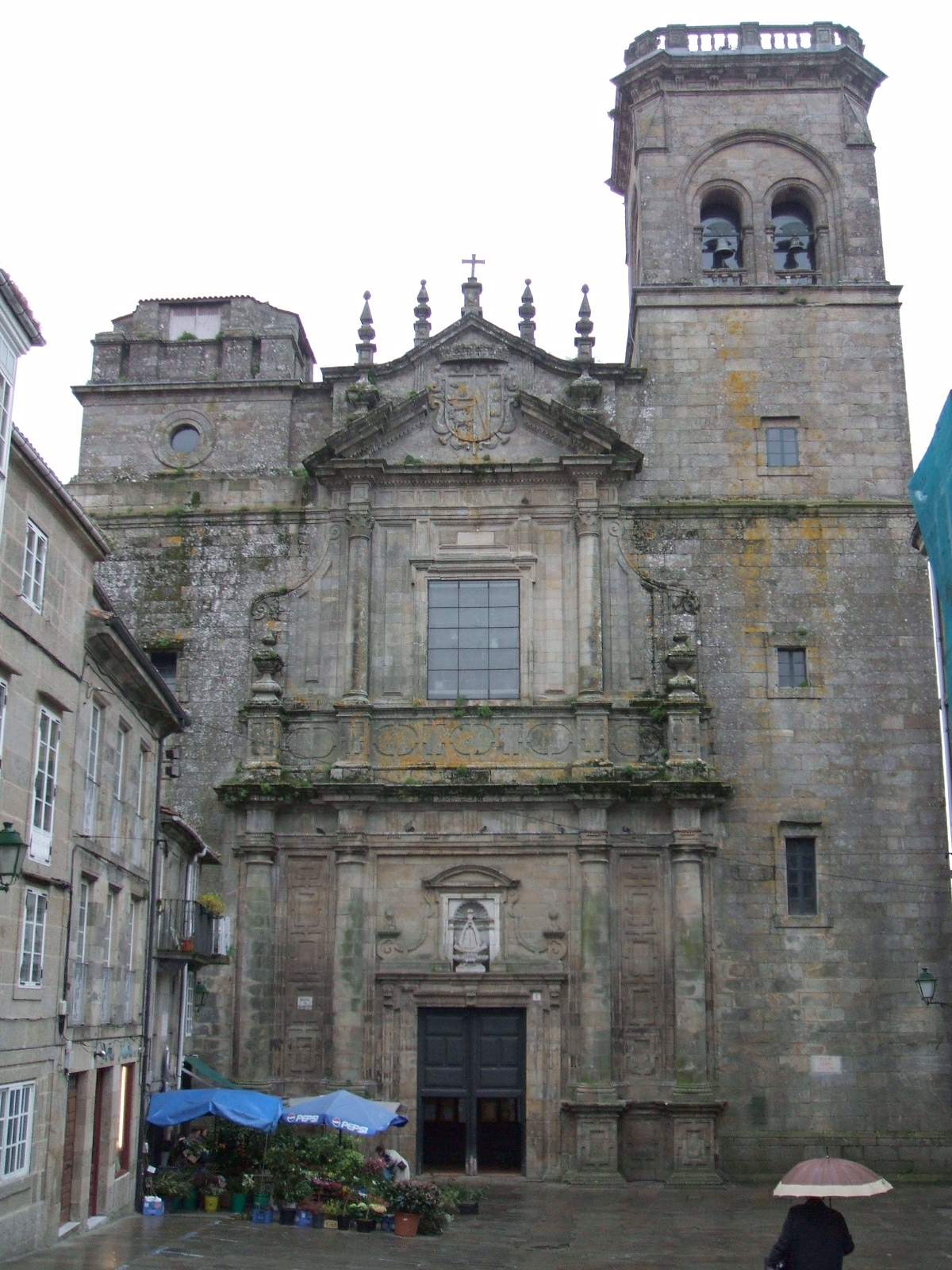
The Monastery of Saint Pelagius of Antealtares (San Paio de Antealtares) is a Benedictine convent in Santiago de Compostela, Galicia, standing just steps from the cathedral's eastern side, on the small square known as Praza de San Paio de Antealtares.
Where is it and how do you get there?
The monastery sits in the heart of Santiago's old town, a UNESCO World Heritage site. From the main cathedral square, Praza do Obradoiro, it's only a few minutes on foot — walk around the back of the cathedral, past the apse and side chapels, and you'll reach the quiet square where the monastery stands. The entire old quarter is closed to cars, so walking is the only way in. The nearest landmarks are the cathedral's Puerta Santa and Praza da Quintana, from which San Paio de Antealtares is already visible.
What is the history behind the monastery?
The name "Antealtares" — literally "before the altars" — refers to the site's original position relative to the earliest altars and chapels that stood here before the current cathedral was built. Tradition ties this spot to the discovery of the tomb of the Apostle James, making it one of the city's oldest religious foundations. Over time the small community grew into a Benedictine convent, which still functions today as an active cloistered community. The church and monastic wings carry layers of successive rebuilding — from early medieval foundations to the Baroque facades and interiors typical of many Santiago churches remodeled during the 17th and 18th centuries.
What will you see inside?
The monastery church shows a Baroque facade and an interior with gilded altarpieces, characteristic of Compostela's religious architecture from that period. Inside the complex, a small Museum of Sacred Art displays liturgical objects, vestments, sculptures and other pieces connected to the community's long history. Because San Paio de Antealtares remains a living cloistered convent, access is limited — visitors can see the church and museum, while the nuns' residential quarters stay closed to the public. The contrast between the plain, monastic corridors and the richly decorated church interior is one of the visit's most memorable details.
When should you visit?
The monastery works best as part of a walk through the old town, paired with a visit to the cathedral and the nearby Praza da Quintana, one of Santiago's most atmospheric squares. Pilgrim traffic on the Camino de Santiago peaks from spring through early autumn, so mornings right after opening tend to be the quietest. Opening hours for the church and museum can vary, so it's worth checking locally or at the tourist information point by the cathedral before planning the exact route.
Frequently asked questions
Is the monastery open to visitors? The monastery church and the Museum of Sacred Art are open to the public, but the nuns' living quarters — an enclosed cloistered area — remain off-limits to outsiders.
How far is it from the cathedral? Just a few minutes on foot — the monastery stands directly behind the eastern side of the cathedral, on the small Praza de San Paio de Antealtares.
What does the name "Antealtares" mean? It refers to the monastery's original location "before the altars" — the earliest chapels and altars that stood on this site before the present cathedral was built.
Can you combine the visit with other old-town sights? Yes — the monastery sits along the natural walking loop around the cathedral, next to Praza da Quintana and other landmarks of Santiago de Compostela's historic center, so it fits easily into the same outing as the rest of your sightseeing.
Nearby places
-

Capela Mondragón
Santiago de Compostela
-
Church of San Bieito do Campo
Santiago de Compostela
-
Capela da Comuñón
Santiago de Compostela
-
Capela das Reliquias
Santiago de Compostela
-
Museum of the Cathedral of Santiago de Compostela
Santiago de Compostela
-
Church and Convent of Saint Augustine
Santiago de Compostela
Earn badges for the places you visit
Download NextOnTrip, discover new places and check off your trails.