About this place
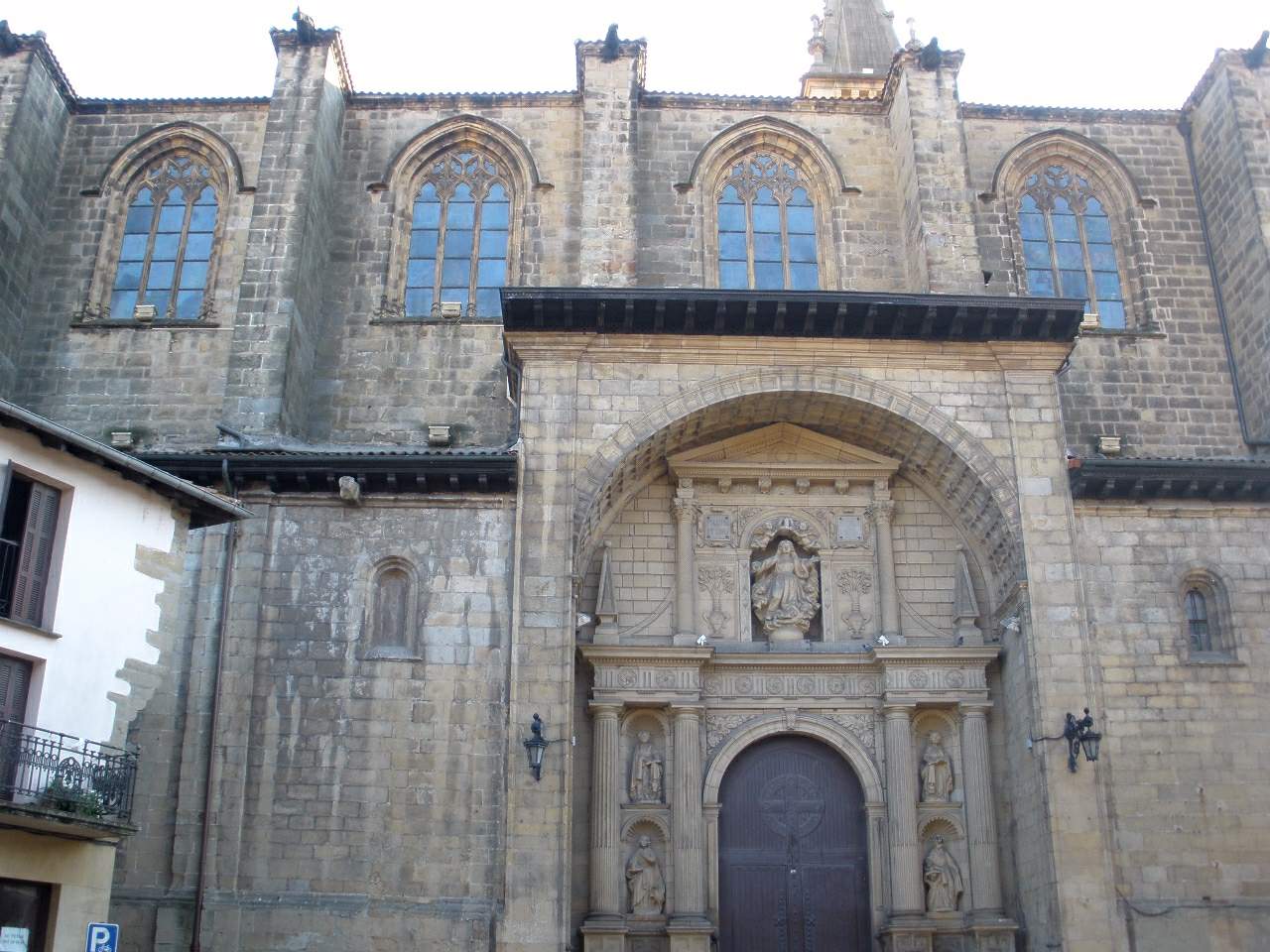
The Church of San Juan Bautista is the principal landmark of Lezo, a small town in the Basque Country, standing on a hill right at the heart of the settlement. Its fortress-like silhouette, reinforced by heavy stone buttresses, catches the eye long before visitors reach the entrance, and a handful of Gothic details hint at a history stretching back over six centuries.
How old is the church?
The building is first documented in 1399, though the structure seen today dates mostly from the 15th century, raised over an even earlier church on the same spot. Traces of that older phase survive in the gargoyles that still channel rainwater off the roof and in the remains of a pointed Gothic arch above the western doorway, tucked behind a more recent door. The west facade also carries a striking Gothic window with twin mullions, one of the most photographed details of the exterior.
Why is the church so large for a small town?
The scale has a concrete historical reason. For generations, the church served two communities at once: Lezo and neighbouring Pasai Donibane (Pasajes de San Juan) were administratively united until 1557, and both parishes shared this single building. Devotion to Saint John the Baptist added to the crowds — pilgrims, particularly the sick, sought him out in large numbers. When Pasaia was finally authorised to form its own parish in the mid-16th century, its residents wanted a church of their own, but lacked the funds to build it; construction there only began in earnest in the early 17th century. Until then, Lezo's church remained the shared spiritual centre for both towns.
What is inside worth seeing?
The interior opens into a single, generously proportioned nave divided into four bays. Its 16th-century ribbed vault is the standout feature, with undulating ribs and pendant keystones — a design considered unique within the wider Gipuzkoa region. The ribs rest on prismatic pilasters with triangular bases, giving the space a distinct geometric rhythm. The main altarpiece is a four-tiered retablo crowned with a Calvary scene, reached by an ornate flight of steps. Above the main door, resting on a depressed arch, sits the organ gallery, inaugurated in 1893 and remodelled in 1944.
What is the church built from, and what else should visitors know?
The walls are built of ashlar stone, and the external buttresses — beyond their structural role — give the building its fortress-like appearance from every angle. A sundial was added to the exterior in the 19th century, one more layer in a long sequence of alterations across the centuries. Despite its size and history, this is still an active parish church rather than a museum piece, so visiting hours follow regular worship schedules rather than tourist opening times.
Frequently Asked Questions
Can the Church of San Juan Bautista in Lezo be visited while touring the town? Yes. It stands on a small hill in central Lezo, visible from most surrounding streets, making it an easy stop on a walk through the town centre.
How is this church different from the Church of San Juan Bautista in Pasaia? They are two separate buildings. The Lezo church is older and originally served the Pasai Donibane community as well, until Pasaia was granted its own parish and built a separate church in the 17th century.
What architectural style defines the building? It combines Gothic elements — the portal, window, and gargoyles — with a distinctive 16th-century ribbed vault and a later Baroque-style main altarpiece.
Is there anything architecturally unique inside? Yes — the ribbed vault, with its undulating ribs and pendant keystones, is regarded as a rare feature within the Gipuzkoa region.
Nearby places

Earn badges for the places you visit
Download NextOnTrip, discover new places and check off your trails.