About this place
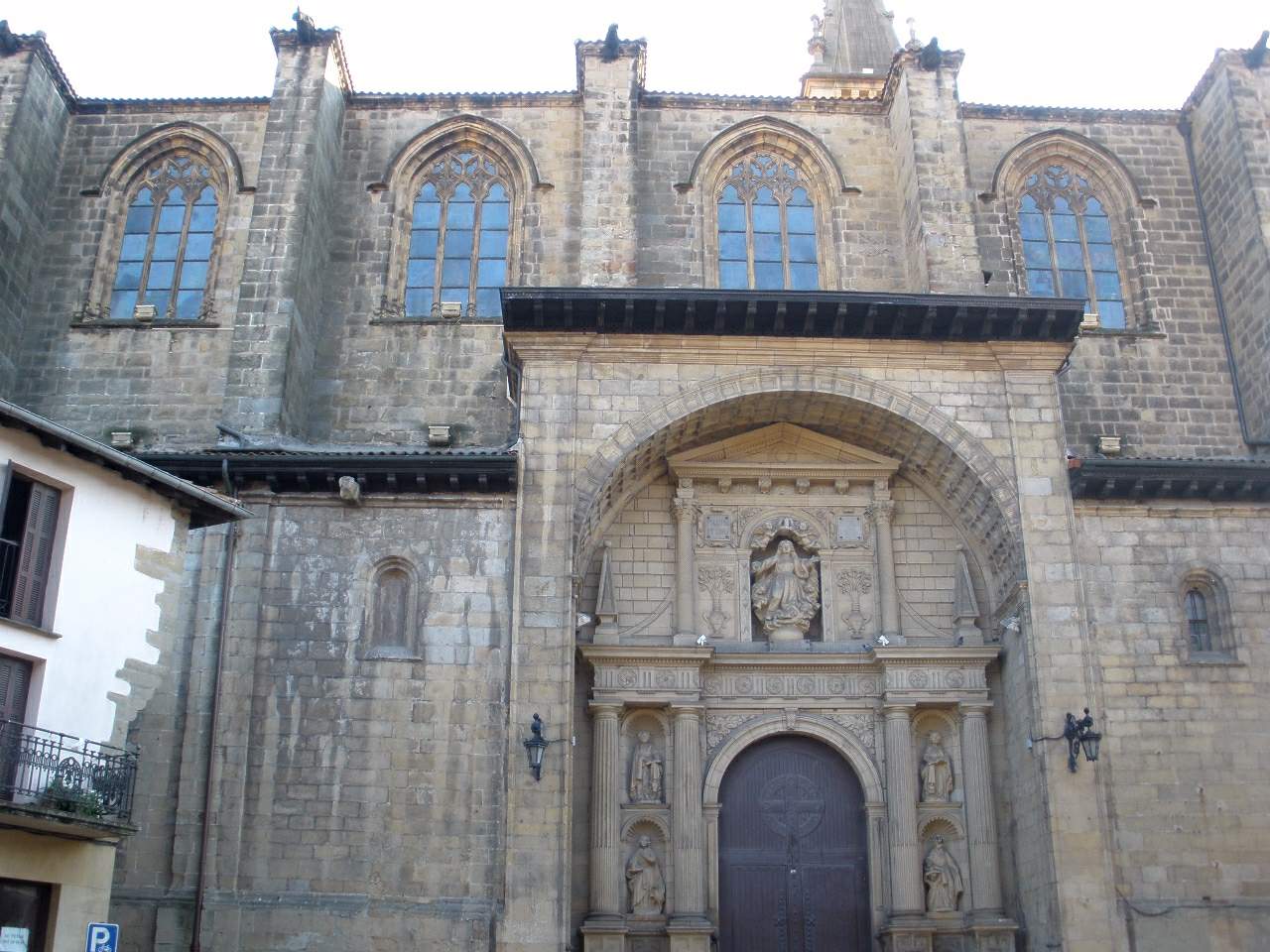
Church of Nuestra Señora de la Asunción is a Gothic parish church standing in the historic center of Errenteria, a town in Gipuzkoa, in the Basque Country. Its bulky silhouette has dominated the old quarter for centuries and remains the natural landmark for anyone exploring Errenteria's town square on foot.
When was the current building constructed?
An earlier medieval church once stood on this site, with taller naves and very sharply pointed arches, but almost nothing of that original structure survives. What visitors see today is the result of a thorough 16th-century rebuilding. Work on the present church proceeded in phases between 1523 and 1573, reaching its essential form around 1570. The whole building, as it stands now, belongs to that Renaissance-era campaign rather than to the medieval church it replaced.
What architectural style does the church represent?
The church is a textbook example of 16th-century Basque hall-church Gothic. Its plan follows a hall layout, with three naves of equal height ending in three apses, also of matching height. Notably, the building has no external flying buttresses, which meant the perimeter walls had to be built extremely thick to carry the weight of the vaults on their own. This structural choice, common across the region, gives the exterior a heavy, fortress-like presence that contrasts with the openness of the interior space.
What is worth seeing inside?
The interior preserves several distinct layers of art history. The main altarpiece is a neoclassical work designed by Ventura Rodríguez, chief architect of the Madrid court, executed between 1777 and 1784 under the direction of Francisco de Azurmendi, with the sculptural and stucco work carried out by Alfonso Bergaz. The retable takes the form of a single-tier facade crowned by a finial, finished with detailed figurative carving.
Alongside the main altarpiece, the church also keeps a much older one, executed in the Flamboyant Gothic style of the 16th century. In the first altar on the gospel side stands a triptych depicting the Assumption and Coronation of the Virgin, dated to around 1505-1510. The work is linked to María de Lezo, a woman from Errenteria who served as lady-in-waiting to Catherine of Aragon - one of the more unexpected threads connecting this small Basque town to the Spanish and English royal courts.
What makes the church tower distinctive?
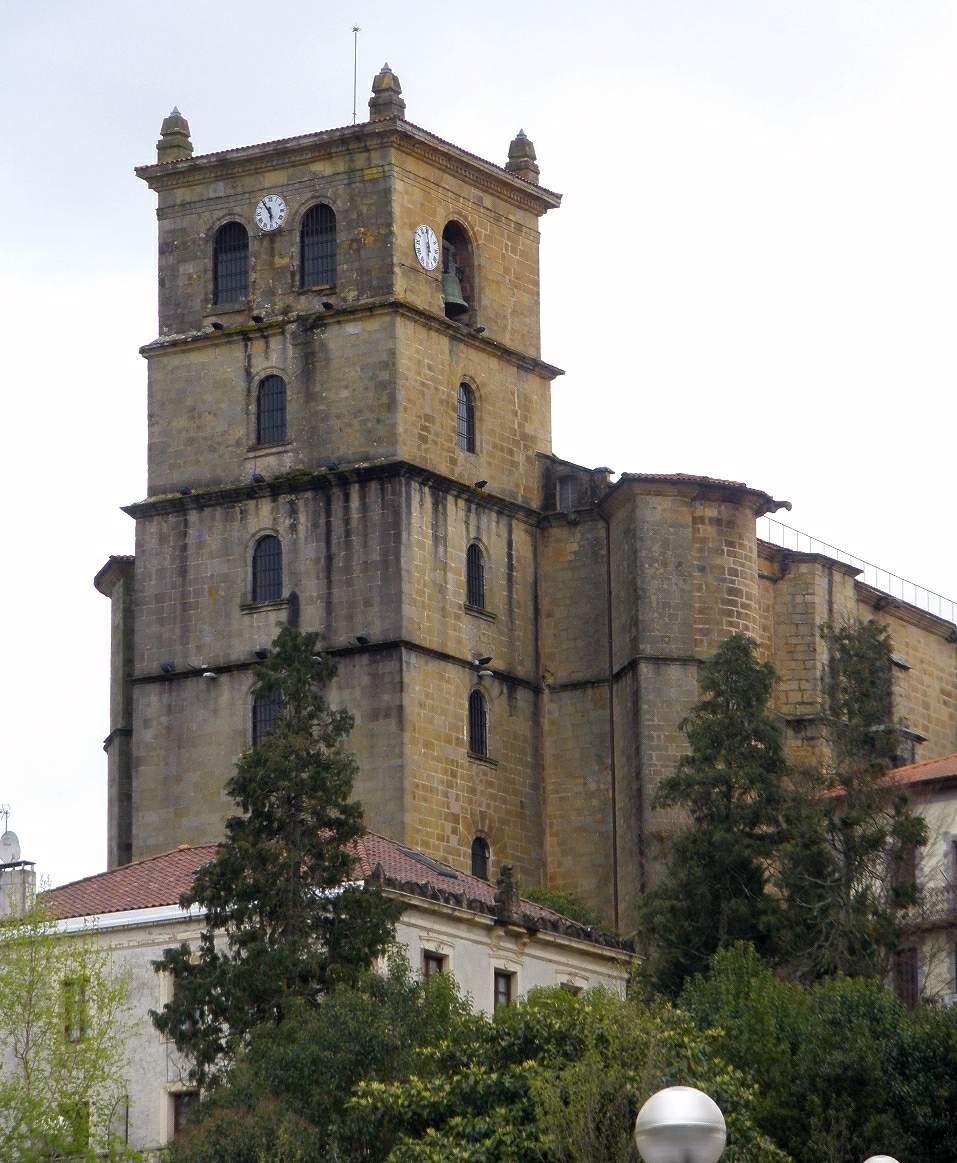
The base of the tower has an unusual feature: it opens into a passage through which the old royal road (Camino Real) to Goizueta once ran, meaning the road literally passed beneath the church tower. The tower standing today dates from a 1825 rebuilding, designed by Juan Bautista de Huici after the earlier structure was deemed at risk of collapse. In 1897 it was topped with a neo-Gothic crown. For a long stretch of its history it was one of the tallest points in town, a height that was put to less peaceful uses as well: a cannon was mounted there during the Carlist Wars, and a machine gun during the Spanish Civil War.
Frequently Asked Questions
When was the Church of Nuestra Señora de la Asunción in Errenteria built? The current building dates from the 16th century, constructed in phases between 1523 and 1573, with the essential structure completed around 1570.
What architectural style is the church? It is an example of Basque hall-church Gothic, with three naves and three apses of equal height, no external flying buttresses, and very thick perimeter walls.
What are the most valuable artworks inside? The neoclassical main altarpiece designed by Ventura Rodríguez (1777-1784), an older Flamboyant Gothic altarpiece, and an early-16th-century triptych of the Assumption and Coronation of the Virgin.
Why is the church tower unusual? Its base forms a passage that once carried the old royal road to Goizueta; the tower was rebuilt in 1825 and given a neo-Gothic crown in 1897.
Nearby places

Earn badges for the places you visit
Download NextOnTrip, discover new places and check off your trails.