About this place
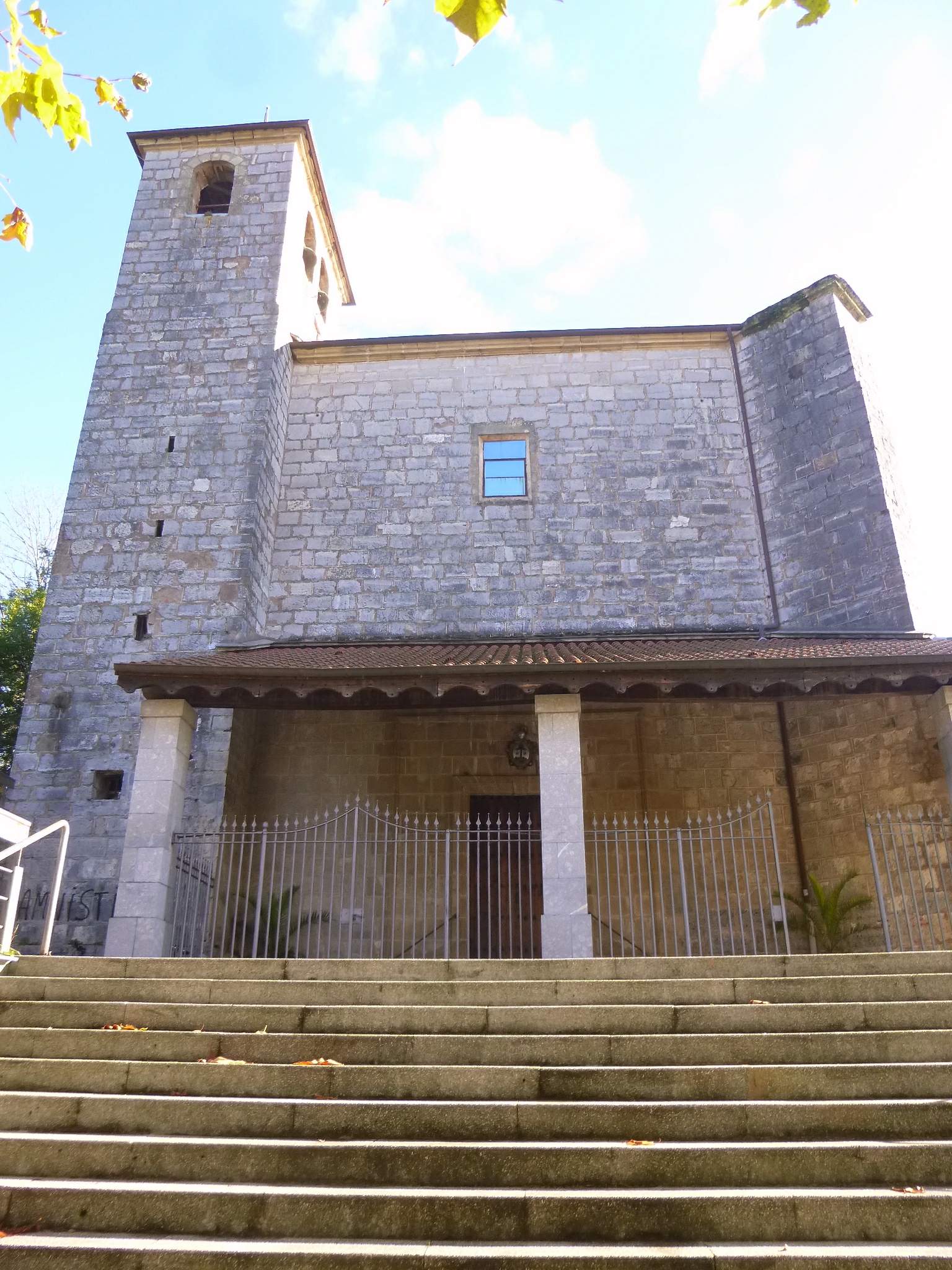
The Basilica of Santa María Magdalena in Errenteria, in Spain's Basque Country, is a modest church with a long and layered past that stretches back to the Middle Ages. Standing apart from the town's old center, it has spent centuries at the crossroads of faith, charity, and travel, and it remains a fixture of local identity today.
When was the Basilica of Santa María Magdalena built?
The church's origins trace back to the mid-14th century. It first appears in written records as a hermitage in 1523. It was raised on municipal land outside the walled enclosure of medieval Errenteria, in one of the outlying settlements along the route leading toward the port of Pasaia. That siting, on the edge of town rather than within it, was tied directly to the building's original purpose.
What was the church's connection to the Camino de Santiago?
From early on, the Magdalena basilica was linked to the care of pilgrims walking the Way of Saint James. The church and its adjoining buildings offered support to travelers, and over time a hospital operated alongside it. That hospital took in people suffering from leprosy — referred to at the time as Saint Lazarus' disease — drawing patients not only from Errenteria itself but from other towns across Gipuzkoa and even from Navarre. For long stretches of its history, this charitable and medical role mattered as much as its religious one.
What happened to the building over the centuries?
The church's history has not been a quiet one. In 1638, a French army assault destroyed the hermitage. Reconstruction did not come immediately: roughly a century later, the town's authorities commissioned substantial renovation work, rebuilding the foundations and raising new main walls on either side of the choir, supported by five stone arches. In time the building stopped functioning as a hospital or shelter for the poor, and that shift marked the start of a long, gradual decline. A thorough restoration in 1987 finally reversed that trend, leaving the basilica in the sound condition visitors find today.
How does the basilica fit into life in Errenteria today?
The church's patron saint gives her name to one of the town's biggest annual events, the "Madalenas" festival, held in July around the feast day of Saint Mary Magdalene. It is a week built around ritual, street music, and communal celebration, deeply rooted in local tradition. The basilica itself, though small in scale, is therefore more than an architectural landmark — it remains a point of reference around which the town still organizes part of its social calendar.
Frequently Asked Questions
Where is the Basilica of Santa María Magdalena located? In Errenteria, in the province of Gipuzkoa, in Spain's Basque Country, in a spot outside the town's historic center, on what was once the route toward the port of Pasaia.
Why was the church historically linked to a hospital? Alongside its religious role, it ran a hospital that sheltered pilgrims and the sick, including leprosy patients from Errenteria, elsewhere in Gipuzkoa, and Navarre.
Is the current building original? Only in part. After French troops destroyed it in 1638, the church was rebuilt about a century later, and it underwent a thorough restoration in 1987.
What is the basilica best known for locally? Chiefly for the annual "Madalenas" festival each July, one of Errenteria's major town celebrations, named after the church's patron saint.
Nearby places

Earn badges for the places you visit
Download NextOnTrip, discover new places and check off your trails.