About this place
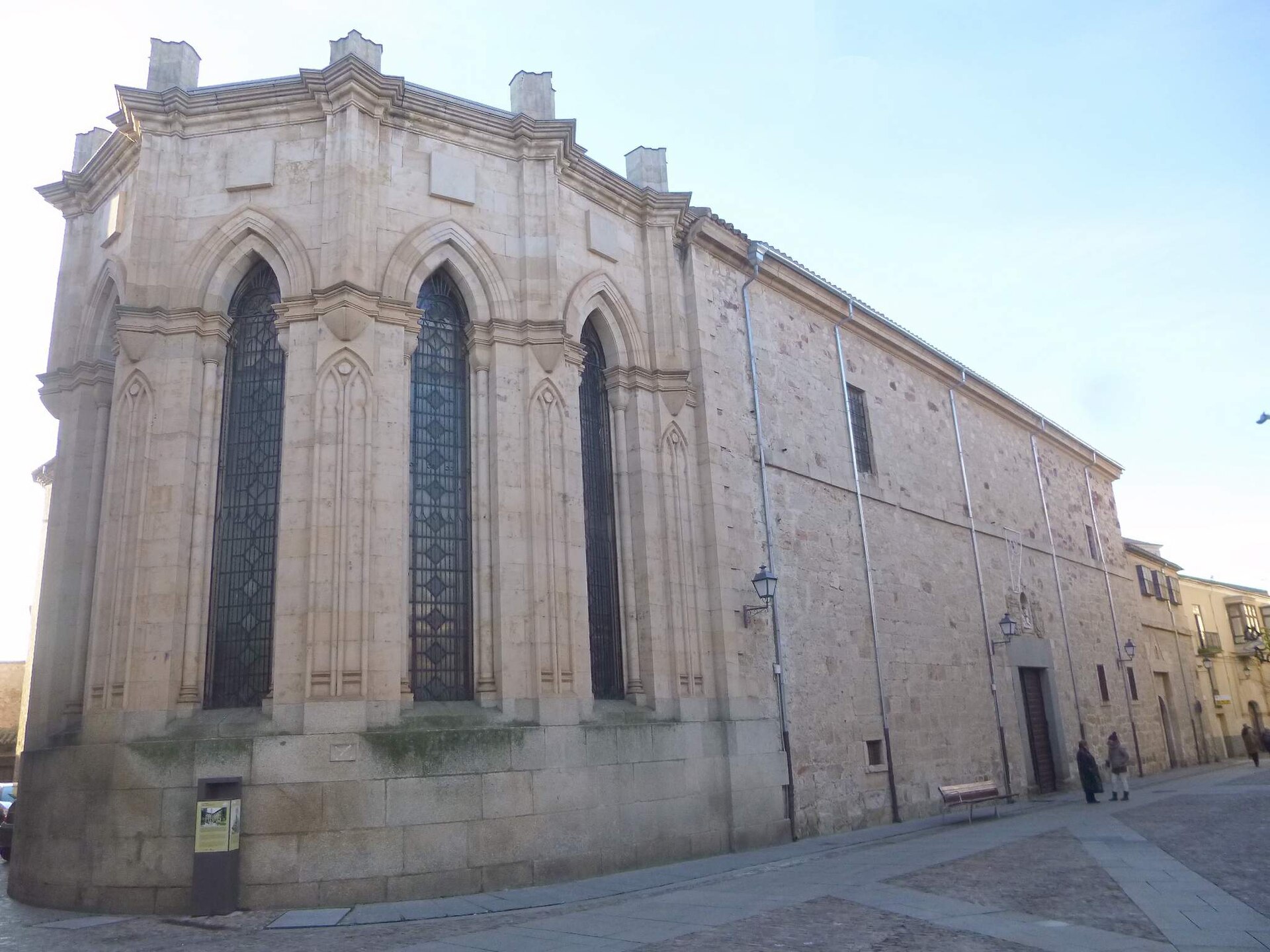
The Church of San Esteban in Zamora is one of the city's most significant Romanesque churches, built at the turn of the 12th and 13th centuries.
How old is the Church of San Esteban?
The earliest written record of the building dates to 1186, when a document describes it as a monastery church that Bishop Guillermo granted to a monk named Fray Garsía. Construction of the church itself is generally placed in the following decades, in the late-to-advanced phase of Romanesque architecture — the point at which Zamora's local building workshops had fully developed their own recognizable style.
What does the church's architecture look like?
The building follows the layout typical of Zamora's Romanesque churches: a single wide nave reinforced on the outside by buttresses, leading to a sanctuary closed off by a triple, straight-edged apse. This combination of a simple volume, sturdy exterior supports, and a flat-ended chancel is one of the recurring features of the city's Romanesque churches and helps identify San Esteban as part of that same local tradition.
The medieval exterior has survived largely intact. The interior tells a different story — during the 18th century it was almost entirely remodeled in the Baroque style fashionable at the time, which favored more ornate, decorative church furnishings. As a result, the church today pairs a plain, austere Romanesque exterior with a noticeably more elaborate Baroque interior.
What roles has the church played over the centuries?
San Esteban's function has shifted many times through its history. It has served as a parish church, a monastery building, and the seat of the Real Cofradía del Santo Sepulcro (the Royal Brotherhood of the Holy Sepulchre) — one of the traditional Zamora brotherhoods tied to the city's Holy Week processions. Later it also functioned as the chapel of the Colegio del Corazón de María.
Is there a museum inside the church?
Until fairly recently, San Esteban housed the Baltasar Lobo Museum, dedicated to the work of the 20th-century sculptor born in Zamora. That collection has since been relocated to Zamora Castle (Castillo de Zamora), so visitors will no longer find it inside the church — worth knowing if a visit is planned specifically to see Lobo's sculptures.
Frequently Asked Questions
When was the Church of San Esteban built? It dates from the turn of the 12th and 13th centuries, in the late Romanesque style, with the first documented mention appearing in 1186.
Is the interior still Romanesque? Not fully — the exterior retains its original medieval structure, but the interior was remodeled in the Baroque style during the 18th century.
What other uses has the building had besides worship? It has served as a monastery, the seat of the Royal Brotherhood of the Holy Sepulchre, a school chapel, and for a time it also housed an art museum.
Where can the Baltasar Lobo collection be seen now? The collection was moved from the Church of San Esteban to Zamora Castle (Castillo de Zamora).
Nearby places

Earn badges for the places you visit
Download NextOnTrip, discover new places and check off your trails.