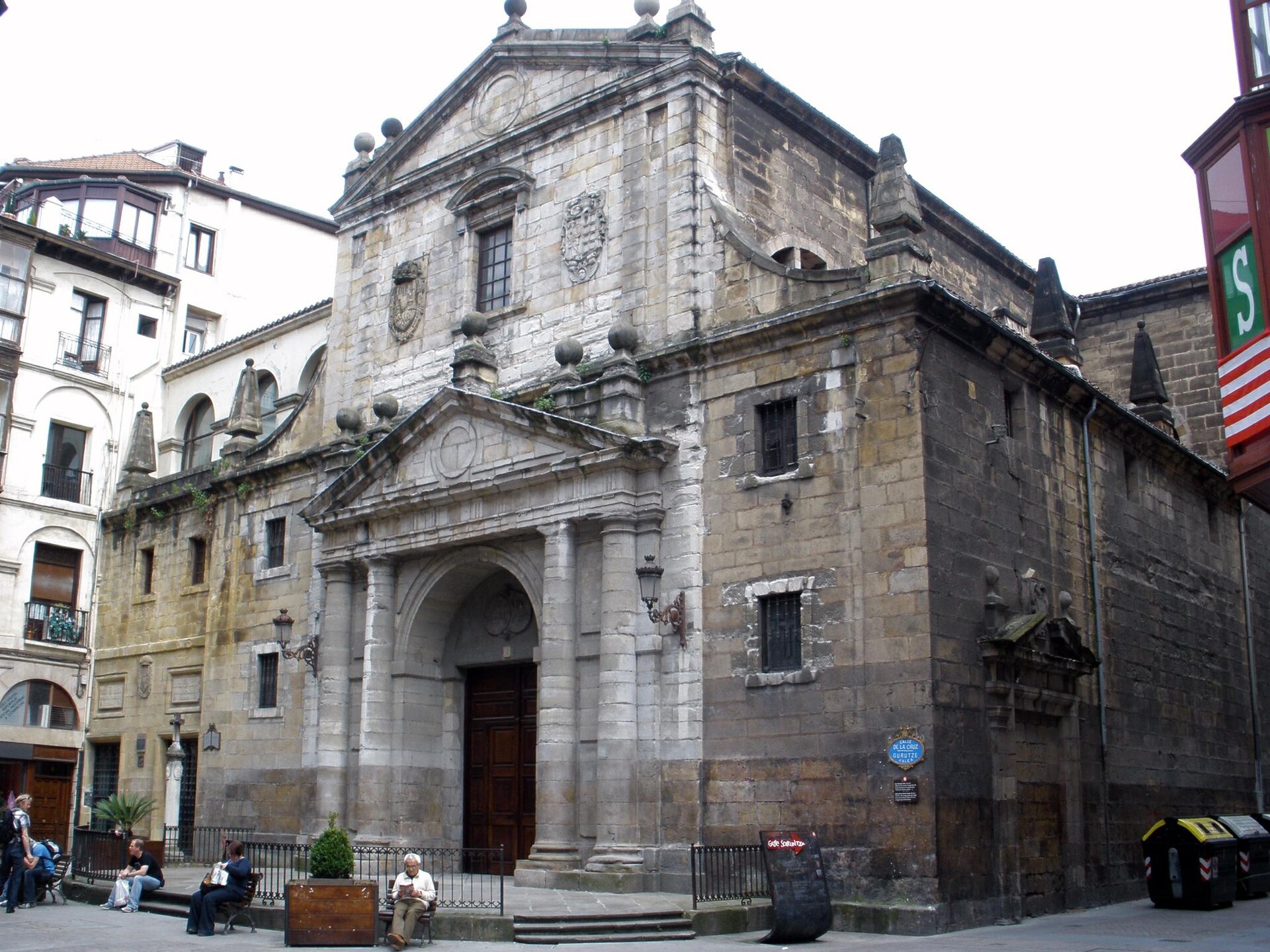
About this place
Church of los Santos Juanes is a modest but historically significant church in Bilbao, in the Basque Country, tucked into the dense streets of the Casco Viejo at the junction of Calle Ronda and Calle Cruz, a short walk from the famous Siete Calles that mark the city's original core.
Where exactly is the church located?
The church sits right in the heart of the old town, though it was originally built outside the boundary of Bilbao's seven founding streets — at the time of construction, this stretch of the city still lay beyond the defensive walls. Today it's one of those low-key buildings visitors often walk past on their way between the La Ribera market and Plaza Nueva, easy to miss but worth a second look.
What is the history behind this church?
The parish's roots go back further than the current building. As early as 1469, a small chapel attached to an old hospital dedicated to the Santos Juanes (the "Holy Johns") already existed in the Ibeni district — which is where the name comes from. From 1477 onward, that chapel served as the town's third parish.
The church standing today was founded by the Jesuits in 1617 as the church of the San Andrés college. Construction began in 1622, based on plans drawn up by the Jesuit father Ramírez. Twenty years later, the rear section — split into three parts, not counting the transept — was finished, meaning the building took considerably longer than a single generation to complete.
The parish itself only moved into this church in 1770, after its previous home, once located near the San Antón bridge, was closed. The building's history hasn't been entirely peaceful, either: after the catastrophic flood that hit Bilbao in 1983, the church needed substantial restoration work, carried out under architect Miguel Ángel Corcuera.
What does the architecture look like?
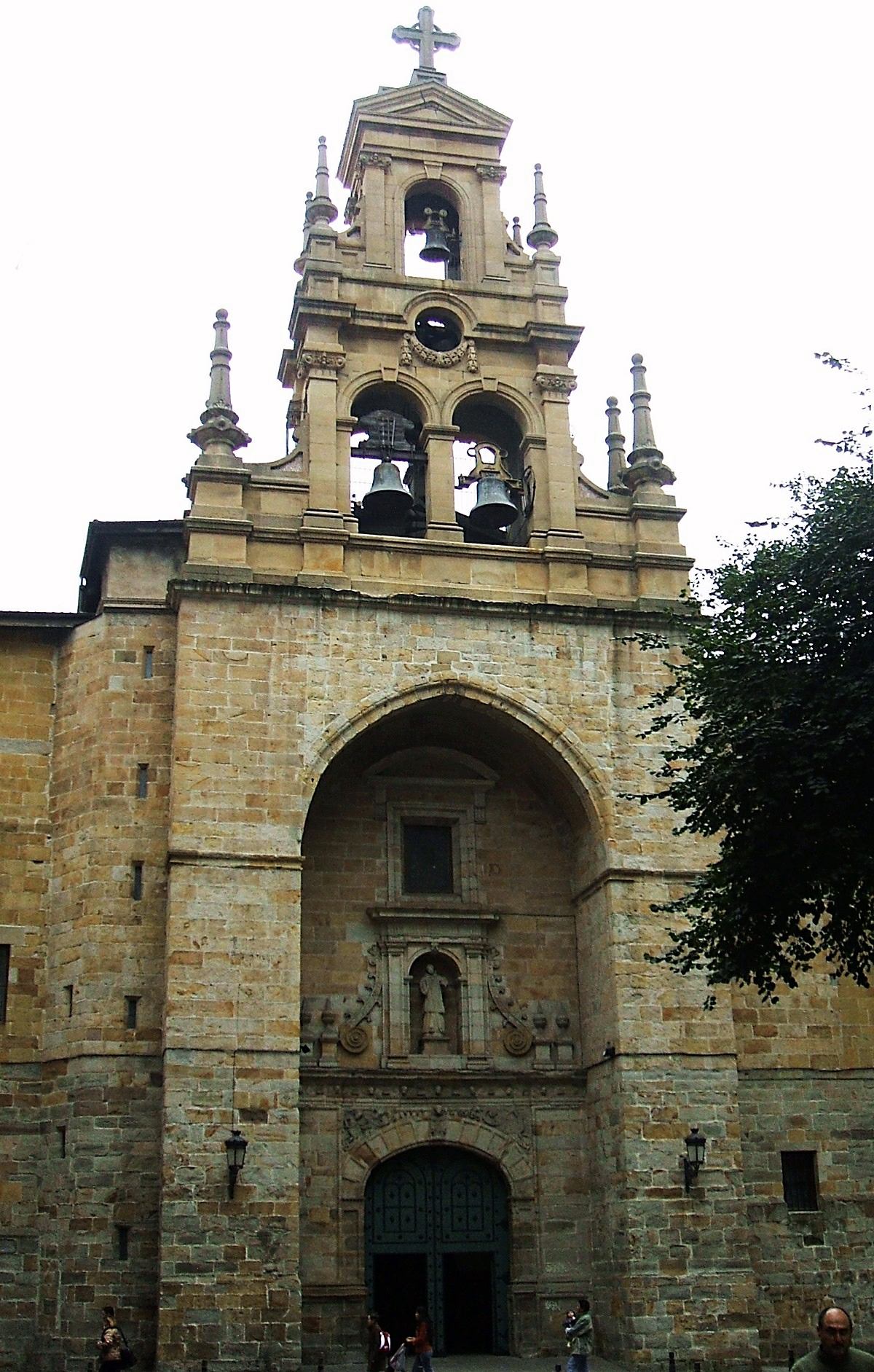
Santos Juanes is built in the Baroque-Classicist style typical of 17th-century Jesuit religious architecture. Its layout follows the standard "Jesuit model": a Latin-cross plan inscribed within a rectangle, with a central nave flanked by side chapels. This arrangement was designed to favor preaching and can be found in Jesuit churches built across Europe during the same period.
The church's understated, plain facade sits in contrast to the tightly packed stonework of the surrounding Casco Viejo — the building doesn't stand on its own square but is wedged between neighboring structures, a pattern typical of Spanish old towns that grew organically over centuries.
What can visitors see inside?
Inside, the main draw is a set of altarpieces (retablos) distributed across the nave and side chapels — a common feature of Baroque churches from this era, though detailed records on the individual artists and exact dates of each piece are patchy, so a visit in person or a chat with the parish is the best way to learn more.
The church still functions as an active parish, which means visitors should be mindful of service times and check current opening hours before stopping by, ideally on site or through the local tourist information point.
Frequently Asked Questions
Is this the same Santos Juanes church that's famous in Valencia? No. This is a separate church in Bilbao, in the Basque Country. Despite sharing the same name, it has no connection to the better-known Baroque Santos Juanes church in Valencia.
How far is it from the Siete Calles? The church stands right at the edge of the Casco Viejo, so reaching the seven historic streets takes only a few minutes on foot.
Who built the church? It was built by the Jesuits in the 17th century as the church for the San Andrés college, following plans by father Ramírez.
Has the church ever been damaged? Yes — the building suffered damage during Bilbao's major flood in 1983 and was subsequently restored.
Nearby places

Earn badges for the places you visit
Download NextOnTrip, discover new places and check off your trails.