About this place
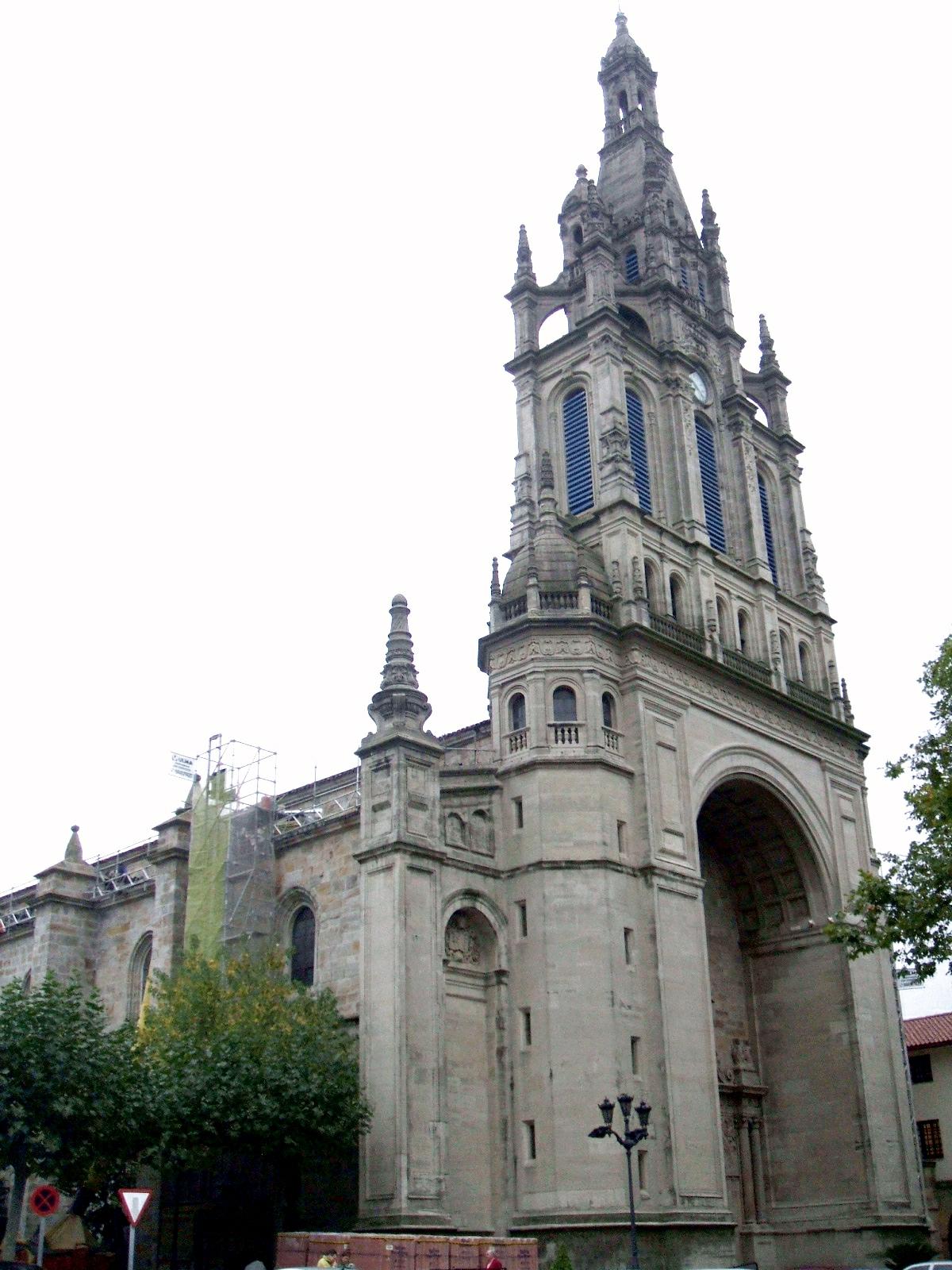
The Basilica of Begoña stands on a hill above Bilbao's old town, in the Basque Country, and serves as the main Marian sanctuary of the entire province of Biscay. Inside, a wooden image of Our Lady of Begoña has been venerated for centuries as the spiritual guardian of the region — locals affectionately call her Amatxu, "little mother."
Where does the sanctuary come from?
Devotion at this site dates back to the turn of the 15th and 16th centuries; local tradition holds that this was the spot of a Marian apparition. The church itself was built under Sancho Martínez de Arego. A surviving inventory from 1503 describes the earliest version of the building: a single nave with a wooden roof, a stone chapel housing the image, a choir, and a wooden cloister leading into the interior. Over the following centuries the modest original structure grew into the much larger basilica seen today.
What does the basilica look like now?
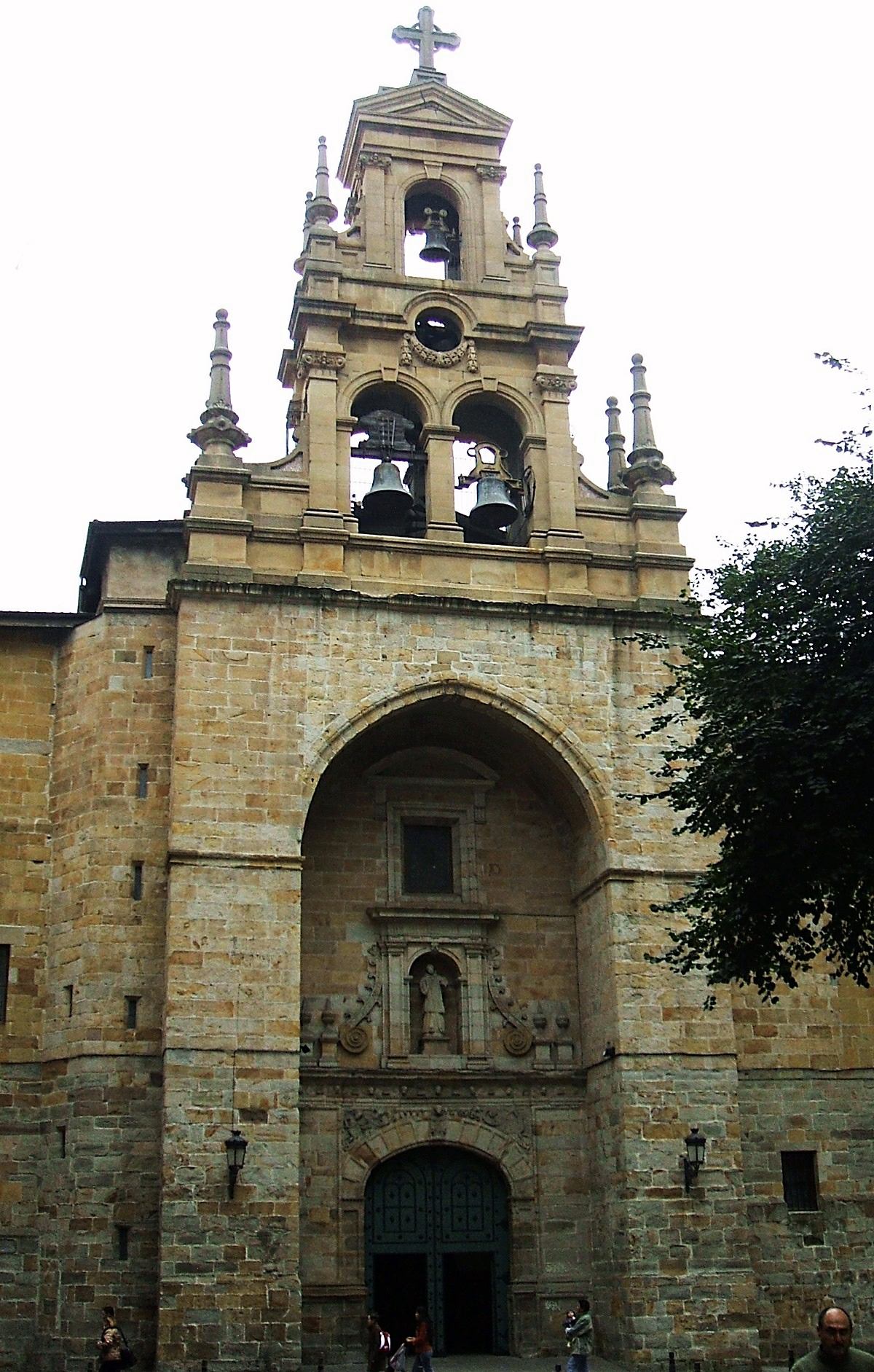
The current building is late Gothic in style, while its main portal — noticeably different from the rest of the façade — takes the form of a Renaissance triumphal arch. Inside, at the heart of the presbytery, stands the Gothic polychrome wooden carving of Our Lady of Begoña. Generations of fishermen, sailors and residents of Bilbao have prayed before this same image, asking for protection on their journeys and at sea.
Why is she the patron saint of all Biscay?
Devotion to Our Lady of Begoña long ago spread beyond Bilbao itself. In 1903, Pope Pius X canonically declared her patroness of the province of Biscay, cementing the basilica's role as the region's spiritual center. Her feast day falls on 11 October and remains one of the most important dates on the local religious calendar. The sanctuary also carries a well-known sporting connection: every year, at the start of the season, Athletic Club Bilbao lays flowers before the image and dedicates its trophies to her — a tradition kept since 1930.
How do you reach the hill of Begoña?
The most distinctive route up to the basilica is the Calzadas de Mallona, a stone staircase built in 1745 that connects Bilbao's Casco Viejo (old town) with the Begoña hill. The climb totals 351 steps spread across 50 flights, starting near Plaza Unamuno. Along the way, walkers pass the entrance to the Mallona cemetery, and from the upper sections of the stairs — as well as from the grounds around the basilica — there are wide views over the rooftops of Bilbao and the river below. The staircase is one of the city's most popular walking routes, combining local history with a striking panorama.
Frequently Asked Questions
Who is Our Lady of Begoña? She is the Marian devotion venerated in Bilbao since the turn of the 15th and 16th centuries, represented by a Gothic polychrome wooden carving kept in the basilica's presbytery. The faithful affectionately call her Amatxu.
Since when has she been the patron saint of Biscay? Pope Pius X formally declared her patroness of the province in 1903, although local devotion and special reverence go back much further.
Is there another way up besides the Mallona stairs? The Calzadas de Mallona are the best-known route, but not the only one — the Begoña neighborhood is also reachable by ordinary streets without climbing all 351 steps; it's worth checking current signage on the ground or asking at a local tourist information point.
What is the basilica's connection to Athletic Club Bilbao? Since 1930, the football club has laid flowers before the image of Our Lady of Begoña at the start of each season and dedicated its trophies to her — one of the most recognizable customs linking local football with the city's religious tradition.
Nearby places

Earn badges for the places you visit
Download NextOnTrip, discover new places and check off your trails.