About this place
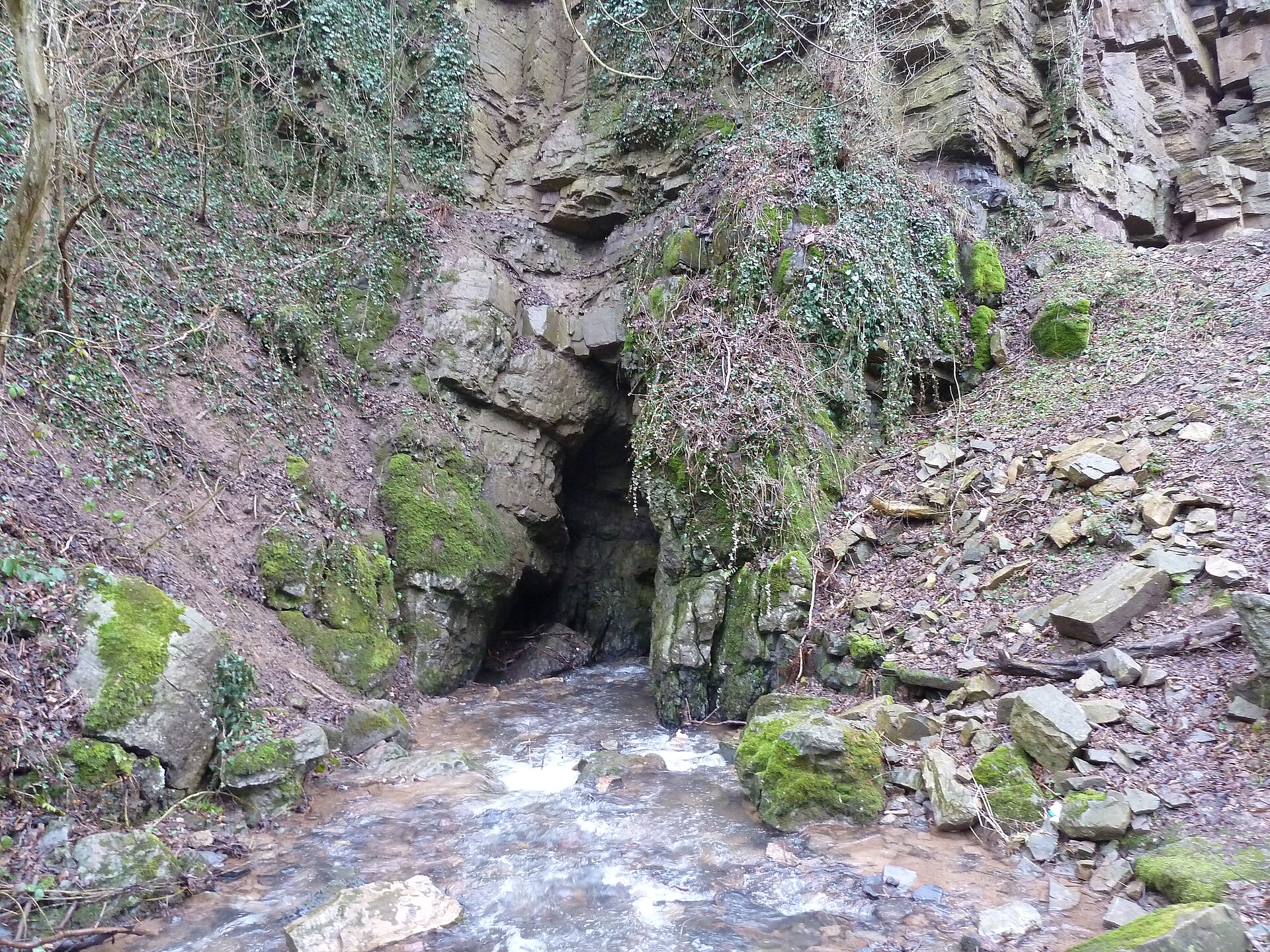
Chantoir d'Adzeux is a natural sinkhole located at the small settlement of Adzeux, today part of the village of Louveigné within the municipality of Sprimont, in the Belgian province of Liège. It sits within the Vallon des Chantoirs, a valley stretching from Louveigné to Remouchamps (in the municipality of Aywaille) that is known for its unusually high concentration of this particular karst feature.
What exactly is a chantoir?
Chantoir is a term used in the Ardennes and Condroz regions of Belgium to describe a spot where a surface stream suddenly disappears, flowing into an underground network of channels carved through limestone rock. The phenomenon is a direct result of the erosion of carbonate rock: limestone, unlike crystalline rock, dissolves relatively easily under the action of mildly acidic rainwater, and over long periods this process carves out caves, conduits, and cavities beneath the surface. The name itself comes from the sound made by water rushing abruptly into the ground — a noise likened to "singing," which gave rise to this regional term.
Where does the Banneway stream go?
At Chantoir d'Adzeux, the stream that vanishes underground is the Banneway (also known as the Ru de Banneux). It flows into the sinkhole near the center of the former village of Adzeux, then continues its course beneath the surface. After traveling several kilometers underground, the water eventually re-emerges elsewhere in the valley. This journey — from the surface, into the earth, and back out again — is what makes chantoirs such a distinctive feature of this corner of Wallonia's landscape.
Why is it also called Chantoir des Faux Monnayeurs?
The site is sometimes referred to by a second name, Chantoir des Faux Monnayeurs, meaning "Counterfeiters' Sinkhole." This reflects a local tradition of giving chantoirs colorful, often folkloric names tied to stories or legends associated with a given spot — in this case, one suggesting that the underground passages nearby were once used as a hideout by people involved in illegal coin-minting.
Why is the area around Adzeux so rich in chantoirs?
The Vallon des Chantoirs lies along a band of limestone belonging to the Calestienne, a geological strip running through southern Belgium composed of Devonian limestone that is especially prone to karst processes. Within the valley itself, which extends from Louveigné to Remouchamps, roughly seventy distinct chantoirs have been identified so far — making this one of the most densely karstified areas in the Ardennes. The sheer number and variety of these sinkholes attract the interest of geologists and speleologists alongside travelers looking for lesser-known natural sights.
How can you visit Chantoir d'Adzeux?
The site lies along a network of marked walking trails running through the Vallon des Chantoirs, connecting Louveigné (including the Banneux area) with Remouchamps. Walking along the valley lets visitors spot several different chantoirs over a fairly short stretch, offering a good sense of the scale and variety of karst phenomena found here. It's worth keeping in mind that these sinkholes are natural formations with no tourist infrastructure built around them — their appeal lies in their geological curiosity and the scenic setting of the valley itself.
Frequently asked questions
What is a chantoir? It's a spot where a surface stream disappears underground, flowing into a network of channels carved through limestone by water over time.
Which stream disappears at Chantoir d'Adzeux? The Banneway (Ru de Banneux), which flows through the former village of Adzeux.
Where is Chantoir d'Adzeux located? In Adzeux, part of the village of Louveigné, in the municipality of Sprimont, Liège province, Belgium.
How many chantoirs are there in the surrounding valley? In the Vallon des Chantoirs, stretching from Louveigné to Remouchamps, around seventy chantoirs have been identified.
Why is it also known as Chantoir des Faux Monnayeurs? It's an alternative local name referencing legends about counterfeiters said to have hidden in the underground passages nearby.
Nearby places

Earn badges for the places you visit
Download NextOnTrip, discover new places and check off your trails.