About this place
Chantoir de Sècheval is a protected karst feature in Belgium's Liège province, tucked into the small hamlet of Sécheval, part of the municipality of Aywaille. It sits north of Remouchamps toward the village of Deigné, and south of Sécheval itself, right along the N666 national road connecting Louveigné and Remouchamps. It's a quiet stop for anyone drawn to the geological side of the Belgian Ardennes rather than just its scenic trails.
What exactly is a chantoir?
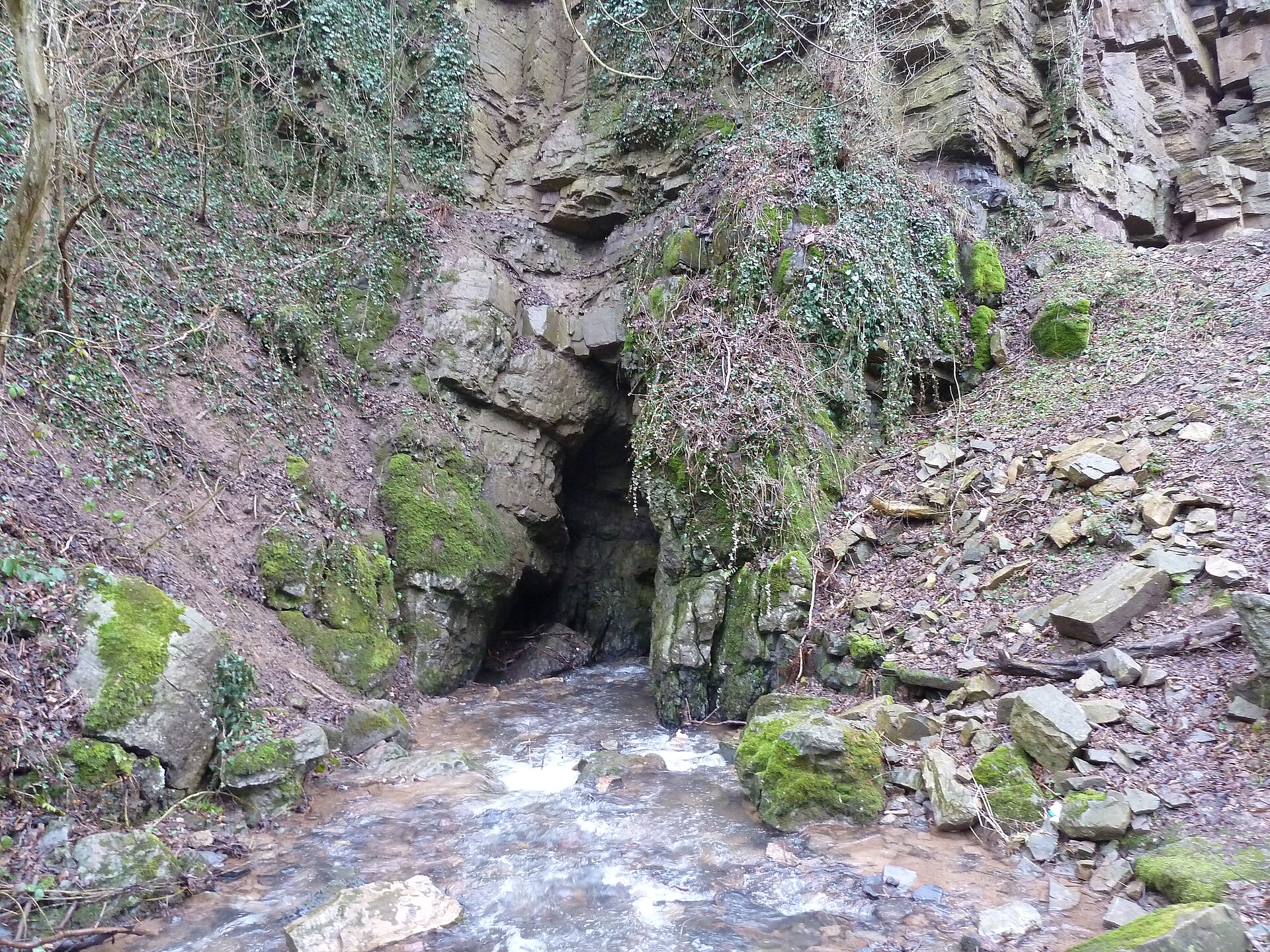
In Wallonia, a "chantoir" (also called a "perte," meaning "loss") is a natural opening in the ground where a surface stream disappears, feeding into an underground karst system. The name Sécheval itself translates to "dry valley," referring to the Vallon des Chantoirs, the valley where this hamlet sits — an apt description, since the stream simply vanishes above ground and continues its journey below.
Where does the water come from, and where does it go?
The Minières stream rises north of Hautregard and flows west through woodland for roughly three kilometers before sinking underground precisely at the Chantoir de Sécheval. Studies of this karst system revealed something remarkable: the waters of several streams merge underground into a shared collector that eventually resurfaces at the Remouchamps caves. This underground river even has its own name — the Rubicon.
What lies beneath the surface?
The galleries extending underground are subhorizontal and can be explored for approximately 300 meters, with a total elevation change of 21 meters. Because of its scientific value, the site holds the official status of a Cavity of Scientific Interest, underlining its importance not just as a landscape curiosity but as a genuinely useful site for hydrogeological research in the region.
Why is it worth visiting?
Chantoir de Sècheval is one of those spots in the Ardennes where science and landscape overlap. The opening where the stream disappears underground may look modest next to the region's more spectacular show caves, but its hydrological significance is considerable — this is where the underground journey begins for water that eventually surfaces at the famous Remouchamps caves, one of the area's most popular tourist attractions. The site appeals to visitors interested in karst geology, anyone tracing the region's hidden waterways, and travelers spending extended time around Aywaille and Remouchamps who want to understand the hidden water system running beneath their feet.
Frequently asked questions
Can you go inside the chantoir? Given its status as a protected area and the nature of a natural cave system, exploring it calls for real caution and is best done with local guides or as part of an organized speleological trip.
How do you get to Chantoir de Sècheval? It sits along the N666 road between Louveigné and Remouchamps, close to the villages of Deigné and Sécheval, within the municipality of Aywaille.
Is this the same place as the Remouchamps caves? No, though the two are connected underground — the water that disappears at Chantoir de Sècheval resurfaces at the Remouchamps caves, forming a single continuous karst system.
Nearby places

Earn badges for the places you visit
Download NextOnTrip, discover new places and check off your trails.