About this place
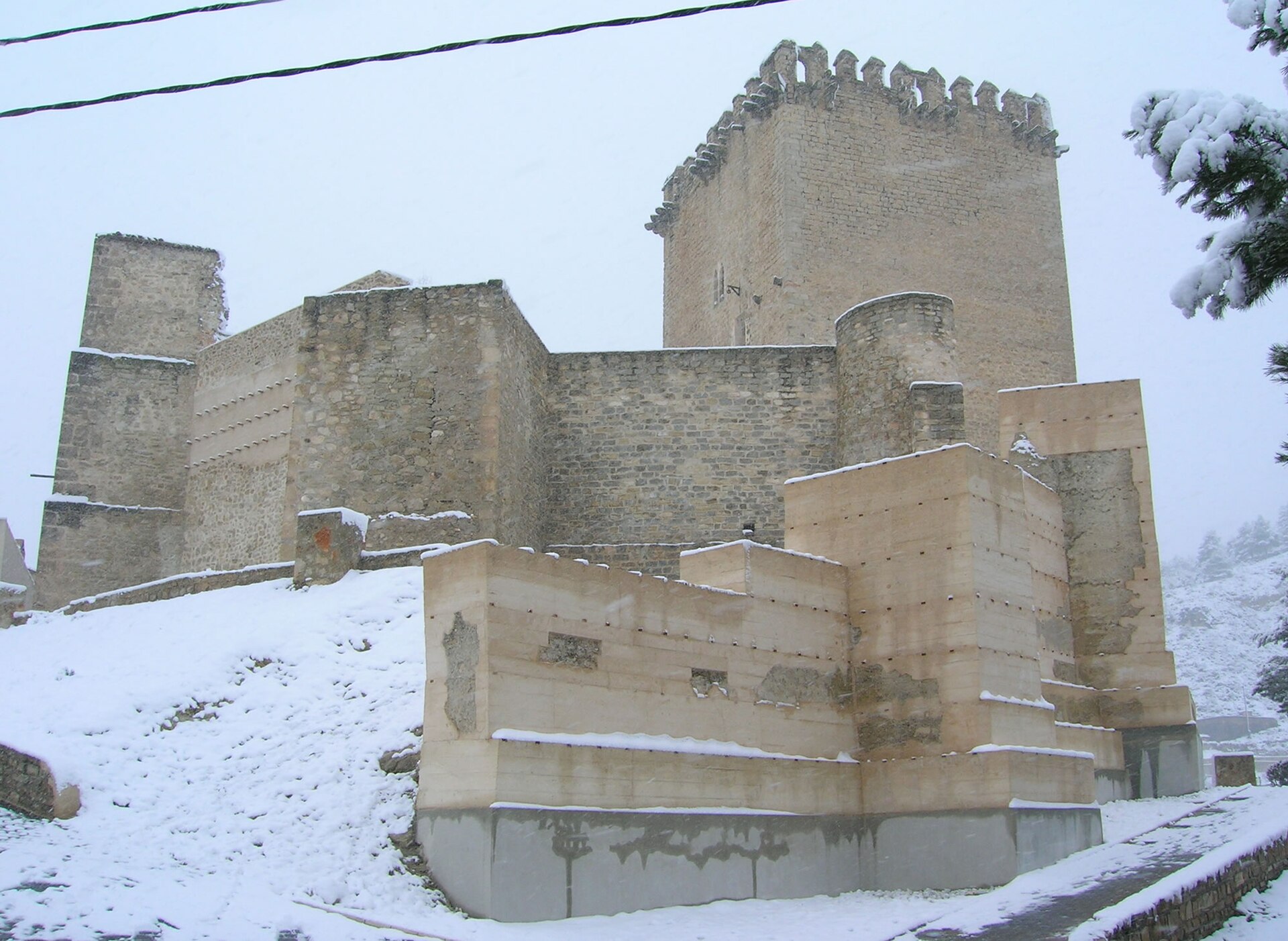
Castle of Moratalla stands on a conical hill above the town of Moratalla, in the Murcia region of southeastern Spain. Long before any walls were raised here, people had already made this summit their home, and the site's history stretches from prehistoric settlers through an Islamic border fortress to a military religious order that shaped its final medieval form.
Why was a fortress built on this particular hill?
The hilltop where the castle now stands was already inhabited during the Neolithic period, when a small farming community used the summit as a base — diorite axes and pottery fragments recovered there confirm this early occupation. Later, in Iberian times, the site was reinforced with a wall of large stone blocks; part of this original construction still survives at the base of the keep, on its northern side. These overlapping layers of settlement show that the hill was valued as a lookout point and refuge long before it became a true fortress.
What did the castle look like under Islamic rule?
The fortress as such took shape in the 9th century, when Al-Andalus authorities built an alcazaba here to reinforce the frontier defenses of the caliphate. It guarded the routes leading toward the Segura river valley, making it a key checkpoint along the paths connecting the interior of the peninsula with the coast. Construction and reinforcement continued gradually between the ninth and eleventh centuries, as the site's strategic value in the region grew.
When did the castle pass into Christian hands?
The turning point came in the 13th century, as the Muslim taifa kingdoms collapsed under the advance of Ferdinand III of Castile. In 1242, the military commander Pelayo Pérez Correa, a senior figure of the Order of Santiago, took control of these lands on the king's behalf. From 1245 the castle became the seat of the local commandery of the Order of Santiago, with Lope Hernández serving as its first commander. The order took over the fortress and gradually rebuilt it to suit its new role.
What happened at the keep?
The centerpiece of the Christian-era rebuilding was the keep, raised in the 15th century and still the most recognizable part of the whole complex. It was above the gate of this tower, in 1465, that the body of Commander Alfonso de Vozmediano was hung — a grim episode tied to internal power struggles within the Order of Santiago that remains one of the best-known chapters in the castle's history.
Why did the castle lose its military importance?
The fortress retained its strategic value into the 16th century, thanks to its position near the border with the Kingdom of Granada, the last Muslim state on the Iberian Peninsula. After the fall of Granada in 1492 and the shifting of political frontiers, the castle's defensive role gradually faded. The last recorded repairs likely took place in the mid-17th century, and a visitation record from 1747 already describes the building as abandoned and in decline.
What can visitors see today?
Visitors can trace the different eras of construction directly in the surviving walls — from the Iberian foundations, through the Islamic alcazaba walls, to the medieval keep built by the Order of Santiago. The hilltop also offers sweeping views over the surrounding countryside, explaining why successive civilizations chose this exact spot as a stronghold. The castle remains a key part of Moratalla's historical identity and of the wider Murcia region.
Frequently Asked Questions
Who built the Castle of Moratalla? The fortress in its recognizable form was first built by Al-Andalus authorities in the 9th century, on top of earlier Iberian defensive works. Following the Christian conquest in the 13th century, the Order of Santiago expanded it and gave it its final shape, including the distinctive 15th-century keep.
What is the oldest evidence of settlement on the castle hill? The earliest finds date to the Neolithic period — diorite stone axes and pottery fragments that point to a small farming settlement on the hilltop long before any fortification was built there.
What happened at the keep in 1465? The body of Commander Alfonso de Vozmediano was hung above the keep's gate that year, a dramatic episode rooted in internal power disputes within the Order of Santiago and one of the castle's most notable historical moments.
Why did the castle fall into ruin? Following the conquest of Granada in 1492 and the southward shift of the political frontier, the fortress steadily lost its military role. Its last known repairs date to around the mid-17th century, and by 1747 visitation records already described it as abandoned.
Nearby places

Earn badges for the places you visit
Download NextOnTrip, discover new places and check off your trails.