About this place
Castillo de Alquipir is a medieval hilltop fortress overlooking the Quípar river valley in the municipality of Cehegín, in the Murcia region of Spain. The ruins sit in an area known as Valle del Paraíso, near the hamlet of Campillo y Suertes, crowning a steep hill that once offered a commanding view over the surrounding farmland and travel routes.
What can you see there?
Ceramic finds at the archaeological site point to a construction date around the 12th century. The fortress served a watchtower role: from its walls, defenders could see the castle of Cehegín, the Jorquera tower, the El Castellar hill near Bullas, and the old road linking Lorca and Cehegín. This visual chain connected the fortifications guarding this frontier territory during the medieval period.
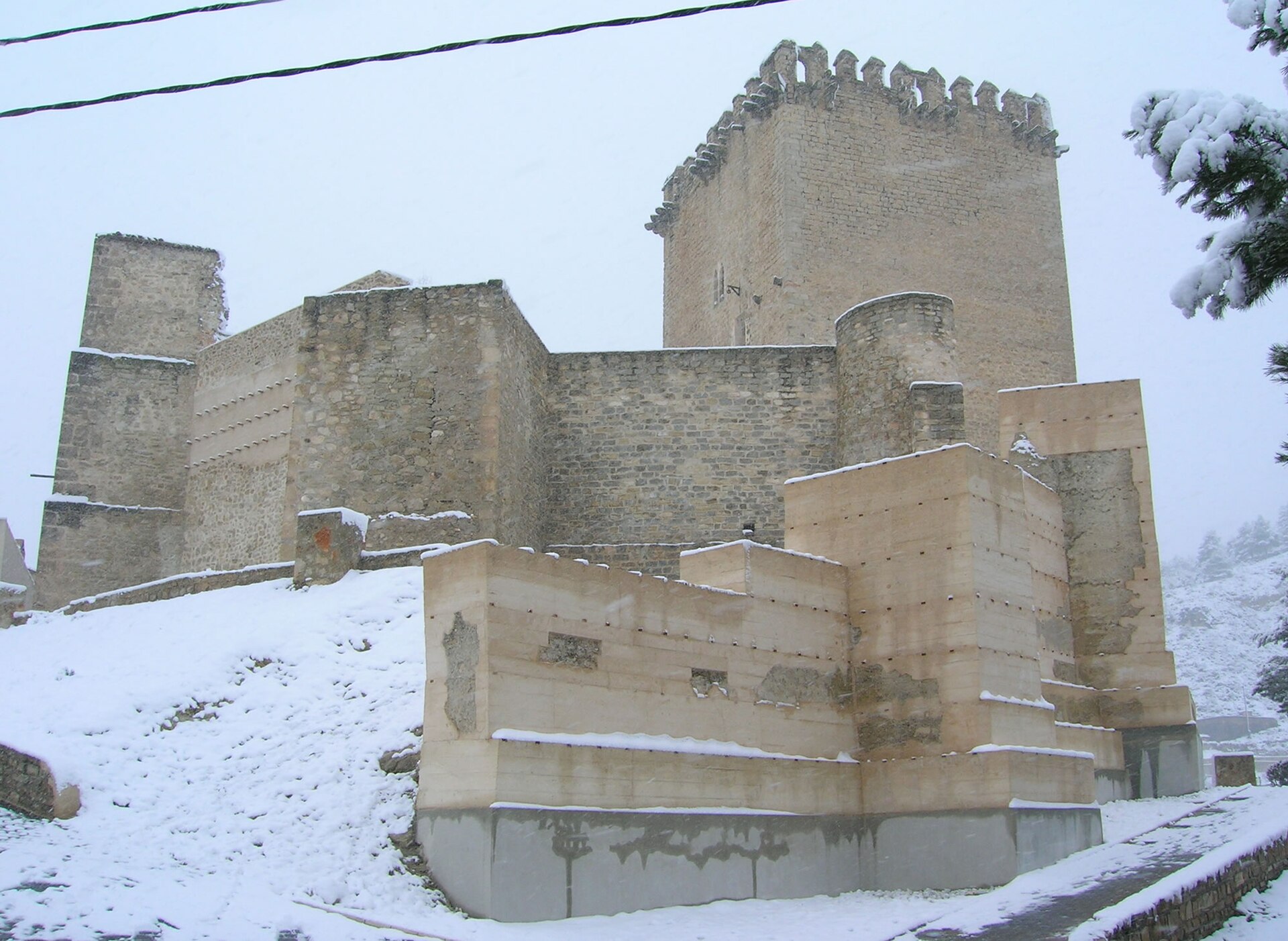
The structure follows a quadrangular layout shaped by the hilltop it sits on, measuring roughly 55 by 20 metres. Builders used rammed earth (tapial) along with mortar and medium-sized stones. Today the surviving walls rarely rise above two metres, though the line of the defensive walls and the remains of a tower are still traceable on the ground. The best-preserved element is the cistern (aljibe), a water tank built to a higher standard than the rest of the fortification, which has survived in noticeably better condition than the surrounding structures.
A hoard of roughly 200 silver coins from the Muslim period was found near the castle, underlining its Islamic-era origins and its historical role in the region. Castillo de Alquipir is listed as a Bien de Interés Cultural, Spain's register for assets of exceptional historical significance, granting it legal protection despite its ongoing deterioration.
How do you get there?
The ruins are now heavily overgrown with pine forest, and the walls themselves stand in an advanced state of decay — this is a site for hikers and history enthusiasts rather than a restored monument with visitor facilities. A marked walking trail leads to the castle, passing along the way an old aqueduct linked to the Acequia de la Pollera (also known as Acequia del Paraíso), a historic irrigation channel that once watered the valley. Sturdy walking shoes are recommended, and the visit works well as part of a longer countryside hike.
When should you visit?
Because the hill offers little shade and there are no visitor facilities on site, spring and autumn are the best seasons to hike up to the castle, when temperatures in the Murcia region are milder than in the height of summer. Morning visits help you avoid the midday heat and catch the Quípar valley in good light.
Frequently Asked Questions
Is Castillo de Alquipir open to visitors? Yes, the ruins form an open-air archaeological site with no fence or admission point, so access is free at any time.
Do any original parts of the fortress still stand? Yes — sections of the defensive walls, the remains of a tower, and a relatively well-preserved water cistern can still be seen on site.
Where does the name Alquipir come from? The name dates back to the period of Arab rule in this area, consistent with the Islamic-era origins of the fortress confirmed by archaeological finds.
Are there other things worth seeing nearby? Yes, the trail to the castle passes an old aqueduct linked to the Acequia de la Pollera, and the fortress walls offer views toward the Jorquera tower and the El Castellar hill in Bullas.
Nearby places

Earn badges for the places you visit
Download NextOnTrip, discover new places and check off your trails.