About this place
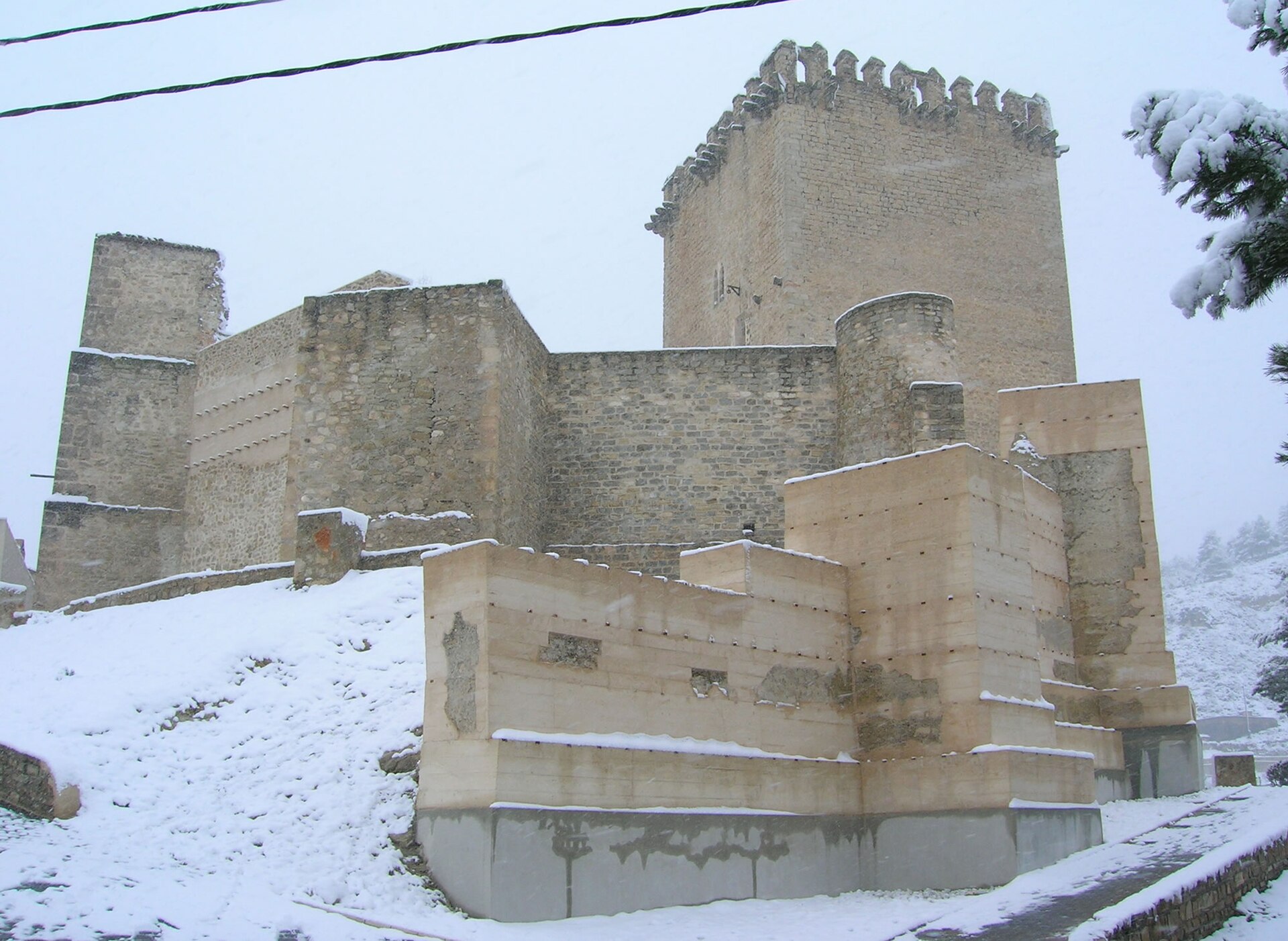
Castillo de Priego is a ruined medieval fortress in Moratalla, standing in an area known as Cortijo de Priego on a hill at the foot of Calar de Incol, close to the present-day boundary between the provinces of Murcia and Albacete. It ranks among the lesser-known but historically significant defensive sites of the northwestern Region of Murcia.
Where did this fortress come from?
The castle's origins trace back to the 11th–12th centuries, when it was raised as a Muslim castillo refugio — a refuge fortress meant to shelter the local population in times of danger. A settlement from the same period stood beside it, and after the Christian conquest this village kept its status as a Mudéjar community well into the 15th century, remaining directly dependent on the Commander of Moratalla. The castle itself passed into Christian hands in the 13th century and came under the administration of the Order of Santiago, one of the Spanish military orders responsible for defending and governing the reconquered frontier lands.
What will you see on site?
The surviving defenses take the form of a polygonal albacara — an outer bailey wall reinforced with towers at its corners, built to shelter people and livestock during a raid. Access to the stronghold was designed as a bent entrance, forcing any attacker to turn rather than approach in a straight line. The fortress itself was built in tapia, rammed earth construction, with stone bonded in lime mortar used at points requiring greater strength. Today visitors can make out sections of the perimeter wall, the outlines of corner towers, and traces of the gate, spread across a hilltop with views over the ravines and borderland terrain shared by Murcia and Albacete.
How to get there and when to visit?
The ruins lie deep within the municipality of Moratalla, in rugged mountain terrain straddling the border of two provinces, so it's worth planning the approach with a good map or GPS navigation and footwear suited to rough ground. This is a destination for history enthusiasts and active travelers rather than a conventional stop with visitor facilities. Spring and autumn are the best seasons to visit, since temperatures in this part of Murcia are milder than in summer and visibility across the surrounding hills and ravines tends to be clearer.
Why is Castillo de Priego worth seeing?
The castle bears witness to the complex Christian-Muslim frontier history of medieval Spain — a stronghold that protected the local population through a change of rulers and religion, next to a village that continued as a Mudéjar enclave for centuries after the conquest. In recognition of this historical and architectural value, Castillo de Priego has been declared a Bien de Interés Cultural (asset of cultural interest) under Spain's 1985 historical heritage law.
Frequently Asked Questions
Is the castle open to the public? The ruins sit in open mountain countryside; since there are no paved access roads or marked visitor infrastructure nearby, reaching the site takes some route planning in advance.
How much of the original structure survives? Sections of the polygonal albacara wall remain, along with traces of corner towers and the bent entrance passage; the main keep and interior buildings have largely been lost over the centuries.
Is there another castle nearby worth visiting? Yes — the same municipality of Moratalla is also home to Castillo de Benizar, at a separate location; the two sites have distinct histories and should not be confused with one another.
Who built this castle? It was raised by the Muslim population in the 11th–12th centuries as a refuge fortress; after the Christian conquest in the 13th century it passed under the administration of the military Order of Santiago.
Nearby places

Earn badges for the places you visit
Download NextOnTrip, discover new places and check off your trails.