About this place
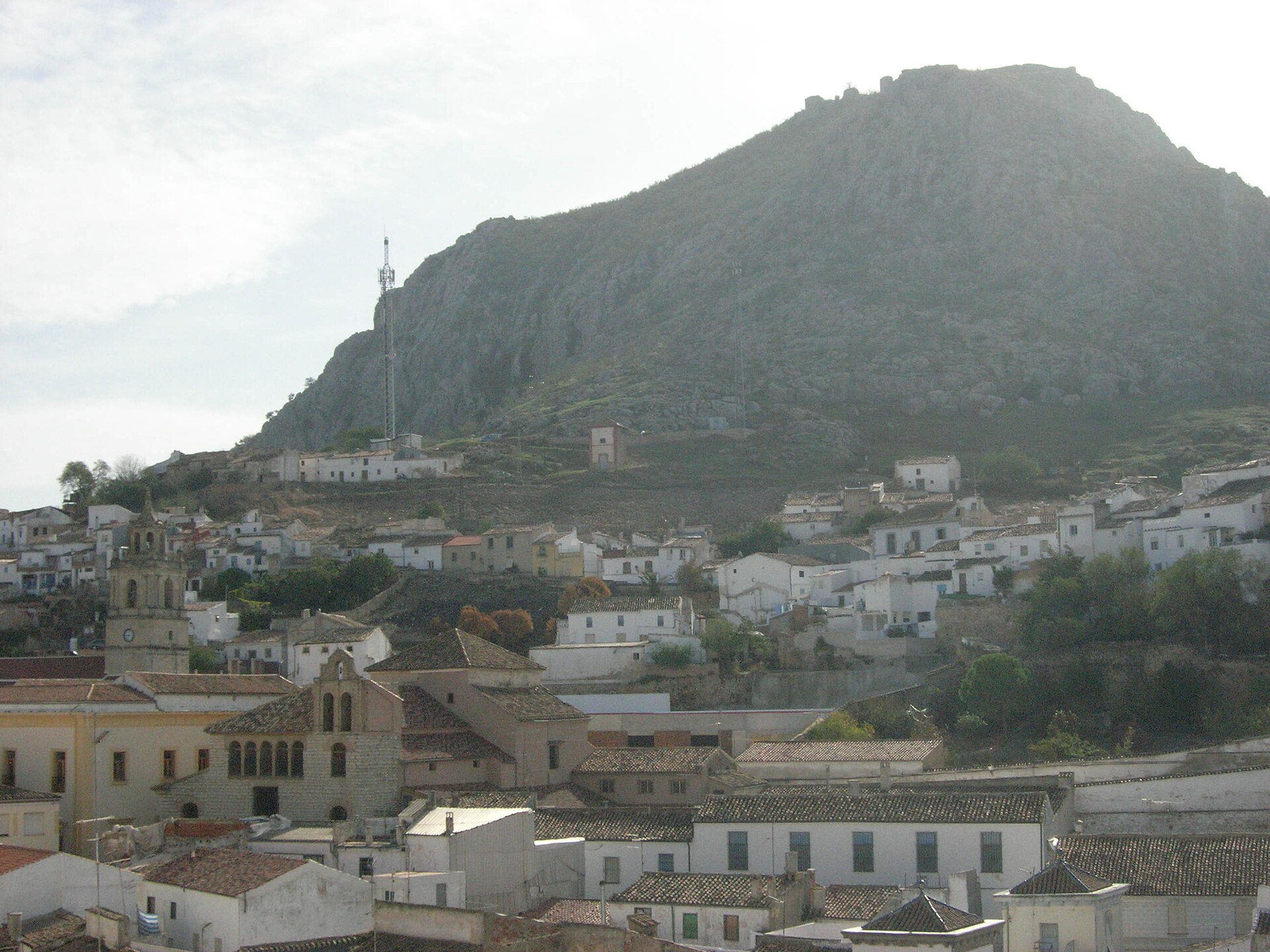
Castillo de la Peña crowns the highest point above Martos, a town in the Jaén province of Andalusia, southern Spain. Perched on a rocky outcrop rising over 1,000 metres above sea level, it forms the upper half of a two-castle defensive complex, its lower counterpart being the Castillo de la Villa at the foot of the same hill.
What will you find at the top?
The fortress follows an irregular layout that hugs the natural shape of the rock — the terrain itself was part of the defence. Surviving elements include stretches of the enclosure wall, a mix of round and square towers, and the base of a large four-storey keep that once served as the site's tower of homage. Approaching the entrance, you can still trace the line of a rock-cut moat and the point where a drawbridge once spanned it. A cistern carved into the stone reminds visitors that a hilltop stronghold like this had no natural water source and depended entirely on collected rainwater. The real reward for the climb, though, is the view: from the walls, the Sierra Sur's olive groves and the valley around Martos stretch out in every direction.
How old is this place, really?
The hill was occupied long before any medieval stonework appeared. Traces of settlement go back to the Copper Age, and by around the 6th century BC an important Iberian hilltop town called Tucci stood here — a place mentioned by classical geographers Ptolemy, Strabo, Mela and Pliny. Around 14–15 BC, Emperor Augustus turned the site into a Roman colony, Colonia Gemella Tucci, settling veterans from the legions III Macedonica and X Gemina on the land. A fortress from the Islamic period followed, and after the Christian conquest of Martos in 1228, the hill passed into the hands of the Order of Calatrava. It was this military order that built most of what stands today, largely dating the current castle to the 14th century, raised on top of the earlier Ibero-Roman and Arab foundations. For generations, La Peña and La Villa together formed one of Calatrava's key border strongholds facing the Nasrid Kingdom of Granada. Once that frontier shifted south, the castle lost its military purpose and was abandoned from the 16th century onward, slowly falling into the ruined state seen today. In 1985, both Martos castles — La Villa and La Peña — were jointly declared a historic monument (Bien de Interés Cultural).
When and how should you visit?
Martos sits in Jaén province, roughly 25 km from the provincial capital, on the main roads connecting Jaén with Córdoba. The access point for both castles is on Calle Primero de Mayo 34, from where a footpath climbs the hill — sturdy shoes are worth packing, since the ascent runs over uneven rock. Visiting hours are limited: Wednesdays and Thursdays from 11:00 to 14:00, and Saturdays from 11:00 to 14:00 and again from 19:00 to 21:00. Guided visits can be arranged by phone in advance. Given the narrow opening windows, it's worth planning ahead, especially if you intend to combine the climb to La Peña with a visit to the lower Castillo de la Villa.
Frequently asked questions
Are Castillo de la Peña and Castillo de la Villa the same castle? No. They are two separate structures belonging to the same medieval defensive complex at Martos. La Villa occupies the lower Cerro de la Villa, while La Peña sits higher up, on the rocky summit above the town.
Can you actually walk inside the ruins? Yes, the site is open to visitors during its scheduled hours (Wednesdays, Thursdays and Saturdays), and guided tours can be booked in advance by phone.
Is the climb difficult? The path up is rocky and uneven, so solid footwear is recommended. The difficult approach was actually part of the castle's original design — it made the fortress harder to attack.
What's the oldest thing on this hill? Settlement traces date back to the Copper Age, and the documented history starts with the Iberian town of Tucci more than 2,500 years ago, later refounded by the Romans as the colony of Colonia Gemella Tucci.
Nearby places

Earn badges for the places you visit
Download NextOnTrip, discover new places and check off your trails.