About this place
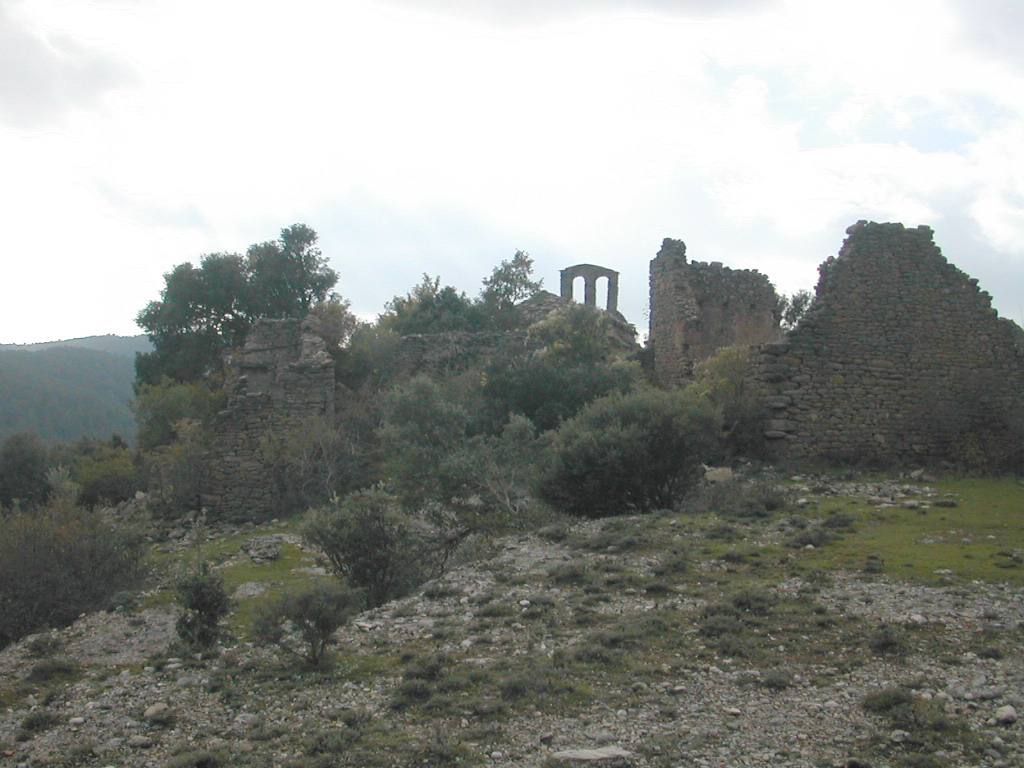
Castell i muralla de Castellar, in the village of Castellar de la Ribera in Catalonia's Solsonès region, are the remains of a medieval castle and its defensive wall, protected as a cultural property of national interest.
What is the history behind these ruins?
The site's documented history goes back to 1091, when Count Udalard of Urgell and his son Pere granted land bordering "Kastellari castro" to the canons of Santa Maria de Solsona. The castle itself first appears explicitly in written sources in 1154. For centuries it served as a strategic lookout controlling the surrounding valley, and its lords ranked among the most powerful feudal families of the area - first as vassals of the counts of Urgell, later under the lordship of the Cardona family. The canonry of Solsona held some nearby land, but judicial and administrative authority over the district stayed firmly with the castle's own lords.
What can you actually see on site?
Visitors will find surviving stretches of defensive wall, foundations of former buildings, and the remains of a cylindrical watchtower. The ruins sit in the small hamlet of Castellar, right next to the church of Sant Pere de Castellar, making the two an easy joint stop. Little of the original layout survives intact, and the structure is hard to read on the ground today - the only visual record of how it once looked is a 1934 drawing by Langlois, published in "La Veu del Diumenge," a supplement to the newspaper "La Veu de Catalunya." The site has since undergone restoration work, and the standing wall fragments are open for visitors to walk around.
How do you get there?
The ruins sit directly beside the C-26 road linking Solsona and Bassella, around kilometre 93-94, close enough to the shoulder that a standard car is all you need - no 4x4 or long hike required. Parking nearby is easy to find. Solsona is the nearest sizeable town, and the drive from there to Castellar de la Ribera takes only around fifteen minutes.
When is the best time to visit?
Given how little of the walls remains exposed and the total absence of visitor infrastructure - no ticket office, no guides, no marked trail - this is best treated as a brief stop rather than a half-day excursion. Spring and autumn suit the site best, since summer temperatures in this part of inland Catalonia can climb quickly and the ruins offer no shade.
Frequently asked questions
Is there an entrance fee? No. The ruins form an open, unstaffed archaeological site with free access at any time.
How long does a visit take? Given the modest size of what survives, most visitors spend 15 to 30 minutes here, longer if combined with a stop at the neighbouring church of Sant Pere de Castellar.
Can I drive there in a regular car? Yes. The site sits right beside the C-26 road near kilometre 93-94, with easy roadside parking.
What architectural elements remain? Wall fragments, building foundations, and the base of a cylindrical watchtower survive, though the original layout of the castle is difficult to reconstruct from what remains.
Nearby places

Earn badges for the places you visit
Download NextOnTrip, discover new places and check off your trails.