About this place
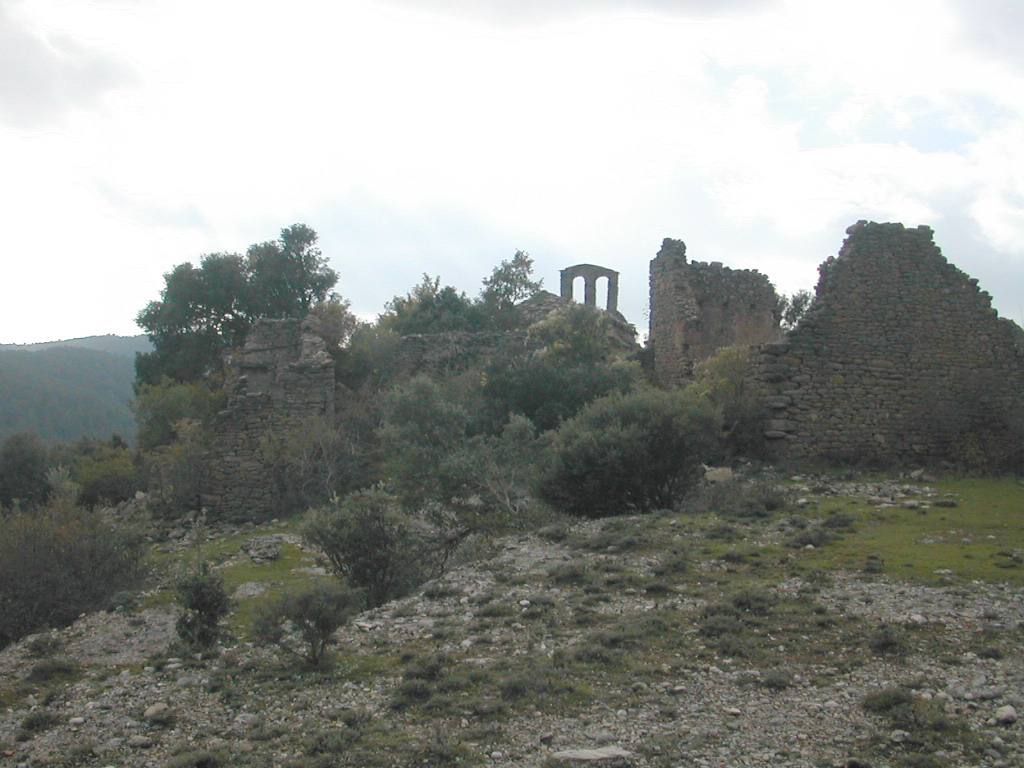
Castell de Cambrils is the ruin of a medieval castle overlooking the small village of Cambrils, part of the municipality of Odèn in the Solsonès region (Lleida province, Catalonia). Perched on a limestone ridge of the Bartoló Vell range high above the Riu Fred, the fortress once controlled the old route linking Cambrils with Oliana. Today it survives as a weathered stone ruin, protected as a cultural asset of national interest, and it draws hikers and history enthusiasts looking for quiet, scenic corners of the Catalan Pyrenees foothills.
What is the history behind the castle?
The castle first appears in historical records in 1375, when it was listed among the holdings of the Viscounty of Cardona. The Cardona family went on to hold the barony of Cambrils almost continuously from 1512 to 1831, making the site a notable piece of the feudal history of Solsonès. Its position on a mountain ridge let it oversee both defense and the traffic passing along the traditional trade and herding route between Cambrils and Oliana.
How do you get to Castell de Cambrils?
The starting point is the village of Cambrils itself, within the municipality of Odèn. A parking area sits near the village, from which a signposted, well-maintained footpath climbs toward the ruins. The route passes the rectory and the parish church of Sant Martí before rising to the ridge just below the castle remains. No technical climbing is required, but sturdy hiking shoes are recommended, since parts of the trail cross rocky, uneven ground.
What will you see on site?
From the ruins, views open out over the Riu Fred valley and the surrounding hills of Solsonès. Just below the ridge lies El Salí de Cambrils, a historic salt spring long tied to the local economy and a familiar landmark for residents of the area. The castle itself survives as partially collapsed stone walls typical of Catalan defensive architecture from its era — there has been no modern reconstruction, so what you find is an authentic, unrestored ruin rather than a polished heritage site.
When is the best time to visit?
Because the terrain is mountainous and there's no sheltered infrastructure on site, spring and autumn offer the mildest temperatures and the clearest visibility along the trail and from the castle's viewpoint. In summer, an early start helps avoid the midday heat on the more exposed stretches of path. Winter conditions can make both the approach road and the trail itself more difficult, as is common in this Pre-Pyrenean landscape.
What else is worth seeing nearby?
Odèn and the wider Solsonès region are rich in Romanesque architecture and medieval strongholds, so a visit to Castell de Cambrils pairs well with nearby village churches and Pyrenean viewpoints. It makes a good stop on a route through the region's lesser-known, low-key heritage sites, away from the crowds found along Catalonia's better-known coastal destinations.
Frequently asked questions
Is Castell de Cambrils the same place as the well-known coastal town of Cambrils? No. This is a different, much smaller village called Cambrils, located within the municipality of Odèn in the mountainous Solsonès region — many kilometers inland from the popular Mediterranean resort town of Cambrils.
Is there an entrance fee to visit the ruins? No. The site is freely accessible via a public hiking trail, with no ticket required.
How long does the hike to the castle take? The walk from the parking area near the village to the ruins is relatively short, typically under an hour one way depending on pace.
Are any original features still standing? Yes, sections of the stone defensive walls remain, though the structure is an unrestored ruin — authentic remnants from the era of Cardona rule rather than a reconstructed monument.
Nearby places

Earn badges for the places you visit
Download NextOnTrip, discover new places and check off your trails.