About this place
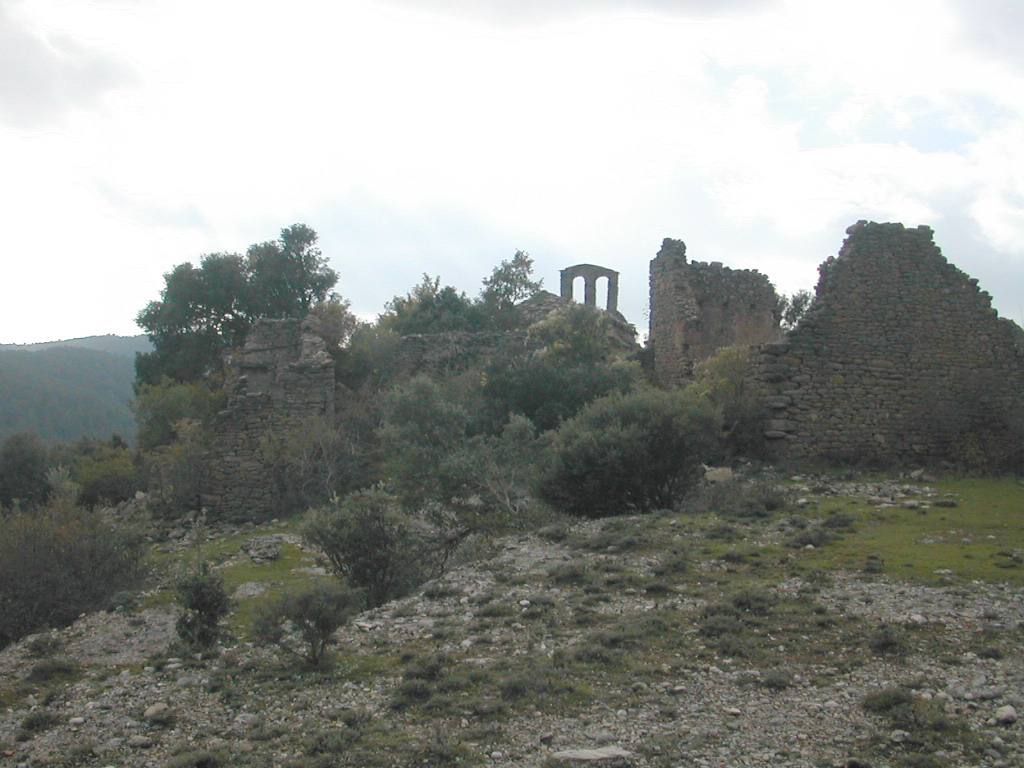
Castell de Pampa, in the municipality of Castellar de la Ribera in Catalonia's Solsonès region, is what remains of a medieval castle listed as a Spanish cultural property of national interest (BCIN). The ruins sit in the now-abandoned hamlet of Pampa, on the northern edge of the municipality, on the southern slopes of the Serra d'Oliana ridge, above the right bank of the Rasa de Solanes ravine.
What is the story behind the castle?
Pampa — recorded in old documents as Pampano or Pampane — was a small settlement and parish that has stood empty since the 1970s. The earliest references to the place itself appear in documents from 839, 959 and 1097, though these describe the settlement rather than a fortification. The castle is first named in the sources only in 1227, when Ponç, Count of Urgell, handed over "the castle of Pampane," together with several estates — Vilaginés, Llor, el Soler, Corts and Sasserra among them — to Bernat de Peramola and his heirs. Earlier records from 1186 and 1222 already mention local figures tied to the place, Arnau de Pampa and Bernat de Pampe, pointing to a lineage connected to the site well before the formal grant.
What will you actually see?
Very little survives above ground. The stone remains of the castle can barely be told apart from the ruins of the adjoining primitive church of Santa Margarida and from a nearby abandoned manor house — all three sit in a similarly advanced state of decay, half-reclaimed by vegetation and bare rock. This is not a restored monument with display panels or paid access; it rewards visitors looking for genuine, untouched medieval traces and the quiet of a deserted hamlet rather than dramatic architecture.
How do you get there?
Pampa lies in the western part of Castellar de la Ribera municipality, in an area drained by the Barranc de Coscollola stream. Reaching it means driving to the nearest local road and continuing on foot across hilly, partly wooded terrain, since there is no direct vehicle access to the ruins themselves. The site is sometimes included on local walking routes organised by the town, such as the annual Caminada Popular de Castellar de la Ribera, which can be a practical way to visit with some orientation on the ground. Bringing a detailed map or hiking app is worth doing before setting out, as trail markers in the area are sparse.
When should you visit?
Spring and early autumn are the best windows, when temperatures in Solsonès are mild and vegetation hasn't yet overgrown the approach to the ruins. Summers here can turn quite hot, and winter rain or snow can make the higher ground difficult to reach. Castellar de la Ribera appeals mainly to hikers and regional-history enthusiasts rather than mass tourism, so it's worth planning the visit ahead and not expecting any services on site.
Frequently asked questions
Can you drive right up to the castle? No. The nearest road stops short of the ruins, and the final stretch has to be covered on foot, since the surrounding terrain is hilly and unsuitable for vehicles.
Is the site open to visitors? There is no formal visitor infrastructure — no ticket office, information panels or regular supervision. The ruins sit exposed in the landscape and can be freely approached, but without any services.
How much of the original castle survives? Very little. The stone remains are hard to distinguish from the ruins of the neighbouring Santa Margarida church and an abandoned manor house, all in an advanced state of decay.
Where does the name Pampa come from? Medieval documents record the place as "Pampano" in 839 and "Pampane" in 1227, the year the Count of Urgell granted the castle under that second form to the Peramola family.
Nearby places

Earn badges for the places you visit
Download NextOnTrip, discover new places and check off your trails.