About this place
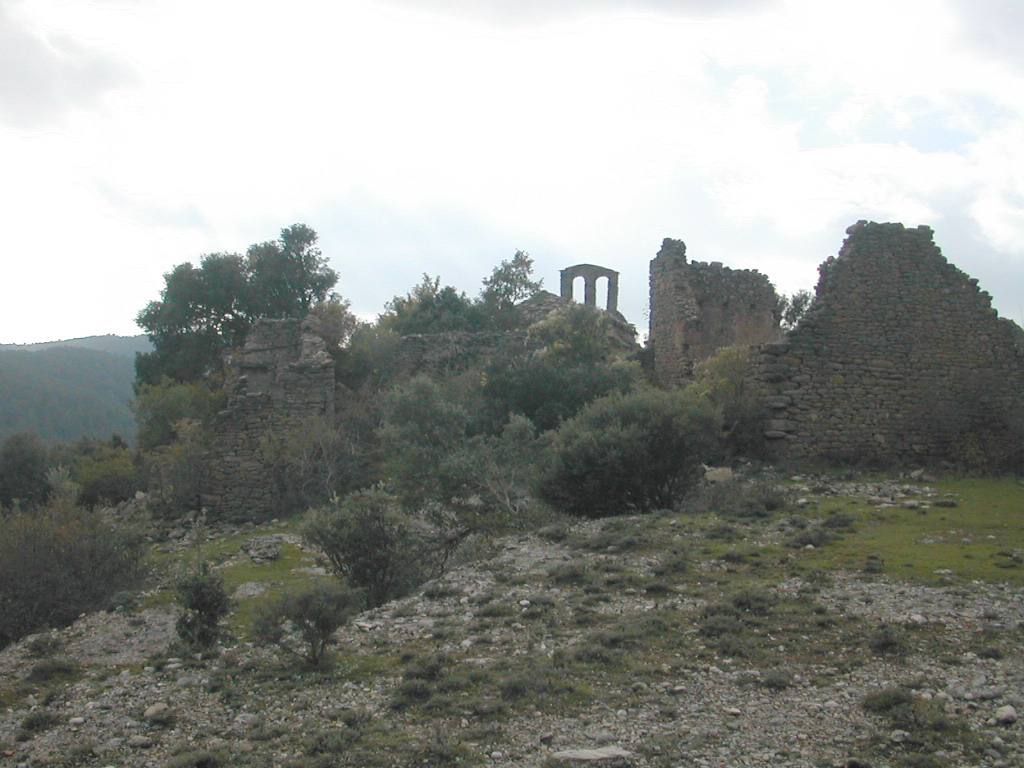
Castell d'Isanta is a former lordly seat in the municipality of Lladurs, in the historic Solsonès region of Catalonia. It is not a dramatic ruin with standing towers and walls, but rather a place with an unusually well-documented medieval past, best visited as part of a countryside walk rather than as a standalone sightseeing stop.
What is the history behind this site?
The name "kastrum de Isanta" first shows up in written records in the 11th century, though the location itself appears in county archives as early as 990, when it still belonged to the neighboring territory of Canalda. The earliest known lord was Duran d'Isanta, in the early 11th century. By the late 12th century the holding had passed to Arnau d'Isanta, who in 1177 sold the surrounding forest to the chapter of Santa Maria de Solsona, and eight years later, in 1185, pledged the castle itself to Joan de Solsona.
The following decades brought a drawn-out dispute over rights to the stronghold. In 1200 an agreement recognized the Solsona chapter's claims, and the split of ownership between the Isanta family and the church was finally settled by a judgment in 1206. The turning point came in 1210, when Ponç de Pinell willed the castle to Santa Maria de Solsona. From then on Isanta operated as a lordship under the Solsona church, and later sources also record Guillem and Saurina d'Isanta among its lords.
What will you actually find on site?
This is worth knowing before setting out: nothing of the original medieval structure survives in recognizable form — whatever stands there today is modern. The site is best approached as part of the historic landscape of Solsonès rather than a ruin to explore up close. Right next to it lies the small hamlet of Vilanova d'Isanta, home to the Sant Miquel hermitage, which is open to visitors, and to a working rural guesthouse that takes overnight guests.
How do you get there and plan a route?
The area around Isanta and Vilanova d'Isanta connects by footpaths to the rest of the Lladurs municipality, including Castell de Lladurs, whose restored tower now houses an astronomical centre with two telescopes. A popular route starts at Vilanova d'Isanta and descends northward along a path to a paved road, followed for about 1.6 km, before turning off across meadows and looping back. It suits an easy, few-hour walk and requires no special equipment.
When is the best time to visit?
Solsonès sits in the Pyrenean foothills, so spring and early autumn are the most comfortable seasons for walking, with mild temperatures for longer routes. In summer, an early start helps avoid the midday heat, while in winter some paths can turn muddy or icy after rain or snow.
Frequently asked questions
Can you still see medieval walls at Castell d'Isanta? No — historical sources are clear that everything visible on site today is modern construction, and the original medieval buildings have not survived.
How is Castell d'Isanta different from Castell de Lladurs? They are two separate sites within the same municipality: Isanta was a church-held lordship with no surviving medieval fabric, while Castell de Lladurs is a restored tower that now houses an astronomical observatory.
What else is worth seeing nearby? The Sant Miquel hermitage in Vilanova d'Isanta, along with walking trails leading to Castell de Lladurs and the surrounding hills of Solsonès.
Do you need a guide or special preparation to visit? No, the local routes are moderate walks and short hikes suitable for anyone with average fitness, and no guide is required.
Nearby places

Earn badges for the places you visit
Download NextOnTrip, discover new places and check off your trails.