About this place
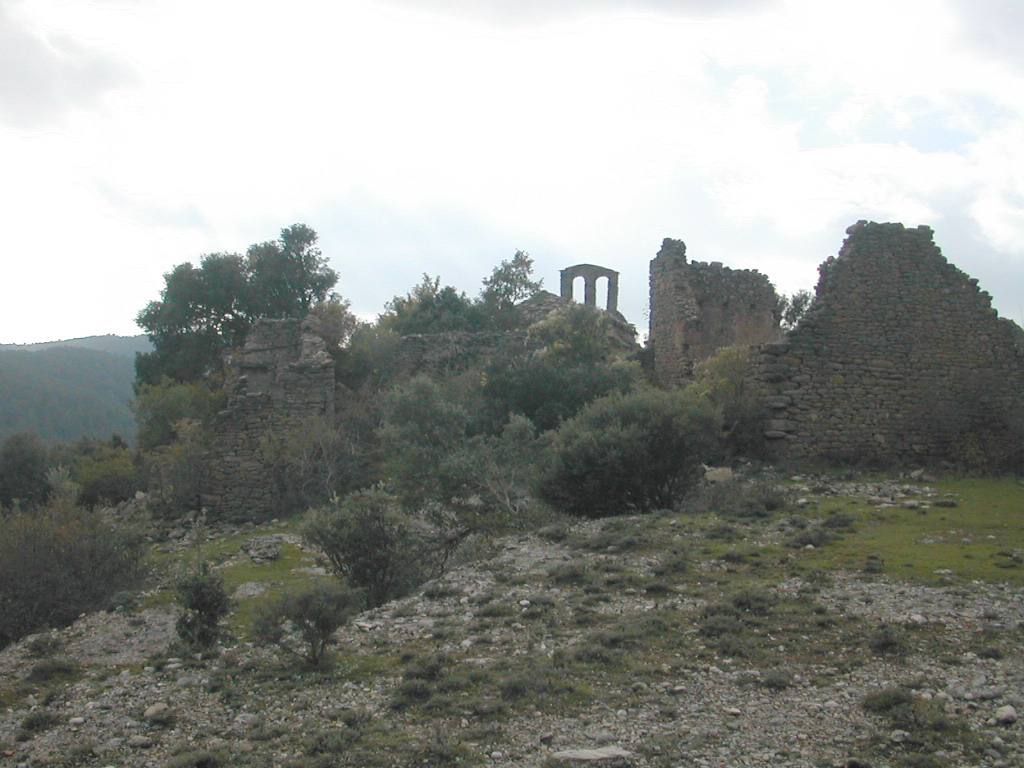
Castelló is a ruined masia (a traditional Catalan farmhouse) in the municipality of Lladurs, in the Solsonès region of Catalonia.
Where exactly is it?
The building stands in the hamlet of Els Torrents, at the southeastern end of the Serra de Castelló ridge, at an elevation of 786 metres. The site was historically also known as Castellonet. Its coordinates are 42.0771 N, 1.56791 E.
How do you get there?
The best starting point is Lladurs, a small municipality at the heart of Solsonès. From the village, local roads and dirt tracks lead toward the Serra de Castelló ridge, crossing the pastures and shallow valleys typical of this part of the region. Because the building is in ruins and there is no tourist infrastructure on site, it is worth checking current access conditions beforehand with the Turisme Solsonès information office, particularly after rain, when unpaved tracks can turn muddy.
What will you find on site?
The masia survives only as a ruin. The main structure measures roughly 7.25 by 6.85 metres, and the earliest records of a building on the site go back to the 16th century. Against its southeastern wall stand the remains of the small chapel of Sant Esteve de Castellonet, and about fifty metres further in the same direction lie the sparse remnants of the hermitage of Sant Joan de Castellonet. Together, the group illustrates the scattered farming settlements once typical of Solsonès, where a single masia often combined a home with a modest place of worship.
From the ridge, the view opens onto three separate valleys: the Rasa de Torrenteller valley to the north, the Rasa de la Salada Vella valley to the south, and the Cardener valley to the east. That panorama, as much as the ruins themselves, is the main reason to make the trip.
When should you visit?
Spring and early autumn are the best seasons, when temperatures across mountainous Solsonès are mild and visibility over the valleys tends to be at its clearest. Summer heat makes walking across the exposed terrain harder going, while winter can leave the access tracks difficult to negotiate under snow or ice. Whatever the season, sturdy walking shoes are essential - the ground is uneven, and given the ruinous state of the building itself, it should be viewed from the outside rather than entered.
Frequently asked questions
Can you drive all the way to Castelló? Not directly - the final stretch has to be covered on foot or along local dirt tracks, so it is best treated as a walking destination reached from Lladurs rather than a site accessible straight from a paved road.
Is it safe to go inside the ruins? The building is in a ruined state, so for safety it is best to view it from the outside only.
Is it worth combining with other nearby sights? Yes - right next to it are the remains of the chapel of Sant Esteve de Castellonet and the hermitage of Sant Joan de Castellonet, and the wider municipality of Lladurs and the Solsonès region hold a network of similarly scattered rural heritage sites.
Do you need a guide? A guide is not required, but since there are no marked trails, it is worth checking the route beforehand with the Turisme Solsonès information office.
Nearby places

Earn badges for the places you visit
Download NextOnTrip, discover new places and check off your trails.