About this place
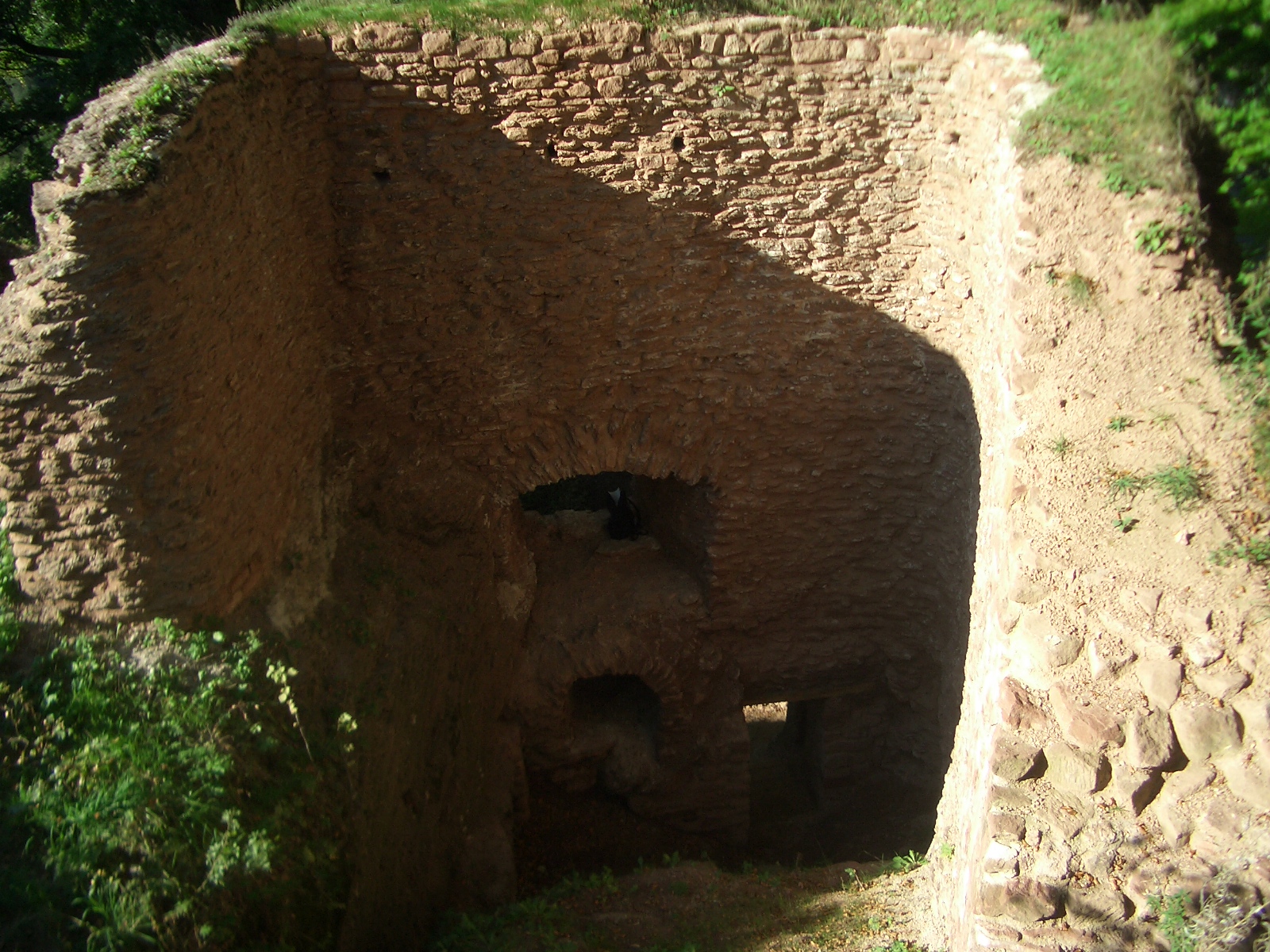
Břecštejn is a ruined castle perched on a steep sandstone crag near the village of Vlčice, roughly six kilometers west of Trutnov, in the Podkrkonoší region of the Hradec Králové district. What survives today is mostly tall stretches of the outer perimeter walls, but the setting alone — a rocky spur wrapped in forest — makes the visit worthwhile regardless of how little masonry remains.
Where does the name come from, and who built it?
The site wasn't always known as Břecštejn. An older stronghold called Stein once stood here, held by a certain Otto ze Steinu, who is already documented in 1336 donating land to a monastery at Oblanov. The castle known as Břecštejn itself only rose in the first half of the 15th century, with the earliest written record dating to 1455 in Trutnov manorial registers, naming Mikuláš Zilvár as its lord. It was the wealthy Zilvár family — who had been steadily building up their estates around Trutnov since the 14th century — who erected the new residence on the site of the older Stein fortress. During the 16th century the Zilvárs started calling their castle Silberstein, a German form of the name first recorded under Adam Zilvár in 1532.
Why was the castle abandoned?
The terrain itself explains a lot. The stronghold sat on a narrow, steep rock, which left little room to expand: the northwestern side drops away in a near-vertical cliff face, while the eastern and southeastern approaches were defended instead by a double ditch and rampart. That cramped footprint eventually stopped suiting its owners. After Adam Zilvár, his brother Kryštof took over the castle, but the family ultimately relocated to a more comfortable seat on their Vlčice estate. From the second half of the 16th century onward, every surviving record simply lists Břecštejn as deserted, a status that held through the entire 17th century.
What happened to the ruin afterward?
After 1790, Jan František Theer had the ruins cleared and structurally secured, and in 1794 he had a wooden octagonal pavilion built on the site of the former palace — a typical romantic-era gesture toward medieval ruins as landscape features. Since 1964, Břecštejn has been legally protected as a cultural monument.
What else is worth knowing about the area?
Right below the castle, in the small forest settlement of Hrádeček, stands a cottage that Václav and Olga Havel bought in 1967. Under communism it hosted gatherings of dissidents, informal theatre performances, and garden parties, and after 1968 it became one of the centers of political resistance in Czechoslovakia — Charter 77 and the "A Few Sentences" petition were both drafted there. Once Havel became president, he received major guests at Hrádeček, including Madeleine Albright and Kofi Annan. It was here, in the shadow of the Břecštejn ruins, that Václav Havel spent his final days, passing away on December 18, 2011.
Frequently asked questions
Where exactly is Břecštejn located? About six kilometers west of Trutnov, above the settlement of Hrádeček, within the municipality of Vlčice, in the Podkrkonoší region.
How much of the castle still stands? Mainly tall sections of the outer perimeter walls — the castle was never large to begin with, constrained by its narrow rocky site.
Who built the castle? The Zilvár family, in the first half of the 15th century, on the site of the older Stein stronghold.
Why did the castle fall out of use? The cramped rocky terrain left no room to expand, so the owners moved to a more convenient residence in Vlčice; by the 16th century Břecštejn was already recorded as abandoned.
Is there anything else worth seeing nearby? Yes — the Hrádeček cottage at the foot of the rock, tied to Václav Havel, a key site of Czech democratic dissent and the place where he died in 2011.
Nearby places

Earn badges for the places you visit
Download NextOnTrip, discover new places and check off your trails.